Showing posts with label Andrea Blundell. Show all posts

Tuesday, October 1, 2013

RABBIT FEVER

Roger Rabbit: A Cultural Impact, Part II by Andrea Blundell

In Part 1 of Roger Rabbit: A Cultural Impact, we looked at the effect Roger Rabbit had on the film industry. Now we come out from behind the lens of movie-making and look instead at his influence on society.

After the huge success of the film, it didn’t take long for Roger Rabbit fever to take hold. And what was not to love? A zany hare with a zest for life—you couldn’t help but root for the guy.

First there was the typical movie memorabilia—pins, clocks, beach towels, video games, and even a board game called Dip Flip. Children begged their parents to buy the latest Roger Rabbit gear. But it didn’t stop there. As the Roger Rabbit craze grew, so did commercial efforts to cash in on it.


In1990, Disney created a comic book series called Roger Rabbit, which ran for eighteen issues and went on to spawn a spin-off series called Roger Rabbit’s Toontown. There were graphic novels, children’s books, and activity books. And now, proof that Roger and Toontown’s legacy lives on, there is a growing community of fan fiction.

In 1994, Disneyland got in on the action, adding a new ride in Mickey’s Toontown called Roger Rabbit’s Car Toon Spin. Here, fans can go through the streets of Toontown and narrowly escape being “dipped.” That same year, McDonald’s had a Happy Meal toy of Roger Rabbit in Benny the Cab.

Aside from the commercialism, Roger Rabbit made a rabbit-shaped hole in our hearts as well. It is almost a guarantee that you can mention Roger Rabbit in a room, and more than one person will respond with, “I loved Roger Rabbit as a child!” or “I watched that movie over and over again when it came out.” Both children and adults loved the film, which is part of what makes it so iconic. Eighties children walked around mimicking Roger Rabbit, drawn into the perfect child’s fantasy of a world with “real” cartoons. For many adults, including Celina Summers, one of Musa’s founders, it was the first VHS tape they bought.

But if you are still questioning the cultural impact of Roger Rabbit, look no further. As the saying goes, the proof is in the pudding. And in this case, the pudding is none other than a Roger Rabbit dance move. Yes, that’s right. There is a Roger Rabbit dance. You may not even know that you’ve seen it, but chances are that you will recognize the move. Just check out this online instructional video for a refresher.

And now twenty-five years have passed. The Eighties kids have grown up to have kids of their own, and the Eighties adults have grandkids of their own. A new generation is around to share in the fun and humor of the Roger Rabbit phenomenon, and they are enjoying it just as much as those before them. Four-year-olds are watching raptly alongside their grandparents, hiding their eyes at some of the more intense scenes, and giggling at the sillier ones. Teenagers are snickering behind their hands as they begin to understand some of the more adult-oriented humor.

Roger Rabbit has proven he can stand the test of time, and his fans are ready for more.

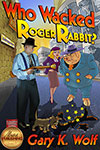
Luckily his creator, Gary K. Wolf, is ready to deliver more with his latest book about Roger and his Toontown pals. Who Wacked Roger Rabbit? promises more of the hare-raising antics and mystery that we’ve all come to expect from Roger, plus a host of new Toons that will keep it fresh.

So whether you are young or old, new to Roger Rabbit or experienced in his p-p-p-playful mannerisms, you can surely appreciate the cultural impact he’s had on society. And who knows? Maybe the Roger Rabbit dance will be making a comeback to a dance floor near you.


Gary K. Wolf’s latest novel Who Wacked Roger Rabbit? will be available for pre-order from Musa Publishing on October 22, 2013, in digital-only format.


Photographs courtesy of AllCollectors.com
Cover art courtesy of Kelly Shorten and Jacques Muller

Thursday, September 19, 2013

Roger Rabbit: A Cultural Impact

Part 1 by Andrea Blundell

In 1988, a little-known cartoon character got his big break. He wasn’t new to the world—after all, he’d been created by author Gary K. Wolf in the 1981 novel Who Censored Roger Rabbit?—but he'd finally “made it” with a starring role in the Disney movie Who Framed Roger Rabbit.

And now, twenty-five years after the release of the movie that made Roger Rabbit a household name, we can definitively look back and see the true cultural impact this irritatingly loveable rabbit has had on us. Part I of this article will look at the impact on the film industry, while Part II will examine the social impact of the film.

The most obvious and immediate impact was in the world of animation and film making. Who Framed Roger Rabbit was heralded as a groundbreaking film because of the unique combinations it presented—traditional animation and live action, Toons and humans, Disney, and Warner Brothers.

Mixing animation and live action had been around for decades before Who Framed Roger Rabbit. In 1919, Max Fleischer began producing Out of the Inkwell, a series of shorts in which he interacted with the animated characters. Then there were Disney’s Alice Comedies, shorts which featured a live action girl and an animated cat in a cartoon world. There was Song of the South in 1946. Mary Poppins in 1964. And the list goes on.

So why the big fuss over Who Framed Roger Rabbit?

In the 1970s and 80s, Disney appeared to have lost its edge in animation, and animation in general had slowly degraded to cheap and rushed television cartoons with a primary audience of children. Animation studios, including Disney, were experiencing disappointing box office sales on their animated films and downsizing as a result.

But Who Framed Roger Rabbit changed all of that. Never before had there been a film that so seamlessly blended hand-drawn animation and live action.

Roger Ebert, in his 4-star review of the film in 1988, credits the film’s success to a ‘breakthrough in craftsmanship,’ calling it “the first film to convincingly combine real actors and animated cartoon characters in the same space in the same time and make it look real.”

Cartoons had shadows. They shook hands with real actors. They walked from cartoon sets into the real world. These combinations no doubt led to the numerous awards the film received, which included four prestigious Oscars in sound effects, visual effects, film editing, and animation direction.

The film also proved that animation could sell to adults as well as children. Whereas television cartoons were geared only toward children, Who Framed Roger Rabbit combined cartoons, humor, and mystery into one show that was able to engage and entertain the whole family. As proof of this, the film was also awarded the less prestigious but still impressive Kids’ Choice Award for Favorite Movie. The film was clearly a success, both behind the scenes and in front of them.

Because of its success at the box office, Who Framed Roger Rabbit is largely credited with the resurgence of animation. Films like Toy Story and Avatar, which are now seen as the pinnacle of animation and CGI, may never have existed without the technology that resulted from making the film, and the renewed interest in animation that followed.

But let’s not forget that, while it was Disney and Steven Spielberg who created the box office hit, it was Gary K. Wolf who first imagined the idea of Roger Rabbit and Toontown, and who dreamed up a world where Toons and humans lived and worked side by side.

In the upcoming Part II, we will step away from the film industry and look at the cultural impact that Roger Rabbit had on society.

Stay ‘toon’ed!

Gary K. Wolf’s latest novel Who Wacked Roger Rabbit? will be available for pre-order from Musa Publishing on October 22, 2013, in digital-only format.

Tuesday, August 27, 2013

The Price of a Book

by Andrea Blundell and Andrea Colasanto

I know, I know. We’ve all read the stories about e-book pricing versus print book pricing. We know that Big Six hardcover books can cost almost $30. We know that those same books in trade paperback can run almost $20. And their digital versions? Well, e-books often cost less than the print book, but they still average in the $10-$15 range. But why is this? Why do e-books have to cost so much most of the time? The answer is that they don’t. And Musa Publishing is out to prove it.

Celina Summers, one of the founders of Musa Publishing, a digital-only publisher, recalls an early conversation between the four founders about e-book pricing. “We said at the time that our readers would be able to rely 100% on the pricing set by word count limits we’d put into place here.”

And readers can. Musa’s e-books are priced based on their word count. Period. And because of this, when Gary K. Wolf’s much-anticipated Who Wacked Roger Rabbit? releases in November, at about 91,000 words, it will sell for $4.99. Yes, you read that correctly—just $4.99 for a major new release.

When asked about the decision to publish Who Wacked Roger Rabbit? as a digital-first and digital-only book, Summers had this to say: “Who Wacked Roger Rabbit? is proof that you don’t need to spend thirty bucks on a hot release, and you definitely don’t need to spend twenty bucks to get the digital version. You can buy digital first and spend the rest of that money on other outstanding books.”

So let’s put her claim to the test and compare Musa publishing pricing to some recent New York Times bestsellers in the most popular formats:

Hardcover fiction:
The Cuckoo’s Calling, by J.K. Rowling (Little, Brown) $26.00
And the Mountains Echoed, by Khaled Hosseini (Riverhead) $28.95
Inferno, by Dan Brown (Doubleday) $29.95
Average price: $28.30


At Musa, you could buy The Indian Shirt Story (just released), by Heather Lockman, for $5.99, Typical Game, by Gary K. Wolf (author of Who Wacked Roger Rabbit?), for $3.99, and Finding Grace, by Rhea Rhodan, for $4.99, and still have $13.33 left over.

Trade paperback:
The Casual Vacancy, by J.K. Rowling (Little, Brown) $18.00
Joyland, by Stephen King (Hard Case Crime) $12.95
Alex Cross, Run, by James Patterson (Grand Central) $15.00
Average price: $15.32


Again, if you spend that money at Musa, you can get The Disciple, by Jemma Chase, for just $1.99, Drowning Cactus, by Carrie Russell, for $4.99, First Love, by Kieran Woodhall, for only $0.99, Pearls of Water, by Richard C. White, for $1.99, Michaela’s Gift, by Cordelia Dinsmore, for $2.99, Suburban Gnome Invasion, by Julie Jansen, for $1.99, a collection of free reads, found here, and still have $0.38 to spare.

Mass-market paperback:
Magic Rises, by Ilona Andrews (Ace) $7.99
Three Little Words, by Susan Mallery (Harlequin) $7.99
Ender’s Game, by Orson Scott Card (Tor) $7.99
Average price: $7.99


At Musa, you could buy Who Wacked Roger Rabbit? plus a second amazing book like Another Journey, by Michael Sutherland, for only $0.99. Purchasing both would be under six dollars.

And then there are e-books. If we look at the e-book versions of the hardcover books listed above, these are the prices:
The Cuckoo’s Calling $12.99
And the Mountains Echoed $10.99
Inferno $12.99
Average price: $12.32


At Musa, you could purchase Killers, by John B. Rosenman, for $0.99, and Time Will Tell, by Mary S. Palmer, for $4.99. Add in a copy of Who Wacked Roger Rabbit? and you still are paying less than the price of one of the above e-books.

So Musa’s pricing strategy may seem unusual, and even low, but it is, and will remain based on word count.

“There are no surprises with Musa books. Not ever. We believe that avid readers should be rewarded for their loyalty with the ability to buy more books for their money instead of less. We are proud of the books we produce at Musa, and we are determined to give our readers real value for their money."

Look for the digital-first and digital-only Who Wacked Roger Rabbit? when it becomes available for pre-order on October 22nd.

And be sure to look for these other upcoming releases on November 29th from Musa Publishing:

Rescuing Lady Rose, by Marguerite Butler
DEAD Santa, by Lizzie T. Leaf
Kissing The Tycoon, by Dominique Eastwick
Reunited, by Helen Hardt
The Ditzy Chix, by Sharon De Vita, a USA Today Bestselling Author for her previous book, The Estrogen Posse.

And don’t worry about waiting for pay day to buy these books, you can just check under your couch cushions and scrounge up enough change to buy one … or two … or three of them.

Tuesday, August 20, 2013

The Actor Behind the Pencil

by Andrea Blundell

You’ve seen Jacques Muller on the silver screen. Not his face per se, but his characters’ faces. You see, Jacques is a legendary character animator who’s worked on such films as Space Jam, The Rescuers Down Under, Star Wars Episode I: The Phantom Menace, and what he’s most known for, the Oscar-winning film Who Framed Roger Rabbit? Musa Publishing is excited to announce that Jacques is revisiting Roger Rabbit and Toontown after twenty-five years to design the cover art for Gary K. Wolf’s upcoming release, Who Wacked Roger Rabbit? And in the process, he’s telling us all about what it’s like to be a character animator, and what it was like to work for Disney and be a part of Who Framed Roger Rabbit?

Jacques still remembers going to the studio in Camden Town London that first day on the job of Who Framed Roger Rabbit? and getting his first glimpse of the work-in-progress film. “[Don Hahn] invited me to have a look at the last rushes from the previous day. So I entered the small projection theatre, and I saw the main scenes of the opening kitchen sequence out of order but in color. Like in a Tex Avery cartoon, my jaw dropped to the floor.”

Jacques initially worked on the film as an assistant to Phil Nibbelink, who, along with Andreas Deja, was seen as the best of the Disney animators. But after a few months, he was promoted to an animator position by Richard Williams, the animation director. “I was beyond myself with joy. [I sat] next to Andreas Deja and Nik Ranieri, not far from Phil Nibbelink and Simon Wells. Rubbing elbows all day long with people like these you surely cannot fail. Something is bound to happen as the inspirational vibrations floating around abound in such quantity.”

Jacques worked on scenes with several of the main characters, including Roger Rabbit. “My first scene [was] with Roger in the bar, when Judge Doom (Christopher Lloyd) is holding him under his arm, trying to open the can of dip. Eventually Roger unfolds his entire body, still held by the neck. He pedals in the air with his big legs and feet for a moment and then comes to a stop. The scene only lasts ten seconds of screen time, but my crew of assistants and I spent a full month on it.” Jacques also contributed to a major part of the warehouse sequence near the end of the movie, where Roger and Jessica are attached to the hook.

Jacques became very familiar with drawing Roger Rabbit’s character, and what he calls his 'plastic structure, contrast of shapes and volumes, and his dynamic property.'

“Richard Williams based his creation [of Roger Rabbit] on a triangle shape for the body, crowned by a pear-like skull, crossed by a sausage-like shape for the cheeks. Bob Zemeckis asked him to come up with a combined character mixing the WB qualities; those of a Tex Avery from MGM and a bit of Br’er Rabbit from Disney's Song of the South.”

Jacques worked for Disney for five years, and he describes the Disney experience from two perspectives. “On one hand working for Disney was like having two giant boosters attached on your belt to propel you into the stars. When the studio decided on it they could make you instantly famous—for a week or two—which happened to me during the launch of Roger Rabbit in France. Appearing on national evening news on all TV channels, radio stations, main magazines, etc, was an experience, but only that. The nature of our world is such that fame for most of us is a very temporary thing, and I am quite fine with that.


"On the other hand working for Disney allowed me to approach The Disney Phenomenon from very close. I spent quite a bit of time at the main Burbank studio and at the archives. This was a fantastic experience to be on the grounds where Uncle Walt and his enormously talented artists made it all happen. Then there were the many encounters with great people like Frank Thomas, Ollie Johnston, Marc Davis, Joe Grant, and other veterans; and all my fellow animators of course. Finally I should mention my traveling with Roy Disney and Jeffrey Katzenberg to Paris on a promotion tour [for Oliver & Co.].”


Jacques currently splits his time between teaching classical animation at Nanyang Polytechnic of Singapore, and working on animation projects. He is finishing a short film in 2D called “A Horse’s Dream,” among many other independent projects.

When asked about the toughest part of animating, his passion immediately shows through. “The biggest challenge in character animation (la crème de la crème) is to deliver a performance that rings true. When all the parameters combined bring to the screen a moment of suspended disbelief; where the work stops being a bunch of drawings, and suddenly an entity appears and moves (in one way or another) the audiences' emotions. Look at all the great characters from the Disney studio; they move you terribly through laughter, empathy, dislike, or wonderment. So it is really of an actor's performance that we are talking about, but an actor behind a pencil or a mouse.”

And now, Jacques is bringing that passion, that performance behind the pencil, into the world of book cover design. “Gary K. Wolf is the one who first mentioned the cover of his new Roger Rabbit book to me. He mentioned that he has a cel of Roger and Jessica on his wall that he enjoys looking at every day. I asked him if he could send me a picture of it. And then, guess what, it was one of my scenes with the couple attached to the hook that appears at the end of the movie! I told this to Gary, and his first response was to offer me [the chance] to do the cover of his next book.”

Because Disney owns the trademark to the film character of Roger Rabbit, Musa needed options for the cover art if Disney refused to grant them the use of the character. Jacques’ experience on the film will allow him to bring an authenticity to the book cover without violating those rights. Another perk of the job is getting the opportunity to visually create a whole new cast of Toontown characters from the new book. “It is a welcome challenge to create new original characters for Toontown. I like the idea and find it extremely exciting. I am especially interested in creating a Jessica antithesis.”

Regardless of who ends up on the cover, there is no doubt that Jacques Muller will bring his passion and authenticity to the drawing table as he revisits Toontown and Roger Rabbit. And soon, you will have seen Jacque’s face on the e-reader screen too—that is, his characters’ faces!

You can read the full interview with Jacques Muller in the September issue of Penumbra. And keep an eye out for Jacques’ latest artistic work when Gary K. Wolf’s Who Wacked Roger Rabbit? releases on November 22, 2013, from Musa Publishing.