by Andrea Colasanto
Gary K. Wolf is the author responsible for creating Roger and Jessica Rabbit, and all of Toontown. His groundbreaking 1981 novel Who Censored Roger Rabbit? served as the basis for the $950 million blockbuster film, Who Framed Roger Rabbit?. His newest novel, the highly anticipated third in the Roger Rabbit series, Who Wacked Roger Rabbit? releases in just a few short weeks, on November 29th. This is clearly a guy with some serious and successful writing chops—but have you ever wondered how an author of this magnitude actually writes?
Gary takes some time with Musa to explain his process throughout the years; interestingly enough his first method in the 1970s reflects his exact process today!
I started writing my first Roger Rabbit novel in 1976.
I would write out my passages in longhand on yellow lined paper using a No. 2 pencil. Then I would type them out on the typewriter I got in high school, a portable Remington manual. Portable being a relative term since the thing weighed almost as much as our black and white, tube-type Emerson cabinet television set.
I would edit those typed pages using my pencil. If a passage had to be eliminated, I would cut those lines out of the page and paste the page back together using Scotch tape. If a passage had to be moved, I would cut that passage out and paste it in the proper position, again using my trusty roll of Scotch tape.
This resulted in pages of wildly different lengths. Some only six inches long, some nearly two feet.
I would then retype what I had done, and repeat the process. Doing that over and over and over until the book was done.
I would retype the book one last time in a clean draft using White-Out to cover any typing errors.
Then, to my great delight, along came the miracle of word processing.
I was working as a copywriter for an advertising agency that specialized in promoting hi-tech companies and products. One of my clients was Wang, a major mainframe computer manufacturer. Wang had developed a small computer they called a word processor. They intended to sell it to companies for use by secretaries.
They gave me one of their word processors to try out.
I rapidly discovered that the Wang word processor mimicked exactly the way I worked. I was able to type, cut, and paste. Except without having to physically print, cut, and tape.
My writing speed increased dramatically.
I took nine years to write Who Censored Roger Rabbit? The Wang turned me into a veritable speedball. I pumped out the sequel, Who P-p-p-plugged Roger Rabbit? in four and a half years.
I remember having a meeting with the top execs at Wang. I suggested to them that perhaps they were thinking too small. They should position their word processors as personal computers and sell them to individuals. They looked at me like I had suddenly grown a second head. “Who would want a computer in their house?” asked one of the senior vice presidents. The other executives agreed. What a silly idea.
Which is probably why, today, Wang is a footnote in computer history and Apple rules the world.
But I digress.
I went from the Wang to a series of other word processors and eventually personal computers. I currently use a home-built desktop machine I put together myself with the help of a grade school computer whiz who lives down the street.
I wrote four more novels on those personal computers.
Then I decided to write the long awaited and highly anticipated third Roger Rabbit novel, Who Wacked Roger Rabbit?
For this one I had a set deadline. The previous two Roger novels were published by big New York publishing houses. These publishers were extremely flexible about release dates. Whenever I finished the book, that was when the book got published.
Who Wacked Roger Rabbit? came out as a digital book. The big sales day for digital books is the last Friday in November. What digital book publishers and on-line book sellers call Black Friday. You miss Black Friday, and you might as well consign your book to the digital Buck-a-Book bin because you will have missed the majority of your sales opportunities.
In order to finish the book on time, I had to keep writing it during the eight weeks I spent in China.
Obviously, I couldn’t take my desktop machine.
So I looked into laptops.
Any of those would have worked. Except in my opinion they would have been useless to me when I returned home and went back to my desktop machine.
I decided instead to get an iPad. I could use the iPad with a Bluetooth keyboard, turning it into an ersatz laptop. Then, when I got home, I could either sell the iPad on eBay or use it for whatever people used iPads to do.
To my great surprise, the iPad changed my writing forever.
I swiftly discarded the keyboard. I’m a very fast touch typist, and the keys did not suit my fingers.
Instead, I used the virtual keyboard and a stylus. I wrote the entire novel one letter at a time. I found the experience to be very similar to the way I first started writing, when I used yellow lined paper and a No. 2 pencil.
I carried the iPad around with me in a red fabric shopping bag I bought for the equivalent of a nickel in a Chinese grocery store.
I worked on the book whenever I had spare time. In Chinese airports, in Chinese hotels (usually in the lobbies, the only places with Wi-Fi), on Chinese airplanes, on Chinese boats on the Yangtze River, in Chinese buses, once in a Chinese pedicab.
The book came together quickly and well.
My wife, who accompanied me on the trip and was usually by my side when I wrote, told me that I started talking to myself. Reciting the book out loud as I wrote. I was completely unaware of that. Although I was aware of getting strange looks from people around me as I sat writing in bars and restaurants.
When I got home from China, I continued to work on the iPad, even though I could have gone back to the desktop. I carried the iPad with me everywhere. I worked in libraries, coffee shops, college student unions, yoga studios, gyms, wherever I happened to be.
The book came together so swiftly and so easily, that I can’t ever envision myself going back to writing on the desktop machine.
I even used the iPad to write scenes for the new movie I’m writing.
My programs include Final Draft for screenwriting and Pages for novels. Because Pages won’t support the Track Changes program my editor uses, I also use Office HD.
Yes, in case you’re wondering, I’m writing this on the iPad, too.
Just goes to show, you can teach an old dog, or an old rabbit, new tricks.
Read more about Jessica Rabbit in Gary K. Wolf’s novel Who Wacked Roger Rabbit?, available now in digital-only publication from Musa Publishing.
Gary K. Wolf hass written many short stories and nine novels. He is well known for two kinds of writing. His science fiction novels include Killerbowl, A Generation Removed, The Resurrectionist, Space Vulture an old-school, throwback, pulp science fiction novel which he co-wrote with his childhood friend Catholic Archbishop John J. Myers. His newest is newest Typical Day. Both Killerbowl and The Resurrectionist are currently in production as major motion pictures.
His other kind of writing isn't as easily categorized. Gary calls it fantasy fiction. He was told early on by a marketing executive at a major publishing house that this kind of writing wouldn't sell. Because there was no place for it on the bookstore shelves. It's not a regular novel, not crime, not science fiction, not romance. He was wrong. Who Censored Roger Rabbit? did indeed get published. It went through sixteen printings, and became a visual reality in Disney/Spielberg's $950 million blockbuster film Who Framed Roger Rabbit? The film won four Academy Awards and the Hugo Award. Walt Disney Pictures has also purchased film rights to the sequel novel Who P-p-p-plugged Roger Rabbit?
One of his newest novels The Late Great Show! is solidly in the Roger Rabbit style fantasy category. Those who enjoy Toontown tales will most assuredly like The Late Great Show!, too.
Gary K. Wolf currently lives in Boston, but regularly travels around the world.
Showing posts with label Musa Publishing. Show all posts
Tuesday, December 3, 2013
Thursday, November 28, 2013
Tuesday, November 19, 2013
New Lands and New Possibilities
by Chris Pavesic
Speculative fiction is not a new invention. It has existed at least since Beowulf (probably earlier, but without print or other recorded versions we cannot say for sure). Indeed, speculative stories cover the globe and are found in all cultures and in all epochs. In these tales humans place their sense of wonder about the world and its creatures, life, death, love, hate, and the other mysteries. Authors use speculative stories to try and help them understand the world around them and bring readers along for the imaginative journey. The territory just beyond the borders of their experience becomes their artistic playgrounds where anything (and everything) is possible.
There was never an era in recorded human history when people did not wonder what might lie beyond the next hill (or beyond the next star-system); those storytellers—and then authors—filled the blank spaces on their maps with their imagination. The authors of speculative fiction—writers like Homer, Malory, Tennyson, Shakespeare, Stoker, Poe, Wells, King, and Rowling—and the stories they and others created—Beowulf, The Adventures of Huckleberry Finn, The Mists of Avalon, The River of Dancing Gods, The Hitchhiker’s Guide to the Galaxy, and The Hunger Games —are part of our literary and cultural touchstones. These authors worked at filling in (and then expanding) the map with the worlds they envisioned— Discworld, OZ, Gormenghast, Wonderland, Xanth, and Pern to name just a few.
In uncharted places, some cartographers would write the warning “Here There Be Monsters” on maps. Writers of speculative fiction were never content with this, however. Questions about the types of monsters, their purpose, the reasons for their creation, and their motivations needed to be answered, and indeed answered in the most entertaining way possible. The men and women who battled against them needed to be described and honored in print for their achievements and explorations, even if the battles were only in our imaginations. Conan, Drizzt, Haroun, Coraline, Stark, and Dresden—Joseph Campbell described these types of literary creations as “the hero with a thousand faces” because these archetypes appeared again and again, always ready to start down the path and begin the hero’s journey in these new, uncharted lands. And because they were interesting—because we wanted to see how they fared against both the figurative and literal monsters—we readers would follow these heroes into the speculative landscapes. What we learned on these journeys about our own lives, world, values, beliefs, and so forth was just as illuminating as what the heroes learned about their fictional world(s).
Being a reader (as well as a writer) of speculative fiction, I realize that I can picture many of these landscapes more clearly than I do many of the places of the “real” world. Without much effort I can pull memories of pushing through pine trees covered in clumps of snow like Lucy just before she reaches the lamp post in Narnia, I can remember the terrifying, oppressive darkness and ruined grandeur of the dwarf mines in Middle Earth (and also the quiet English-like flower and vegetable garden settings of the Shire complete with the round doors of the hobbit holes), and I can recall the thrill of standing on the deck of the Neverland pirate ship, complete with the smell of the sea and the splash of the salt water on my face. (And because I am an avid reader of these stories, I need to stop this list before it grows intolerably long!) These settings unfolded the marvels and perils of all that I had always suspected was just past my immediate horizon—indeed just over the next hill; I just had to muster the courage to start my own hero’s journey and find them for myself.
By publishing speculative fiction, Penumbra has joined this vast literary tradition. With each issue the authors add new dimensions and nuances to the unexplored places on the map. New worlds are envisioned by authors and new landscapes are explored by readers who are yearning to push past the borders of their experience to see places that are out of reach only for those who lack the imagination to make the voyage. In the pages of the magazine readers may discover (in highly personal ways) other arrangements and interpretations of experience that directly relate to their daily lives. In those new imaginary places on the map, we may indeed find a sense of wonder—complete with monsters and high adventure—and we also may broaden our knowledge of our own world and find new inspiration to continue on our own hero’s path. Anything (and everything) is possible.
Chris Pavesic lives in the Midwestern United States and loves Kona coffee, fairy tales, and all types of speculative fiction. Her stories, “Going Home” and “The World In Front of Me,” have been published in Penumbra EMag. Between writing projects, Chris can most often be found reading, gaming, gardening, working on an endless list of DIY household projects, or hanging out with friends.
Stay in touch with Chris on her blog.
Speculative fiction is not a new invention. It has existed at least since Beowulf (probably earlier, but without print or other recorded versions we cannot say for sure). Indeed, speculative stories cover the globe and are found in all cultures and in all epochs. In these tales humans place their sense of wonder about the world and its creatures, life, death, love, hate, and the other mysteries. Authors use speculative stories to try and help them understand the world around them and bring readers along for the imaginative journey. The territory just beyond the borders of their experience becomes their artistic playgrounds where anything (and everything) is possible.
There was never an era in recorded human history when people did not wonder what might lie beyond the next hill (or beyond the next star-system); those storytellers—and then authors—filled the blank spaces on their maps with their imagination. The authors of speculative fiction—writers like Homer, Malory, Tennyson, Shakespeare, Stoker, Poe, Wells, King, and Rowling—and the stories they and others created—Beowulf, The Adventures of Huckleberry Finn, The Mists of Avalon, The River of Dancing Gods, The Hitchhiker’s Guide to the Galaxy, and The Hunger Games —are part of our literary and cultural touchstones. These authors worked at filling in (and then expanding) the map with the worlds they envisioned— Discworld, OZ, Gormenghast, Wonderland, Xanth, and Pern to name just a few.
In uncharted places, some cartographers would write the warning “Here There Be Monsters” on maps. Writers of speculative fiction were never content with this, however. Questions about the types of monsters, their purpose, the reasons for their creation, and their motivations needed to be answered, and indeed answered in the most entertaining way possible. The men and women who battled against them needed to be described and honored in print for their achievements and explorations, even if the battles were only in our imaginations. Conan, Drizzt, Haroun, Coraline, Stark, and Dresden—Joseph Campbell described these types of literary creations as “the hero with a thousand faces” because these archetypes appeared again and again, always ready to start down the path and begin the hero’s journey in these new, uncharted lands. And because they were interesting—because we wanted to see how they fared against both the figurative and literal monsters—we readers would follow these heroes into the speculative landscapes. What we learned on these journeys about our own lives, world, values, beliefs, and so forth was just as illuminating as what the heroes learned about their fictional world(s).
Being a reader (as well as a writer) of speculative fiction, I realize that I can picture many of these landscapes more clearly than I do many of the places of the “real” world. Without much effort I can pull memories of pushing through pine trees covered in clumps of snow like Lucy just before she reaches the lamp post in Narnia, I can remember the terrifying, oppressive darkness and ruined grandeur of the dwarf mines in Middle Earth (and also the quiet English-like flower and vegetable garden settings of the Shire complete with the round doors of the hobbit holes), and I can recall the thrill of standing on the deck of the Neverland pirate ship, complete with the smell of the sea and the splash of the salt water on my face. (And because I am an avid reader of these stories, I need to stop this list before it grows intolerably long!) These settings unfolded the marvels and perils of all that I had always suspected was just past my immediate horizon—indeed just over the next hill; I just had to muster the courage to start my own hero’s journey and find them for myself.
By publishing speculative fiction, Penumbra has joined this vast literary tradition. With each issue the authors add new dimensions and nuances to the unexplored places on the map. New worlds are envisioned by authors and new landscapes are explored by readers who are yearning to push past the borders of their experience to see places that are out of reach only for those who lack the imagination to make the voyage. In the pages of the magazine readers may discover (in highly personal ways) other arrangements and interpretations of experience that directly relate to their daily lives. In those new imaginary places on the map, we may indeed find a sense of wonder—complete with monsters and high adventure—and we also may broaden our knowledge of our own world and find new inspiration to continue on our own hero’s path. Anything (and everything) is possible.
Chris Pavesic lives in the Midwestern United States and loves Kona coffee, fairy tales, and all types of speculative fiction. Her stories, “Going Home” and “The World In Front of Me,” have been published in Penumbra EMag. Between writing projects, Chris can most often be found reading, gaming, gardening, working on an endless list of DIY household projects, or hanging out with friends.
Stay in touch with Chris on her blog.
Tuesday, November 12, 2013
Penumbra of the Orange Donkey
by B. Morris Allen
I started writing when I was young. It’s probably for the best that there’s only one survivor of the period, a piece called “The Orange Donkey”. It reads like what it is, a story written by a six year old. My parents were proud, but despite their acclaim, I didn’t do much more writing until a few desultory pieces for a college writing class.
After college, as I was deciding what to do about not becoming a veterinarian, I tried my hand at writing. I produced the outline and opening chapters of a fantasy novel, and a short story based on a Deep Purple song, “Blind”. Then graduate school called, and I gave up on writing again.
Over the next two decades, I sent out “Blind” every couple of years, with no result – mostly with no answer at all. Meanwhile, my writing process consisted of: 1) waiting for inspiration to strike, and 2) hoping to be near a keyboard or pen when that happened. It’s surprising how rarely the two coincide. My total output was essentially nil, though I did keep my ‘idea’ file regularly topped up.
In the fall of 2010, something changed – Absent Willow Review (now sadly defunct), accepted “Blind”, the story I’d been sending around for so long. When the shock wore off, I sat down to think. Clearly, my inspiration-based process wasn’t working; twenty years is a pretty fair test period. At the same time, I was working as a short-term consultant; I had time free between gigs. I’m pretty serious about my work. Why not do what so many people recommend, and treat writing as a job?
As with an annoyingly high percentage of popular wisdom, it worked. Every day, after an hour futzing around doing nothing, I would find my rhythm, and the words would pour out. At one point, I was writing a story a day – good ones! I found myself racing to complete stories before the mailman arrived, so that I could send them to those irritating magazines that only accept hardcopies. I was about to burst onto the writing scene in a big way!
Or maybe in a small way. My scintillating prose didn’t seem to wow the editors (it may be that the whole type-and-send approach deserved a rethink). Equally important, I accepted a full-time job, and my period of high production came to a close after only two months.
I kept writing new stories, but at a much slower rate – perhaps one a quarter, if I was lucky. One such was “Tocsin”, inspired by Thomas Covenant; at least, I was reading the latest by Stephen Donaldson, and he used the word. My immediate reaction was “Hey! [Fellow writer] Fran Wilde could use that” as the title for a story of hers that I loved, and which involved ships, a bell, and mysterious disappearances. Unfortunately, her story was more hopeful and uplifting, and I decided the title didn’t fit after all. So I was left with a clever title but no story to go with it. “Tocsin”, with its steady rhythm and echoes of John Donne, is what I came up with.
Despite my meager output, I’d been selling stories occasionally to ‘semi-pro’ venues during 2011 and 2012, and I’d reconciled to the idea of taking the world by light breeze, instead of by storm. Then, in February this year, Penumbra accepted “Tocsin” for its Ocean-themed issue. My first ‘professional’ sale!
Real world requirements have prevented much new writing this year, so the Penumbra sale didn’t open the floodgates, but there are several stories due in anthologies in the near future (including “Blind”, I’m happy to say). I’ve also been experimenting with self-publishing – a few stories, two collections, a novella.
It’s been a long, leisurely path from Alfred the Orange Donkey to here, but I like to think that he’d be pleased with the result. Despite the slowdown in production at the story factory, there’s a sizeable batch of new stories awaiting finishing touches, so there’s a chance that light breeze will pick up soon. Keep your eyes open for a change in the weather!
B. Morris Allen grew up in a house full of books that traveled the world, and was initially a fan of Gogol and Dickens. Then, one cool night, he saw the light of Barsoom...
B. Morris has been a biochemist, an activist, and a lawyer. He pauses from time to time on the Oregon coast to recharge, but now he's back on the move, and the books are multiplying like mad. When he can, he works on his own contributions to speculative fiction.
I started writing when I was young. It’s probably for the best that there’s only one survivor of the period, a piece called “The Orange Donkey”. It reads like what it is, a story written by a six year old. My parents were proud, but despite their acclaim, I didn’t do much more writing until a few desultory pieces for a college writing class.
After college, as I was deciding what to do about not becoming a veterinarian, I tried my hand at writing. I produced the outline and opening chapters of a fantasy novel, and a short story based on a Deep Purple song, “Blind”. Then graduate school called, and I gave up on writing again.
Over the next two decades, I sent out “Blind” every couple of years, with no result – mostly with no answer at all. Meanwhile, my writing process consisted of: 1) waiting for inspiration to strike, and 2) hoping to be near a keyboard or pen when that happened. It’s surprising how rarely the two coincide. My total output was essentially nil, though I did keep my ‘idea’ file regularly topped up.
In the fall of 2010, something changed – Absent Willow Review (now sadly defunct), accepted “Blind”, the story I’d been sending around for so long. When the shock wore off, I sat down to think. Clearly, my inspiration-based process wasn’t working; twenty years is a pretty fair test period. At the same time, I was working as a short-term consultant; I had time free between gigs. I’m pretty serious about my work. Why not do what so many people recommend, and treat writing as a job?
As with an annoyingly high percentage of popular wisdom, it worked. Every day, after an hour futzing around doing nothing, I would find my rhythm, and the words would pour out. At one point, I was writing a story a day – good ones! I found myself racing to complete stories before the mailman arrived, so that I could send them to those irritating magazines that only accept hardcopies. I was about to burst onto the writing scene in a big way!
Or maybe in a small way. My scintillating prose didn’t seem to wow the editors (it may be that the whole type-and-send approach deserved a rethink). Equally important, I accepted a full-time job, and my period of high production came to a close after only two months.
I kept writing new stories, but at a much slower rate – perhaps one a quarter, if I was lucky. One such was “Tocsin”, inspired by Thomas Covenant; at least, I was reading the latest by Stephen Donaldson, and he used the word. My immediate reaction was “Hey! [Fellow writer] Fran Wilde could use that” as the title for a story of hers that I loved, and which involved ships, a bell, and mysterious disappearances. Unfortunately, her story was more hopeful and uplifting, and I decided the title didn’t fit after all. So I was left with a clever title but no story to go with it. “Tocsin”, with its steady rhythm and echoes of John Donne, is what I came up with.
Despite my meager output, I’d been selling stories occasionally to ‘semi-pro’ venues during 2011 and 2012, and I’d reconciled to the idea of taking the world by light breeze, instead of by storm. Then, in February this year, Penumbra accepted “Tocsin” for its Ocean-themed issue. My first ‘professional’ sale!
Real world requirements have prevented much new writing this year, so the Penumbra sale didn’t open the floodgates, but there are several stories due in anthologies in the near future (including “Blind”, I’m happy to say). I’ve also been experimenting with self-publishing – a few stories, two collections, a novella.
It’s been a long, leisurely path from Alfred the Orange Donkey to here, but I like to think that he’d be pleased with the result. Despite the slowdown in production at the story factory, there’s a sizeable batch of new stories awaiting finishing touches, so there’s a chance that light breeze will pick up soon. Keep your eyes open for a change in the weather!
B. Morris Allen grew up in a house full of books that traveled the world, and was initially a fan of Gogol and Dickens. Then, one cool night, he saw the light of Barsoom...
B. Morris has been a biochemist, an activist, and a lawyer. He pauses from time to time on the Oregon coast to recharge, but now he's back on the move, and the books are multiplying like mad. When he can, he works on his own contributions to speculative fiction.
Tuesday, November 5, 2013
Two Years of Penumbra
by Dianna L. Gunn
Two years ago I sent an email to a woman named Celina asking if I could intern with her brand new publishing company. To be honest, as a writer with only a couple non-fiction clips and still in high school, I didn't expect to hear back. I was happily surprised when she invited me to become an intern, and happier still when I was moved from Musa Publishing to Penumbra EMag. Soon enough I was put in charge of this blog, and through it I've had the opportunity to work with many great authors.
Over the two years since my internship began, many things have changed. Musa has grown exponentially, publishing the works of Gary K. Wolf and the late great Homer Eon Flint. The website has been made over and we've published hundreds of books. This little publisher has grown to be a massive force that attracts some of speculative fiction's most renowned authors away from the Big Six. We have proven that an ebook publisher, who's completely open and honest with its authors, can succeed and that we can publish several good books in a single month.
I have also changed. I graduated high school, but I'm staying for an extra semester to help launch some massive writing projects. I have fallen in and out of love. I have become a woman in the eyes of the law, and I am now preparing to move out on my own for the first time. I've experimented with freelance writing and decided I'd rather have a normal job for now. I've written and edited several books of my own, and I am slowly gearing up to start submitting my first novel.
The literary world has changed, too. Ebooks are on the rise. J.K. Rowling is writing something other than Harry Potter. One of the most brilliant minds of the last century, Ray Bradbury, has been lost to the world.
As the third year of Penumbra begins it is time to celebrate what we've accomplished so far and the great successes soon to come. As such, we'll have different authors from this past year make an appearance here to talk about speculative fiction and Penumbra EMag. I hope you'll enjoy reading these posts as much as I've enjoyed working with these authors.
Dianna L. Gunn is a young Canadian fiction writer who specializes in dark fantasy. She also writes poetry, generally dark, which is her way of dealing with life. This insightful author hosts a website covering every aspect of fiction writing and interviews with noted guest authors.
Learn more about Dianna L. Gunn on her website and follow her on Twitter.
Two years ago I sent an email to a woman named Celina asking if I could intern with her brand new publishing company. To be honest, as a writer with only a couple non-fiction clips and still in high school, I didn't expect to hear back. I was happily surprised when she invited me to become an intern, and happier still when I was moved from Musa Publishing to Penumbra EMag. Soon enough I was put in charge of this blog, and through it I've had the opportunity to work with many great authors.
Over the two years since my internship began, many things have changed. Musa has grown exponentially, publishing the works of Gary K. Wolf and the late great Homer Eon Flint. The website has been made over and we've published hundreds of books. This little publisher has grown to be a massive force that attracts some of speculative fiction's most renowned authors away from the Big Six. We have proven that an ebook publisher, who's completely open and honest with its authors, can succeed and that we can publish several good books in a single month.
I have also changed. I graduated high school, but I'm staying for an extra semester to help launch some massive writing projects. I have fallen in and out of love. I have become a woman in the eyes of the law, and I am now preparing to move out on my own for the first time. I've experimented with freelance writing and decided I'd rather have a normal job for now. I've written and edited several books of my own, and I am slowly gearing up to start submitting my first novel.
The literary world has changed, too. Ebooks are on the rise. J.K. Rowling is writing something other than Harry Potter. One of the most brilliant minds of the last century, Ray Bradbury, has been lost to the world.
As the third year of Penumbra begins it is time to celebrate what we've accomplished so far and the great successes soon to come. As such, we'll have different authors from this past year make an appearance here to talk about speculative fiction and Penumbra EMag. I hope you'll enjoy reading these posts as much as I've enjoyed working with these authors.
Dianna L. Gunn is a young Canadian fiction writer who specializes in dark fantasy. She also writes poetry, generally dark, which is her way of dealing with life. This insightful author hosts a website covering every aspect of fiction writing and interviews with noted guest authors.
Learn more about Dianna L. Gunn on her website and follow her on Twitter.
Thursday, October 31, 2013
Long Live Penumbra EMag!
by Brian Griggs
Anniversaries are a big deal. I don’t think that I need to remind anyone of the elaborate parties that werewolves host every full moon (they’re rip-roaring events, to be sure) and everyone knows that the exploding giants of Erb’durindian can bring the house down. Don’t get me started on how husbands on Shazbar 3 have no excuse for forgetting anniversaries even though the planet completes an orbit every 55 days. You and I know that, whether you’re a squidfolk, an automaton, or somewhere in-between, anniversaries are a big deal.
It should come as no surprise, then, that Penumbra’s anniversary is an event to watch. Rumor has it that Paulis is grilling up some sim-steak and galta-fish for the potluck. Kyr is bringing his patented pre-fab coffee, which I hear is to die for. And for the first time in a long time, Wendell, Custodian of the Galaxy, will not have to clean up the whole thing afterwards.
It’s a time to celebrate, a time to enjoy hanging out with characters from all branches of speculative fiction. Because where else can you find great homages to Ray Bradbury one month and then the next be immersed in the zombie apocalypse? If you’re a fan of the imagination, Penumbra is your place.
I’ve enjoyed having stories run in issues of Penumbra EMag and it’s not just because I love seeing my name on their beautiful covers (thank you, Celina Summers and Kelly Shorten!). I know that when I have a story in an issue of Penumbra, I know that I’m a part of something bigger than myself. Fans of speculative fiction who are fans just like me will read our stories. I know that it’s about the quality of the story, the believability of the unbelievable, and not limited to what some big corporation says is good. (This is where I ask people to purchase a year’s subscription, right?)
I love that Musa Publishing is keeping great short stories and poems in the hands/ereaders/tentacles of spec fic fans because it is an art form that I don’t want to see disappear. There’s a powerful lineage with spec fic short works. Imagine a world without the kid genius going to Battle School or without the mind-altered man and his mouse, Algernon. The world would be drastically different, like “stepping on a butterfly while hunting a Tyrannosaur” different. Penumbra is doing its part to find this generation’s up-and-coming greats.
So here’s to Penumbra EMag! Happy anniversary! May your issues keep coming and may your trade routes be free of deathbots.
Brian Griggs is the World's Tallest (Non-Guinness Endorsed) Librarian and has been an educator for 12 years. He knows that there's hope for the next generation when a student raves about how crazy the ending to Ender's Game is or when he hears a student shout, "Long live the fighters!"
Find more updates from Brian on his website or if you have a recent deathbot sighting, you can message him on Twitter.
Anniversaries are a big deal. I don’t think that I need to remind anyone of the elaborate parties that werewolves host every full moon (they’re rip-roaring events, to be sure) and everyone knows that the exploding giants of Erb’durindian can bring the house down. Don’t get me started on how husbands on Shazbar 3 have no excuse for forgetting anniversaries even though the planet completes an orbit every 55 days. You and I know that, whether you’re a squidfolk, an automaton, or somewhere in-between, anniversaries are a big deal.
It should come as no surprise, then, that Penumbra’s anniversary is an event to watch. Rumor has it that Paulis is grilling up some sim-steak and galta-fish for the potluck. Kyr is bringing his patented pre-fab coffee, which I hear is to die for. And for the first time in a long time, Wendell, Custodian of the Galaxy, will not have to clean up the whole thing afterwards.
It’s a time to celebrate, a time to enjoy hanging out with characters from all branches of speculative fiction. Because where else can you find great homages to Ray Bradbury one month and then the next be immersed in the zombie apocalypse? If you’re a fan of the imagination, Penumbra is your place.
I’ve enjoyed having stories run in issues of Penumbra EMag and it’s not just because I love seeing my name on their beautiful covers (thank you, Celina Summers and Kelly Shorten!). I know that when I have a story in an issue of Penumbra, I know that I’m a part of something bigger than myself. Fans of speculative fiction who are fans just like me will read our stories. I know that it’s about the quality of the story, the believability of the unbelievable, and not limited to what some big corporation says is good. (This is where I ask people to purchase a year’s subscription, right?)
I love that Musa Publishing is keeping great short stories and poems in the hands/ereaders/tentacles of spec fic fans because it is an art form that I don’t want to see disappear. There’s a powerful lineage with spec fic short works. Imagine a world without the kid genius going to Battle School or without the mind-altered man and his mouse, Algernon. The world would be drastically different, like “stepping on a butterfly while hunting a Tyrannosaur” different. Penumbra is doing its part to find this generation’s up-and-coming greats.
So here’s to Penumbra EMag! Happy anniversary! May your issues keep coming and may your trade routes be free of deathbots.
Brian Griggs is the World's Tallest (Non-Guinness Endorsed) Librarian and has been an educator for 12 years. He knows that there's hope for the next generation when a student raves about how crazy the ending to Ender's Game is or when he hears a student shout, "Long live the fighters!"
Find more updates from Brian on his website or if you have a recent deathbot sighting, you can message him on Twitter.
Tuesday, October 29, 2013
ONLY 2 DAYS LEFT
to celebrate
Musa Publishing's
second birthday
with
great deals on top selling books!
with
great deals on top selling books!
BIRTHDAY BONUS
Free copy of
Cooking with Musa
with every book purchased
Click Musa Publishing for exciting books.
Enjoy our Blog with fun topics and fantastic recipes.
Speculative fiction fans be sure to read Penumbra eMag Blog.
And of course, check us out on Facebook.
Thursday, October 24, 2013
An Anxiety of Influence
by Steve Chapman
My story The Driver was written “in the style of” Ray Bradbury and published in Penumbra’s Bradbury tribute issue. In the wake of that story (of which I’m quite fond), a number of “in the style of” projects caught my eye, anthologies of new stories written in tribute to Jack Vance, Gene Wolfe, and Roger Zelazny, to name the first three that come to mind.
My first impulse was discomfort. Was all this tributing a bad idea? Shouldn’t writers be developing their own distinct voices, rather than trying to ape their forebears?
There have always been tribute books and stories in the relatively small neighborhood of speculative fiction. Motivations of genuine celebration and pragmatic brand extension drive such enterprises, often a bit of both. For an author, trying on a different, distinctive voice can be fun and instructive. That had been my experience on the Bradbury story. But what does the reader get out of it?
It struck me that there’s a voluminous SFF tradition of stories written “in the style of” H.P. Lovecraft going back twenty years at least, that once upon a time I was pretty familiar with. When I was younger, having run out of actual Lovecraft, I would hunt down these secondhand stories hoping to extract some fraction of the pleasure I got from the real thing.
That didn’t happen often, but over time I was struck by the fact that my enjoyment of such stories often came from writers bringing distinct voices to bear on the original material. Fred Chappell and Ramsey Campbell jump to mind as authors who applied their own style and concerns to Lovecraftian tropes, creating striking stories and novels. In a different mode, but equally pleasurable, are Neil Gaiman’s Lovecraft pastiches – deconstructive and humorous more often than not.
So there are clearly modes of writing ‘in tribute’ that result in quality work.
I wonder if I suffered little of this anxiety of influence in writing the Penumbra tribute because Bradbury has always seemed to me ground zero for story construction. A Bradburyesque story requires a clear, simple SFF concept, evocative but straightforward prose, and a fable-like insistence on teasing out the emotional meaning of the concept. This has always seemed to me like an essential thing to know how to do – not as well as Bradbury, of course, but necessary in the manner of basic draftsmanship to a painter.
What I learned from that story is that writing ‘in the style of’ Bradbury meant a striking concept, unfussy writing, and a clear emotional through line, requirements not so different from simply “write a good story.” For someone else, another writer might fill this position. Perhaps to an author there is real value in imitating/interrogating the styles of the authors who feel most essential to you.
A lapsed musician and engineer, Steve Chapman lives with his wife and daughter at the New Jersey shore. Though he spends most days high above Times Square, in the evenings he can hear the ocean. Recent stories can be round in Marion Zimmer Bradley’s Sword & Sorceress 27, the Harrow Press anthology Mortis Operandi, and the January 2013 issue of Penumbra.
My story The Driver was written “in the style of” Ray Bradbury and published in Penumbra’s Bradbury tribute issue. In the wake of that story (of which I’m quite fond), a number of “in the style of” projects caught my eye, anthologies of new stories written in tribute to Jack Vance, Gene Wolfe, and Roger Zelazny, to name the first three that come to mind.
My first impulse was discomfort. Was all this tributing a bad idea? Shouldn’t writers be developing their own distinct voices, rather than trying to ape their forebears?
There have always been tribute books and stories in the relatively small neighborhood of speculative fiction. Motivations of genuine celebration and pragmatic brand extension drive such enterprises, often a bit of both. For an author, trying on a different, distinctive voice can be fun and instructive. That had been my experience on the Bradbury story. But what does the reader get out of it?
It struck me that there’s a voluminous SFF tradition of stories written “in the style of” H.P. Lovecraft going back twenty years at least, that once upon a time I was pretty familiar with. When I was younger, having run out of actual Lovecraft, I would hunt down these secondhand stories hoping to extract some fraction of the pleasure I got from the real thing.
That didn’t happen often, but over time I was struck by the fact that my enjoyment of such stories often came from writers bringing distinct voices to bear on the original material. Fred Chappell and Ramsey Campbell jump to mind as authors who applied their own style and concerns to Lovecraftian tropes, creating striking stories and novels. In a different mode, but equally pleasurable, are Neil Gaiman’s Lovecraft pastiches – deconstructive and humorous more often than not.
So there are clearly modes of writing ‘in tribute’ that result in quality work.
I wonder if I suffered little of this anxiety of influence in writing the Penumbra tribute because Bradbury has always seemed to me ground zero for story construction. A Bradburyesque story requires a clear, simple SFF concept, evocative but straightforward prose, and a fable-like insistence on teasing out the emotional meaning of the concept. This has always seemed to me like an essential thing to know how to do – not as well as Bradbury, of course, but necessary in the manner of basic draftsmanship to a painter.
What I learned from that story is that writing ‘in the style of’ Bradbury meant a striking concept, unfussy writing, and a clear emotional through line, requirements not so different from simply “write a good story.” For someone else, another writer might fill this position. Perhaps to an author there is real value in imitating/interrogating the styles of the authors who feel most essential to you.
A lapsed musician and engineer, Steve Chapman lives with his wife and daughter at the New Jersey shore. Though he spends most days high above Times Square, in the evenings he can hear the ocean. Recent stories can be round in Marion Zimmer Bradley’s Sword & Sorceress 27, the Harrow Press anthology Mortis Operandi, and the January 2013 issue of Penumbra.
Tuesday, October 22, 2013
HAPPY BIRTHDAY!
by Edoardo Albert
In honour of Penumbra’s second birthday, and without the slightest (well, hardly) intention to ingratiate myself with its editors, may I say that this is undoubtedly the friendliest and most professional magazine I’ve dealt with. Penumbra pays well, looks marvellous, responds quickly and, apart from publishing my stories, provides me with this free soapbox to advertise myself and my wares. What’s not to like? And, more importantly, long may it continue, particularly if it publishes more of my stories.
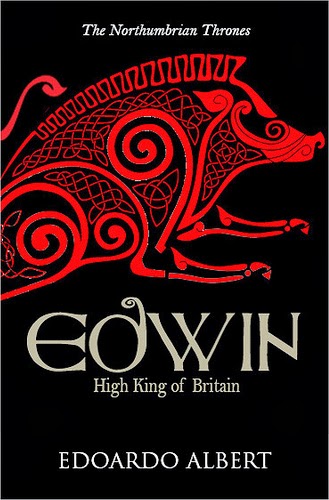
Dianna Gunn, intern par excellence, asked me to write something about what I’ve been up to since appearing in the magazine (since you ask, the Revolution and Exploration issues) and it just so happens that I have my first novel due out next March.
It’s only taken me thirty-two years to get to this stage! Anyway, Edwin: High King of Britain was a result of the research that went into writing my book, Northumbria: the Lost Kingdom, on the history and archaeology of one of the key Dark Ages kingdoms of England (although, of course, England didn’t actually exist then). The story of the three successive Northumbrian kings whom the Venerable Bede accords the title bretwalda – that is High King of Britain – seemed so extraordinary I was astonished that nobody had written about them before. So I decided to.
One of the advantages of doing things this way round was that I had already done most of the historical research necessary – it was just a matter of trying to bring it all to life. Hopefully I have done so, it would be a grave discourtesy to some extraordinary but all but forgotten people if I haven’t. The book will be published by Lion Fiction in March. The publishers, spotting a link, have given the trilogy the overarching title of The Northumbrian Thrones but in truth, there really was something very like a game for thrones going on in the bloody, violent but extraordinarily creative kingdoms of seventh-century Britain. The foundations of England were laid, amid historical darkness, in a time when the only certainty for a king was a violent death. And yet, perhaps because of the very precariousness of the times, these men and women created things, such as the Lindisfarne Gospels and the Sutton Hoo jewellery, of quite extraordinary beauty. While in some ways the kings of the Early Medieval Period (the preferred academic term today) were like Mafia dons, enforcing protection rackets on their subjects, yet the culture they created and their sensitivity to language were as far removed from the profane and profanity filled life of a John Gotti as it is possible to be.
To do such times and such people justice is no small task. I can hardly hope to have succeeded, but at least I hope not to have failed.
Edoardo Albert is, on paper at least, a surprisingly exotic creature: Italian, Sinhala and Tamil by background, he grew up in London among the polyglot children of immigrants (it was only when he went to university that he actually got to know any English people). He avers that he once reduced a reader to helpless, hysterical laughter. Unfortunately, the piece that did so was a lonely-hearts ad.
Find Edoardo Albert’s books (he’s particularly proud of Northumbria: The Lost Kingdom) and stories via his website although the lonely-hearts ad will not be making an appearance in the foreseeable future. Connect with him through his blog, Twitter or Facebook.
In honour of Penumbra’s second birthday, and without the slightest (well, hardly) intention to ingratiate myself with its editors, may I say that this is undoubtedly the friendliest and most professional magazine I’ve dealt with. Penumbra pays well, looks marvellous, responds quickly and, apart from publishing my stories, provides me with this free soapbox to advertise myself and my wares. What’s not to like? And, more importantly, long may it continue, particularly if it publishes more of my stories.
Dianna Gunn, intern par excellence, asked me to write something about what I’ve been up to since appearing in the magazine (since you ask, the Revolution and Exploration issues) and it just so happens that I have my first novel due out next March.
It’s only taken me thirty-two years to get to this stage! Anyway, Edwin: High King of Britain was a result of the research that went into writing my book, Northumbria: the Lost Kingdom, on the history and archaeology of one of the key Dark Ages kingdoms of England (although, of course, England didn’t actually exist then). The story of the three successive Northumbrian kings whom the Venerable Bede accords the title bretwalda – that is High King of Britain – seemed so extraordinary I was astonished that nobody had written about them before. So I decided to. One of the advantages of doing things this way round was that I had already done most of the historical research necessary – it was just a matter of trying to bring it all to life. Hopefully I have done so, it would be a grave discourtesy to some extraordinary but all but forgotten people if I haven’t. The book will be published by Lion Fiction in March. The publishers, spotting a link, have given the trilogy the overarching title of The Northumbrian Thrones but in truth, there really was something very like a game for thrones going on in the bloody, violent but extraordinarily creative kingdoms of seventh-century Britain. The foundations of England were laid, amid historical darkness, in a time when the only certainty for a king was a violent death. And yet, perhaps because of the very precariousness of the times, these men and women created things, such as the Lindisfarne Gospels and the Sutton Hoo jewellery, of quite extraordinary beauty. While in some ways the kings of the Early Medieval Period (the preferred academic term today) were like Mafia dons, enforcing protection rackets on their subjects, yet the culture they created and their sensitivity to language were as far removed from the profane and profanity filled life of a John Gotti as it is possible to be.
To do such times and such people justice is no small task. I can hardly hope to have succeeded, but at least I hope not to have failed.
Edoardo Albert is, on paper at least, a surprisingly exotic creature: Italian, Sinhala and Tamil by background, he grew up in London among the polyglot children of immigrants (it was only when he went to university that he actually got to know any English people). He avers that he once reduced a reader to helpless, hysterical laughter. Unfortunately, the piece that did so was a lonely-hearts ad.
Find Edoardo Albert’s books (he’s particularly proud of Northumbria: The Lost Kingdom) and stories via his website although the lonely-hearts ad will not be making an appearance in the foreseeable future. Connect with him through his blog, Twitter or Facebook.
Thursday, October 17, 2013
How I Became a Writer
by BJ Leesman
It was by accident.
Don't remember much…just the sound of a crash, then total darkness.
I woke up to my teenager screaming, "What's happening?"
Our SUV spun in circles and jerked to a stop. The satellite radio hung off the dashboard at a crazy angle. I tried to put it back but it wouldn't stay.
Across the intersection, the car we never saw or heard moved in silence. Air bags deployed, it rolled to a slow stop on someone's front lawn.
"My head, my head..." Blood ran down Stewart's face.
Fumbling for my phone, I called my husband. "Paul, we've been in an accident. It's bad."
My family arrived before the ambulance rushed my son to the trauma hospital. I tagged along and almost passed out next to his stretcher. Family took Stewart home around midnight diagnosed with a concussion.
In the packed waiting room, I sat alone cradling my left arm against my chest. Around 2 am, Paul returned and convinced the nurse to give me two aspirin. My wrist began to curl at an odd angle as dawn lit up the faces of the sick and injured.
Thirteen hours after the ambulance ride, I saw an ER Doctor.
"No, you're wrong. My right hand's not broken, it's my left wrist."
"You have seven breaks in your left wrist and hand." The doctor pointed to the X-ray. "The break on your right hand looks bad. If this was the only break, you'd have the same kind of cast on your right arm. But you need to be able to use one of your hands."
My husband pushed me in a wheelchair to his car. An old-fashioned plaster cast from my fingers to my armpit kept my left arm stationary. A shorter removable cast immobilized my right hand.
On the long ride home, I watched the light change as the shadow of the Sandia Mountains receded from the foothills. Imagining how to capture the scene in a watercolor, an idea fractured the picture in my mind. I panicked.
My career as an artist is over. I'm doomed. I'll never be able to paint again. It doesn't matter about the art shows in New York, Chicago, and LA. What do I do now?
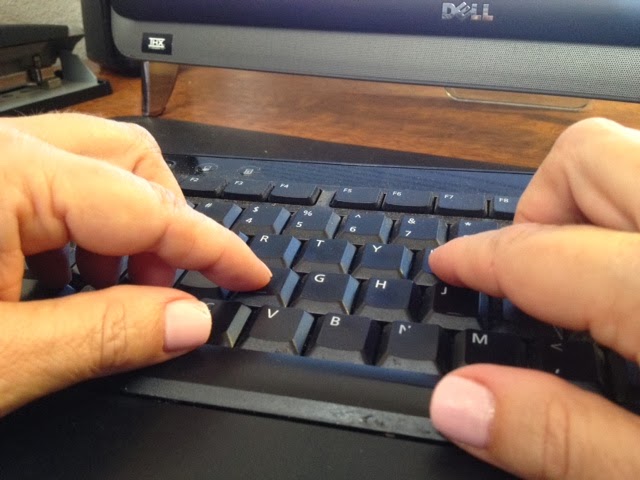
Months later I sat in front of my computer wearing purple and blue casts. It took weeks to figure out how to type again. I learned to punch the keyboard with my index fingers while resting both casts on a pillow and balancing ice packs on the back of my wrists.
Bored, restless and bored again...I got an idea for a story and haven't stopped writing since. And that's how I became a speculative fiction writer. It wasn't for a couple of bad breaks, I'd still be painting.
Read BJ Leesman's story The Little Man Who Wasn't There in the October issue of Penumbra EMag.
It was by accident.
Don't remember much…just the sound of a crash, then total darkness.
I woke up to my teenager screaming, "What's happening?"
Our SUV spun in circles and jerked to a stop. The satellite radio hung off the dashboard at a crazy angle. I tried to put it back but it wouldn't stay.
Across the intersection, the car we never saw or heard moved in silence. Air bags deployed, it rolled to a slow stop on someone's front lawn.
"My head, my head..." Blood ran down Stewart's face.
Fumbling for my phone, I called my husband. "Paul, we've been in an accident. It's bad."
My family arrived before the ambulance rushed my son to the trauma hospital. I tagged along and almost passed out next to his stretcher. Family took Stewart home around midnight diagnosed with a concussion.
In the packed waiting room, I sat alone cradling my left arm against my chest. Around 2 am, Paul returned and convinced the nurse to give me two aspirin. My wrist began to curl at an odd angle as dawn lit up the faces of the sick and injured.
Thirteen hours after the ambulance ride, I saw an ER Doctor.
"No, you're wrong. My right hand's not broken, it's my left wrist."
"You have seven breaks in your left wrist and hand." The doctor pointed to the X-ray. "The break on your right hand looks bad. If this was the only break, you'd have the same kind of cast on your right arm. But you need to be able to use one of your hands."
My husband pushed me in a wheelchair to his car. An old-fashioned plaster cast from my fingers to my armpit kept my left arm stationary. A shorter removable cast immobilized my right hand.
On the long ride home, I watched the light change as the shadow of the Sandia Mountains receded from the foothills. Imagining how to capture the scene in a watercolor, an idea fractured the picture in my mind. I panicked.
My career as an artist is over. I'm doomed. I'll never be able to paint again. It doesn't matter about the art shows in New York, Chicago, and LA. What do I do now?
Months later I sat in front of my computer wearing purple and blue casts. It took weeks to figure out how to type again. I learned to punch the keyboard with my index fingers while resting both casts on a pillow and balancing ice packs on the back of my wrists.
Bored, restless and bored again...I got an idea for a story and haven't stopped writing since. And that's how I became a speculative fiction writer. It wasn't for a couple of bad breaks, I'd still be painting.
Read BJ Leesman's story The Little Man Who Wasn't There in the October issue of Penumbra EMag.
Tuesday, October 15, 2013
Cooking With Musa is FREE!
Our cookbook is a collection of
80 tasty recipes provided by 39 creative Musa Authors!
To continue our month long celebration, Musa is offering all our readers a free copy of Cooking with Musa with the purchase of any book. This is a $2.99 savings! Simply add the cookbook to your cart. At checkout the savings automatically appears on your invoice.
For our Speculative Fiction fans - Penumbra EMAg is included in this fantastic offer.
And another great savings especially for you
This week all GLBT books are discounted 30%!
Click Musa Publishing for a wide selection of impressive reads and your free cookbook.
Thursday, October 10, 2013
PARTY TIME FOR ONE AND ALL
With a month long party to celebrate
Musa Publishing's
second birthday!
Join us from October 1 - 31
for 30% off top selling books.
Oct. 1 - 7 Aurora Regency & Clio
Oct. 8 - 14 Calliope/FEA/Wiccan Haus
Oct. 15 - 21 Erato (GLBT)
Click Musa Publishing for exciting books.
Enjoy our Blog with fun topics and fantastic recipes.
Speculative fiction fans be sure to read Penumbra eMag Blog.
And of course, check us out on Facebook.
Tuesday, October 8, 2013
Gary K. Wolf Wants YOU!
by Liz DeJesus
Are you a fan of the movie Who Framed Roger Rabbit? Did you know that this movie was based on a novel titled Who Censored Roger Rabbit? and that it was written by a novelist named Gary K. Wolf?
Do you have questions you’d like to ask the author? If so, this is your chance! I’m honored to interview Gary K. Wolf and ask him questions about his writing and his upcoming novel Who Wacked Roger Rabbit?, but I wanted to give the fans a chance for input.
For example:
What does Roger Rabbit have for breakfast in the morning?
Does Jessica Rabbit always look that good?
Does she have a bad hair day?
What does Eddie Valiant do on his days off?
The questions will be sent to Gary, and maybe your question will get picked! For what, you ask? Not only to be answered but for a chance to win a giveaway once the interview is posted.
Hmmm…interview, fan questions answered, and a giveaway. What’s not to love? Please post your questions right here in the Comments section.
Gary K. Wolf wrote his first short story when he was in the third grade. The teacher told the students to write about their summer vacation. Gary wrote about his trip to the moon! He always did have an over active imagination.
He's gone back to the moon many times since. Also to places in the galaxy far, far beyond that.
To date he's written many short stories and nine novels.
Gary is well known for two kinds of writing. His science fiction novels include Killerbowl, A Generation Removed, The Resurrectionist, Space Vulture an old-school, throwback, pulp science fiction novel which he co-wrote with his childhood friend Catholic Archbishop John J. Myers. His newest is newest Typical Day. Both Killerbowl and The Resurrectionist are currently in production as major motion pictures.
His other kind of writing isn't as easily categorized. Gary calls it fantasy fiction. He was told early on by a marketing executive at a major publishing house that this kind of writing wouldn't sell. Because there was no place for it on the bookstore shelves. It's not a regular novel, not crime, not science fiction, not romance. Gary asked the executive what he would do if he got Gulliver's Travels, The Wizard of Oz, or Alice In Wonderland? He thought for a moment and said he couldn't sell those either.
He was wrong. Who Censored Roger Rabbit? did indeed get published. It went through sixteen printings, and became a visual reality in Disney/Spielberg's $950 million blockbuster film Who Framed Roger Rabbit? The film won four Academy Awards and the Hugo Award. Walt Disney Pictures has also purchased film rights to the sequel novel Who P-p-p-plugged Roger Rabbit?
One of my newest novels The Late Great Show! is solidly in the Roger Rabbit style fantasy category. Those who enjoy Toontown tales will most assuredly like The Late Great Show!, too.
Gary K. Wolf currently lives in Boston, but regularly travels around the world.
Liz DeJesus was born on the tiny island of Puerto Rico. She is a novelist and a poet. She has been writing for as long as she was capable of holding a pen. She is the author of the novel Nina (Blu Phi'er Publishing, October 2007), The Jackets (Arte Publico Press, March 31st 2011) First Frost (Musa Publishing, June 22nd 2012) and Glass Frost (Musa Publishing, July 2013).
She is also a member of The Written Remains Writers Guild.
Liz is currently working on a new novel.
Are you a fan of the movie Who Framed Roger Rabbit? Did you know that this movie was based on a novel titled Who Censored Roger Rabbit? and that it was written by a novelist named Gary K. Wolf?
Do you have questions you’d like to ask the author? If so, this is your chance! I’m honored to interview Gary K. Wolf and ask him questions about his writing and his upcoming novel Who Wacked Roger Rabbit?, but I wanted to give the fans a chance for input.
For example:
What does Roger Rabbit have for breakfast in the morning?
Does Jessica Rabbit always look that good?
Does she have a bad hair day?
What does Eddie Valiant do on his days off?
The questions will be sent to Gary, and maybe your question will get picked! For what, you ask? Not only to be answered but for a chance to win a giveaway once the interview is posted.
Hmmm…interview, fan questions answered, and a giveaway. What’s not to love? Please post your questions right here in the Comments section.
Gary K. Wolf wrote his first short story when he was in the third grade. The teacher told the students to write about their summer vacation. Gary wrote about his trip to the moon! He always did have an over active imagination.
He's gone back to the moon many times since. Also to places in the galaxy far, far beyond that.
To date he's written many short stories and nine novels.
Gary is well known for two kinds of writing. His science fiction novels include Killerbowl, A Generation Removed, The Resurrectionist, Space Vulture an old-school, throwback, pulp science fiction novel which he co-wrote with his childhood friend Catholic Archbishop John J. Myers. His newest is newest Typical Day. Both Killerbowl and The Resurrectionist are currently in production as major motion pictures.
His other kind of writing isn't as easily categorized. Gary calls it fantasy fiction. He was told early on by a marketing executive at a major publishing house that this kind of writing wouldn't sell. Because there was no place for it on the bookstore shelves. It's not a regular novel, not crime, not science fiction, not romance. Gary asked the executive what he would do if he got Gulliver's Travels, The Wizard of Oz, or Alice In Wonderland? He thought for a moment and said he couldn't sell those either.
He was wrong. Who Censored Roger Rabbit? did indeed get published. It went through sixteen printings, and became a visual reality in Disney/Spielberg's $950 million blockbuster film Who Framed Roger Rabbit? The film won four Academy Awards and the Hugo Award. Walt Disney Pictures has also purchased film rights to the sequel novel Who P-p-p-plugged Roger Rabbit?
One of my newest novels The Late Great Show! is solidly in the Roger Rabbit style fantasy category. Those who enjoy Toontown tales will most assuredly like The Late Great Show!, too.
Gary K. Wolf currently lives in Boston, but regularly travels around the world.
Liz DeJesus was born on the tiny island of Puerto Rico. She is a novelist and a poet. She has been writing for as long as she was capable of holding a pen. She is the author of the novel Nina (Blu Phi'er Publishing, October 2007), The Jackets (Arte Publico Press, March 31st 2011) First Frost (Musa Publishing, June 22nd 2012) and Glass Frost (Musa Publishing, July 2013).
She is also a member of The Written Remains Writers Guild.
Liz is currently working on a new novel.
Tuesday, October 1, 2013
RABBIT FEVER
Roger Rabbit: A Cultural Impact, Part II by Andrea Blundell
In Part 1 of Roger Rabbit: A Cultural Impact, we looked at the effect Roger Rabbit had on the film industry. Now we come out from behind the lens of movie-making and look instead at his influence on society.
After the huge success of the film, it didn’t take long for Roger Rabbit fever to take hold. And what was not to love? A zany hare with a zest for life—you couldn’t help but root for the guy.

First there was the typical movie memorabilia—pins, clocks, beach towels, video games, and even a board game called Dip Flip. Children begged their parents to buy the latest Roger Rabbit gear. But it didn’t stop there. As the Roger Rabbit craze grew, so did commercial efforts to cash in on it.
In1990, Disney created a comic book series called Roger Rabbit, which ran for eighteen issues and went on to spawn a spin-off series called Roger Rabbit’s Toontown. There were graphic novels, children’s books, and activity books. And now, proof that Roger and Toontown’s legacy lives on, there is a growing community of fan fiction.
In 1994, Disneyland got in on the action, adding a new ride in Mickey’s Toontown called Roger Rabbit’s Car Toon Spin. Here, fans can go through the streets of Toontown and narrowly escape being “dipped.” That same year, McDonald’s had a Happy Meal toy of Roger Rabbit in Benny the Cab.
Aside from the commercialism, Roger Rabbit made a rabbit-shaped hole in our hearts as well. It is almost a guarantee that you can mention Roger Rabbit in a room, and more than one person will respond with, “I loved Roger Rabbit as a child!” or “I watched that movie over and over again when it came out.” Both children and adults loved the film, which is part of what makes it so iconic. Eighties children walked around mimicking Roger Rabbit, drawn into the perfect child’s fantasy of a world with “real” cartoons. For many adults, including Celina Summers, one of Musa’s founders, it was the first VHS tape they bought.
But if you are still questioning the cultural impact of Roger Rabbit, look no further. As the saying goes, the proof is in the pudding. And in this case, the pudding is none other than a Roger Rabbit dance move. Yes, that’s right. There is a Roger Rabbit dance. You may not even know that you’ve seen it, but chances are that you will recognize the move. Just check out this online instructional video for a refresher.
And now twenty-five years have passed. The Eighties kids have grown up to have kids of their own, and the Eighties adults have grandkids of their own. A new generation is around to share in the fun and humor of the Roger Rabbit phenomenon, and they are enjoying it just as much as those before them. Four-year-olds are watching raptly alongside their grandparents, hiding their eyes at some of the more intense scenes, and giggling at the sillier ones. Teenagers are snickering behind their hands as they begin to understand some of the more adult-oriented humor.
Roger Rabbit has proven he can stand the test of time, and his fans are ready for more.
Luckily his creator, Gary K. Wolf, is ready to deliver more with his latest book about Roger and his Toontown pals. Who Wacked Roger Rabbit? promises more of the hare-raising antics and mystery that we’ve all come to expect from Roger, plus a host of new Toons that will keep it fresh.
So whether you are young or old, new to Roger Rabbit or experienced in his p-p-p-playful mannerisms, you can surely appreciate the cultural impact he’s had on society. And who knows? Maybe the Roger Rabbit dance will be making a comeback to a dance floor near you.
Gary K. Wolf’s latest novel Who Wacked Roger Rabbit? will be available for pre-order from Musa Publishing on October 22, 2013, in digital-only format.
Photographs courtesy of AllCollectors.com
Cover art courtesy of Kelly Shorten and Jacques Muller
In Part 1 of Roger Rabbit: A Cultural Impact, we looked at the effect Roger Rabbit had on the film industry. Now we come out from behind the lens of movie-making and look instead at his influence on society.
After the huge success of the film, it didn’t take long for Roger Rabbit fever to take hold. And what was not to love? A zany hare with a zest for life—you couldn’t help but root for the guy.

First there was the typical movie memorabilia—pins, clocks, beach towels, video games, and even a board game called Dip Flip. Children begged their parents to buy the latest Roger Rabbit gear. But it didn’t stop there. As the Roger Rabbit craze grew, so did commercial efforts to cash in on it.
In1990, Disney created a comic book series called Roger Rabbit, which ran for eighteen issues and went on to spawn a spin-off series called Roger Rabbit’s Toontown. There were graphic novels, children’s books, and activity books. And now, proof that Roger and Toontown’s legacy lives on, there is a growing community of fan fiction.
In 1994, Disneyland got in on the action, adding a new ride in Mickey’s Toontown called Roger Rabbit’s Car Toon Spin. Here, fans can go through the streets of Toontown and narrowly escape being “dipped.” That same year, McDonald’s had a Happy Meal toy of Roger Rabbit in Benny the Cab.
Aside from the commercialism, Roger Rabbit made a rabbit-shaped hole in our hearts as well. It is almost a guarantee that you can mention Roger Rabbit in a room, and more than one person will respond with, “I loved Roger Rabbit as a child!” or “I watched that movie over and over again when it came out.” Both children and adults loved the film, which is part of what makes it so iconic. Eighties children walked around mimicking Roger Rabbit, drawn into the perfect child’s fantasy of a world with “real” cartoons. For many adults, including Celina Summers, one of Musa’s founders, it was the first VHS tape they bought.
But if you are still questioning the cultural impact of Roger Rabbit, look no further. As the saying goes, the proof is in the pudding. And in this case, the pudding is none other than a Roger Rabbit dance move. Yes, that’s right. There is a Roger Rabbit dance. You may not even know that you’ve seen it, but chances are that you will recognize the move. Just check out this online instructional video for a refresher.
And now twenty-five years have passed. The Eighties kids have grown up to have kids of their own, and the Eighties adults have grandkids of their own. A new generation is around to share in the fun and humor of the Roger Rabbit phenomenon, and they are enjoying it just as much as those before them. Four-year-olds are watching raptly alongside their grandparents, hiding their eyes at some of the more intense scenes, and giggling at the sillier ones. Teenagers are snickering behind their hands as they begin to understand some of the more adult-oriented humor.
Roger Rabbit has proven he can stand the test of time, and his fans are ready for more.
Luckily his creator, Gary K. Wolf, is ready to deliver more with his latest book about Roger and his Toontown pals. Who Wacked Roger Rabbit? promises more of the hare-raising antics and mystery that we’ve all come to expect from Roger, plus a host of new Toons that will keep it fresh.
So whether you are young or old, new to Roger Rabbit or experienced in his p-p-p-playful mannerisms, you can surely appreciate the cultural impact he’s had on society. And who knows? Maybe the Roger Rabbit dance will be making a comeback to a dance floor near you.
Gary K. Wolf’s latest novel Who Wacked Roger Rabbit? will be available for pre-order from Musa Publishing on October 22, 2013, in digital-only format.
Photographs courtesy of AllCollectors.com
Cover art courtesy of Kelly Shorten and Jacques Muller
Thursday, September 19, 2013
Roger Rabbit: A Cultural Impact
Part 1 by Andrea Blundell
In 1988, a little-known cartoon character got his big break. He wasn’t new to the world—after all, he’d been created by author Gary K. Wolf in the 1981 novel Who Censored Roger Rabbit?—but he'd finally “made it” with a starring role in the Disney movie Who Framed Roger Rabbit.
And now, twenty-five years after the release of the movie that made Roger Rabbit a household name, we can definitively look back and see the true cultural impact this irritatingly loveable rabbit has had on us. Part I of this article will look at the impact on the film industry, while Part II will examine the social impact of the film.
The most obvious and immediate impact was in the world of animation and film making. Who Framed Roger Rabbit was heralded as a groundbreaking film because of the unique combinations it presented—traditional animation and live action, Toons and humans, Disney, and Warner Brothers.
Mixing animation and live action had been around for decades before Who Framed Roger Rabbit. In 1919, Max Fleischer began producing Out of the Inkwell, a series of shorts in which he interacted with the animated characters. Then there were Disney’s Alice Comedies, shorts which featured a live action girl and an animated cat in a cartoon world. There was Song of the South in 1946. Mary Poppins in 1964. And the list goes on.
So why the big fuss over Who Framed Roger Rabbit?
In the 1970s and 80s, Disney appeared to have lost its edge in animation, and animation in general had slowly degraded to cheap and rushed television cartoons with a primary audience of children. Animation studios, including Disney, were experiencing disappointing box office sales on their animated films and downsizing as a result.
But Who Framed Roger Rabbit changed all of that. Never before had there been a film that so seamlessly blended hand-drawn animation and live action.
Roger Ebert, in his 4-star review of the film in 1988, credits the film’s success to a ‘breakthrough in craftsmanship,’ calling it “the first film to convincingly combine real actors and animated cartoon characters in the same space in the same time and make it look real.”
Cartoons had shadows. They shook hands with real actors. They walked from cartoon sets into the real world. These combinations no doubt led to the numerous awards the film received, which included four prestigious Oscars in sound effects, visual effects, film editing, and animation direction.
The film also proved that animation could sell to adults as well as children. Whereas television cartoons were geared only toward children, Who Framed Roger Rabbit combined cartoons, humor, and mystery into one show that was able to engage and entertain the whole family. As proof of this, the film was also awarded the less prestigious but still impressive Kids’ Choice Award for Favorite Movie. The film was clearly a success, both behind the scenes and in front of them.
Because of its success at the box office, Who Framed Roger Rabbit is largely credited with the resurgence of animation. Films like Toy Story and Avatar, which are now seen as the pinnacle of animation and CGI, may never have existed without the technology that resulted from making the film, and the renewed interest in animation that followed.
But let’s not forget that, while it was Disney and Steven Spielberg who created the box office hit, it was Gary K. Wolf who first imagined the idea of Roger Rabbit and Toontown, and who dreamed up a world where Toons and humans lived and worked side by side.
In the upcoming Part II, we will step away from the film industry and look at the cultural impact that Roger Rabbit had on society.
Stay ‘toon’ed!
Gary K. Wolf’s latest novel Who Wacked Roger Rabbit? will be available for pre-order from Musa Publishing on October 22, 2013, in digital-only format.
In 1988, a little-known cartoon character got his big break. He wasn’t new to the world—after all, he’d been created by author Gary K. Wolf in the 1981 novel Who Censored Roger Rabbit?—but he'd finally “made it” with a starring role in the Disney movie Who Framed Roger Rabbit.
And now, twenty-five years after the release of the movie that made Roger Rabbit a household name, we can definitively look back and see the true cultural impact this irritatingly loveable rabbit has had on us. Part I of this article will look at the impact on the film industry, while Part II will examine the social impact of the film.
The most obvious and immediate impact was in the world of animation and film making. Who Framed Roger Rabbit was heralded as a groundbreaking film because of the unique combinations it presented—traditional animation and live action, Toons and humans, Disney, and Warner Brothers.
Mixing animation and live action had been around for decades before Who Framed Roger Rabbit. In 1919, Max Fleischer began producing Out of the Inkwell, a series of shorts in which he interacted with the animated characters. Then there were Disney’s Alice Comedies, shorts which featured a live action girl and an animated cat in a cartoon world. There was Song of the South in 1946. Mary Poppins in 1964. And the list goes on.
So why the big fuss over Who Framed Roger Rabbit?
In the 1970s and 80s, Disney appeared to have lost its edge in animation, and animation in general had slowly degraded to cheap and rushed television cartoons with a primary audience of children. Animation studios, including Disney, were experiencing disappointing box office sales on their animated films and downsizing as a result.
But Who Framed Roger Rabbit changed all of that. Never before had there been a film that so seamlessly blended hand-drawn animation and live action.
Roger Ebert, in his 4-star review of the film in 1988, credits the film’s success to a ‘breakthrough in craftsmanship,’ calling it “the first film to convincingly combine real actors and animated cartoon characters in the same space in the same time and make it look real.”
Cartoons had shadows. They shook hands with real actors. They walked from cartoon sets into the real world. These combinations no doubt led to the numerous awards the film received, which included four prestigious Oscars in sound effects, visual effects, film editing, and animation direction.
The film also proved that animation could sell to adults as well as children. Whereas television cartoons were geared only toward children, Who Framed Roger Rabbit combined cartoons, humor, and mystery into one show that was able to engage and entertain the whole family. As proof of this, the film was also awarded the less prestigious but still impressive Kids’ Choice Award for Favorite Movie. The film was clearly a success, both behind the scenes and in front of them.Because of its success at the box office, Who Framed Roger Rabbit is largely credited with the resurgence of animation. Films like Toy Story and Avatar, which are now seen as the pinnacle of animation and CGI, may never have existed without the technology that resulted from making the film, and the renewed interest in animation that followed.
But let’s not forget that, while it was Disney and Steven Spielberg who created the box office hit, it was Gary K. Wolf who first imagined the idea of Roger Rabbit and Toontown, and who dreamed up a world where Toons and humans lived and worked side by side.
In the upcoming Part II, we will step away from the film industry and look at the cultural impact that Roger Rabbit had on society.
Stay ‘toon’ed!
Gary K. Wolf’s latest novel Who Wacked Roger Rabbit? will be available for pre-order from Musa Publishing on October 22, 2013, in digital-only format.
Thursday, September 12, 2013
Daredevil Author
by Andrea Colasanto
Sonny Whitelaw.
Yep, that Sonny Whitelaw. Author of the Stargate novels, winner of the Draco Award—and soon to be a Musa published author with a new edition of The Rhesus Factor, available December 20th!
When Sonny’s not writing, she can be found exploring all the wonders New Zealand has to offer. Here she is being awesome, exploring caverns on Fox Glacier.
Working with Musa will give Sonny a wider audience in an e-publishing format. On her website, she mentions her Stargate novels are not available in New Zealand, where she resides. Musa Publishing will ensure that The Rhesus Factor will be available at the fingertips of all who wish to access it, anywhere!
Below is an excerpt from an interview with Sonny—you can read it in its entirety in the upcoming October issue of Penumbra EMag, so be on the lookout!
Sonny, were you a fan of the Stargate television series before writing the proposal for the novel?
Honestly? No. Not because I didn’t like it, but because I didn't see a television for two decades (aside from the odd trips overseas). But when I saw the movie, I loved the premise because back in the 1970s, I’d been intrigued by how the nineteenth century alien-gods-built-the-Egyptian-pyramids notion had escaped eighteenth and early nineteenth century science fiction and insinuated itself into pop culture and pseudo science. Back then, I thought it would make a great modern science fiction tale (after all, James Cameron turned Pocahontas into Avatar). The storytelling potential of Stargate was unlimited because it could capture every mythology from every culture for the past 10,000 years of human history, plus any number of aliens on unlimited planets. So yeah, when offered me the chance to play in their sandpit, I leaped at the opportunity.
Why do you think speculative fiction is so successful?
I wrote my second Masters thesis, The Attraction of Sloppy Nonsense, on that very question! (If by any chance anyone is vaguely interested, just Google the title). By its nature, speculative fiction explores and often challenges the human condition. It pulls apart what we believe, including our mythologies, and exposes the potential moral quagmires that science and technology are creating. That’s the storytelling side of speculative fiction. When it comes to movies and television, mind-blowing special effects breathe life into stories that many people would never normally read, if only because they don’t have time. Gaming takes it a step further: take great stories, add science fiction and a user interface, and even the most unadventurous can become immersed in fabulous tales set in realistic worlds without leaving the safety of their room.
As an author, what is your take on e-publishing and what it means for a changing market?
E-publishing has certainly come of age. I haven’t read the latest statistics but the last time I looked, around 60% of sales through some of the big name international print publishers were e-books. And many are struggling to compete with e-publishers who’ve been around for a while and have embraced the market and technology and run with it. Indeed, a top New Zealand publisher has just been forced to close, citing competitive pressure from e-publishers, and particularly self-publishing. While self-publishing is certainly taking a chunk of the market by virtue of the sheer volume of works out there, there is little or no quality control in the finished product. Readers quickly learn that if they want a quality product, they’ll buy from quality e-publishers.
What can you tell us about the upcoming The Rhesus Factor?
I'll let two reviewers explain:
Cause and effect, and for every action there is an equal and opposite reaction. Those principles are commonplace and indisputable. The Rhesus Factor by Sonny Whitelaw demonstrates with painful clarity that we ignore cause and effect at our peril. Perhaps the most frightening book of recent years, Whitelaw's thriller builds an all too plausible scenario of what might happen should our ecosphere decide to apply an equal and opposite reaction to our actions.
Fast-paced and grounded in solid research, the book charts not only the breakdown of ecosystems in the wake of global warming, but the breakdown of society that will be an inescapable result. It is precisely in the devastating detail of the wreckage of everyday life that the book is at its most explosive. While Joe Voter may dismiss global warming as a theory that doesn't affect him, the very real prospect of losing home, livelihood, educational facilities and medical care is bound to strike a chord. - Dr. Sabine C Bauer
Although fiction, I now know that some of the events in the book could happen in the future. The effects of global warming are evident, as is how this has put stress on the world, leading to world events that include terrorism, environmental vandalism and a lifestyle that we do not want for our future generations. I encourage all members to buy this book when it becomes available. - Barbara Stone MP for Queensland, Australia. (Excerpt from speech to Queensland State Parliament).
~~~~~~~~~~~~~~~~~~~~~~~~~~~~~~~~~~~~~~~~~~~~~~~~~~~~~~~~~~~~~~~~~~~~~~~~~~~~
Check back again for more information on the new edition of The Rhesus Factor by Sonny Whitelaw releasing December 20th!
Sonny Whitelaw.
Yep, that Sonny Whitelaw. Author of the Stargate novels, winner of the Draco Award—and soon to be a Musa published author with a new edition of The Rhesus Factor, available December 20th!
When Sonny’s not writing, she can be found exploring all the wonders New Zealand has to offer. Here she is being awesome, exploring caverns on Fox Glacier.
Working with Musa will give Sonny a wider audience in an e-publishing format. On her website, she mentions her Stargate novels are not available in New Zealand, where she resides. Musa Publishing will ensure that The Rhesus Factor will be available at the fingertips of all who wish to access it, anywhere!
Below is an excerpt from an interview with Sonny—you can read it in its entirety in the upcoming October issue of Penumbra EMag, so be on the lookout!
Sonny, were you a fan of the Stargate television series before writing the proposal for the novel?
Honestly? No. Not because I didn’t like it, but because I didn't see a television for two decades (aside from the odd trips overseas). But when I saw the movie, I loved the premise because back in the 1970s, I’d been intrigued by how the nineteenth century alien-gods-built-the-Egyptian-pyramids notion had escaped eighteenth and early nineteenth century science fiction and insinuated itself into pop culture and pseudo science. Back then, I thought it would make a great modern science fiction tale (after all, James Cameron turned Pocahontas into Avatar). The storytelling potential of Stargate was unlimited because it could capture every mythology from every culture for the past 10,000 years of human history, plus any number of aliens on unlimited planets. So yeah, when offered me the chance to play in their sandpit, I leaped at the opportunity.
Why do you think speculative fiction is so successful?
I wrote my second Masters thesis, The Attraction of Sloppy Nonsense, on that very question! (If by any chance anyone is vaguely interested, just Google the title). By its nature, speculative fiction explores and often challenges the human condition. It pulls apart what we believe, including our mythologies, and exposes the potential moral quagmires that science and technology are creating. That’s the storytelling side of speculative fiction. When it comes to movies and television, mind-blowing special effects breathe life into stories that many people would never normally read, if only because they don’t have time. Gaming takes it a step further: take great stories, add science fiction and a user interface, and even the most unadventurous can become immersed in fabulous tales set in realistic worlds without leaving the safety of their room.
As an author, what is your take on e-publishing and what it means for a changing market?
E-publishing has certainly come of age. I haven’t read the latest statistics but the last time I looked, around 60% of sales through some of the big name international print publishers were e-books. And many are struggling to compete with e-publishers who’ve been around for a while and have embraced the market and technology and run with it. Indeed, a top New Zealand publisher has just been forced to close, citing competitive pressure from e-publishers, and particularly self-publishing. While self-publishing is certainly taking a chunk of the market by virtue of the sheer volume of works out there, there is little or no quality control in the finished product. Readers quickly learn that if they want a quality product, they’ll buy from quality e-publishers.
What can you tell us about the upcoming The Rhesus Factor?
I'll let two reviewers explain:
Cause and effect, and for every action there is an equal and opposite reaction. Those principles are commonplace and indisputable. The Rhesus Factor by Sonny Whitelaw demonstrates with painful clarity that we ignore cause and effect at our peril. Perhaps the most frightening book of recent years, Whitelaw's thriller builds an all too plausible scenario of what might happen should our ecosphere decide to apply an equal and opposite reaction to our actions.
Fast-paced and grounded in solid research, the book charts not only the breakdown of ecosystems in the wake of global warming, but the breakdown of society that will be an inescapable result. It is precisely in the devastating detail of the wreckage of everyday life that the book is at its most explosive. While Joe Voter may dismiss global warming as a theory that doesn't affect him, the very real prospect of losing home, livelihood, educational facilities and medical care is bound to strike a chord. - Dr. Sabine C Bauer
Although fiction, I now know that some of the events in the book could happen in the future. The effects of global warming are evident, as is how this has put stress on the world, leading to world events that include terrorism, environmental vandalism and a lifestyle that we do not want for our future generations. I encourage all members to buy this book when it becomes available. - Barbara Stone MP for Queensland, Australia. (Excerpt from speech to Queensland State Parliament).
~~~~~~~~~~~~~~~~~~~~~~~~~~~~~~~~~~~~~~~~~~~~~~~~~~~~~~~~~~~~~~~~~~~~~~~~~~~~
Check back again for more information on the new edition of The Rhesus Factor by Sonny Whitelaw releasing December 20th!
Tuesday, August 20, 2013
The Actor Behind the Pencil
by Andrea Blundell
You’ve seen Jacques Muller on the silver screen. Not his face per se, but his characters’ faces. You see, Jacques is a legendary character animator who’s worked on such films as Space Jam, The Rescuers Down Under, Star Wars Episode I: The Phantom Menace, and what he’s most known for, the Oscar-winning film Who Framed Roger Rabbit? Musa Publishing is excited to announce that Jacques is revisiting Roger Rabbit and Toontown after twenty-five years to design the cover art for Gary K. Wolf’s upcoming release, Who Wacked Roger Rabbit? And in the process, he’s telling us all about what it’s like to be a character animator, and what it was like to work for Disney and be a part of Who Framed Roger Rabbit?
Jacques still remembers going to the studio in Camden Town London that first day on the job of Who Framed Roger Rabbit? and getting his first glimpse of the work-in-progress film. “[Don Hahn] invited me to have a look at the last rushes from the previous day. So I entered the small projection theatre, and I saw the main scenes of the opening kitchen sequence out of order but in color. Like in a Tex Avery cartoon, my jaw dropped to the floor.”
Jacques initially worked on the film as an assistant to Phil Nibbelink, who, along with Andreas Deja, was seen as the best of the Disney animators. But after a few months, he was promoted to an animator position by Richard Williams, the animation director. “I was beyond myself with joy. [I sat] next to Andreas Deja and Nik Ranieri, not far from Phil Nibbelink and Simon Wells. Rubbing elbows all day long with people like these you surely cannot fail. Something is bound to happen as the inspirational vibrations floating around abound in such quantity.”
Jacques worked on scenes with several of the main characters, including Roger Rabbit. “My first scene [was] with Roger in the bar, when Judge Doom (Christopher Lloyd) is holding him under his arm, trying to open the can of dip. Eventually Roger unfolds his entire body, still held by the neck. He pedals in the air with his big legs and feet for a moment and then comes to a stop. The scene only lasts ten seconds of screen time, but my crew of assistants and I spent a full month on it.” Jacques also contributed to a major part of the warehouse sequence near the end of the movie, where Roger and Jessica are attached to the hook.
Jacques became very familiar with drawing Roger Rabbit’s character, and what he calls his 'plastic structure, contrast of shapes and volumes, and his dynamic property.'
“Richard Williams based his creation [of Roger Rabbit] on a triangle shape for the body, crowned by a pear-like skull, crossed by a sausage-like shape for the cheeks. Bob Zemeckis asked him to come up with a combined character mixing the WB qualities; those of a Tex Avery from MGM and a bit of Br’er Rabbit from Disney's Song of the South.”
Jacques worked for Disney for five years, and he describes the Disney experience from two perspectives. “On one hand working for Disney was like having two giant boosters attached on your belt to propel you into the stars. When the studio decided on it they could make you instantly famous—for a week or two—which happened to me during the launch of Roger Rabbit in France. Appearing on national evening news on all TV channels, radio stations, main magazines, etc, was an experience, but only that. The nature of our world is such that fame for most of us is a very temporary thing, and I am quite fine with that.
"On the other hand working for Disney allowed me to approach The Disney Phenomenon from very close. I spent quite a bit of time at the main Burbank studio and at the archives. This was a fantastic experience to be on the grounds where Uncle Walt and his enormously talented artists made it all happen. Then there were the many encounters with great people like Frank Thomas, Ollie Johnston, Marc Davis, Joe Grant, and other veterans; and all my fellow animators of course. Finally I should mention my traveling with Roy Disney and Jeffrey Katzenberg to Paris on a promotion tour [for Oliver & Co.].”
Jacques currently splits his time between teaching classical animation at Nanyang Polytechnic of Singapore, and working on animation projects. He is finishing a short film in 2D called “A Horse’s Dream,” among many other independent projects.
When asked about the toughest part of animating, his passion immediately shows through. “The biggest challenge in character animation (la crème de la crème) is to deliver a performance that rings true. When all the parameters combined bring to the screen a moment of suspended disbelief; where the work stops being a bunch of drawings, and suddenly an entity appears and moves (in one way or another) the audiences' emotions. Look at all the great characters from the Disney studio; they move you terribly through laughter, empathy, dislike, or wonderment. So it is really of an actor's performance that we are talking about, but an actor behind a pencil or a mouse.”
And now, Jacques is bringing that passion, that performance behind the pencil, into the world of book cover design. “Gary K. Wolf is the one who first mentioned the cover of his new Roger Rabbit book to me. He mentioned that he has a cel of Roger and Jessica on his wall that he enjoys looking at every day. I asked him if he could send me a picture of it. And then, guess what, it was one of my scenes with the couple attached to the hook that appears at the end of the movie! I told this to Gary, and his first response was to offer me [the chance] to do the cover of his next book.”
Because Disney owns the trademark to the film character of Roger Rabbit, Musa needed options for the cover art if Disney refused to grant them the use of the character. Jacques’ experience on the film will allow him to bring an authenticity to the book cover without violating those rights. Another perk of the job is getting the opportunity to visually create a whole new cast of Toontown characters from the new book. “It is a welcome challenge to create new original characters for Toontown. I like the idea and find it extremely exciting. I am especially interested in creating a Jessica antithesis.”
Regardless of who ends up on the cover, there is no doubt that Jacques Muller will bring his passion and authenticity to the drawing table as he revisits Toontown and Roger Rabbit. And soon, you will have seen Jacque’s face on the e-reader screen too—that is, his characters’ faces!
You can read the full interview with Jacques Muller in the September issue of Penumbra. And keep an eye out for Jacques’ latest artistic work when Gary K. Wolf’s Who Wacked Roger Rabbit? releases on November 22, 2013, from Musa Publishing.
You’ve seen Jacques Muller on the silver screen. Not his face per se, but his characters’ faces. You see, Jacques is a legendary character animator who’s worked on such films as Space Jam, The Rescuers Down Under, Star Wars Episode I: The Phantom Menace, and what he’s most known for, the Oscar-winning film Who Framed Roger Rabbit? Musa Publishing is excited to announce that Jacques is revisiting Roger Rabbit and Toontown after twenty-five years to design the cover art for Gary K. Wolf’s upcoming release, Who Wacked Roger Rabbit? And in the process, he’s telling us all about what it’s like to be a character animator, and what it was like to work for Disney and be a part of Who Framed Roger Rabbit?
Jacques still remembers going to the studio in Camden Town London that first day on the job of Who Framed Roger Rabbit? and getting his first glimpse of the work-in-progress film. “[Don Hahn] invited me to have a look at the last rushes from the previous day. So I entered the small projection theatre, and I saw the main scenes of the opening kitchen sequence out of order but in color. Like in a Tex Avery cartoon, my jaw dropped to the floor.”
Jacques initially worked on the film as an assistant to Phil Nibbelink, who, along with Andreas Deja, was seen as the best of the Disney animators. But after a few months, he was promoted to an animator position by Richard Williams, the animation director. “I was beyond myself with joy. [I sat] next to Andreas Deja and Nik Ranieri, not far from Phil Nibbelink and Simon Wells. Rubbing elbows all day long with people like these you surely cannot fail. Something is bound to happen as the inspirational vibrations floating around abound in such quantity.”
Jacques worked on scenes with several of the main characters, including Roger Rabbit. “My first scene [was] with Roger in the bar, when Judge Doom (Christopher Lloyd) is holding him under his arm, trying to open the can of dip. Eventually Roger unfolds his entire body, still held by the neck. He pedals in the air with his big legs and feet for a moment and then comes to a stop. The scene only lasts ten seconds of screen time, but my crew of assistants and I spent a full month on it.” Jacques also contributed to a major part of the warehouse sequence near the end of the movie, where Roger and Jessica are attached to the hook.
Jacques became very familiar with drawing Roger Rabbit’s character, and what he calls his 'plastic structure, contrast of shapes and volumes, and his dynamic property.'
“Richard Williams based his creation [of Roger Rabbit] on a triangle shape for the body, crowned by a pear-like skull, crossed by a sausage-like shape for the cheeks. Bob Zemeckis asked him to come up with a combined character mixing the WB qualities; those of a Tex Avery from MGM and a bit of Br’er Rabbit from Disney's Song of the South.”
Jacques worked for Disney for five years, and he describes the Disney experience from two perspectives. “On one hand working for Disney was like having two giant boosters attached on your belt to propel you into the stars. When the studio decided on it they could make you instantly famous—for a week or two—which happened to me during the launch of Roger Rabbit in France. Appearing on national evening news on all TV channels, radio stations, main magazines, etc, was an experience, but only that. The nature of our world is such that fame for most of us is a very temporary thing, and I am quite fine with that.
"On the other hand working for Disney allowed me to approach The Disney Phenomenon from very close. I spent quite a bit of time at the main Burbank studio and at the archives. This was a fantastic experience to be on the grounds where Uncle Walt and his enormously talented artists made it all happen. Then there were the many encounters with great people like Frank Thomas, Ollie Johnston, Marc Davis, Joe Grant, and other veterans; and all my fellow animators of course. Finally I should mention my traveling with Roy Disney and Jeffrey Katzenberg to Paris on a promotion tour [for Oliver & Co.].”
Jacques currently splits his time between teaching classical animation at Nanyang Polytechnic of Singapore, and working on animation projects. He is finishing a short film in 2D called “A Horse’s Dream,” among many other independent projects.
When asked about the toughest part of animating, his passion immediately shows through. “The biggest challenge in character animation (la crème de la crème) is to deliver a performance that rings true. When all the parameters combined bring to the screen a moment of suspended disbelief; where the work stops being a bunch of drawings, and suddenly an entity appears and moves (in one way or another) the audiences' emotions. Look at all the great characters from the Disney studio; they move you terribly through laughter, empathy, dislike, or wonderment. So it is really of an actor's performance that we are talking about, but an actor behind a pencil or a mouse.”
And now, Jacques is bringing that passion, that performance behind the pencil, into the world of book cover design. “Gary K. Wolf is the one who first mentioned the cover of his new Roger Rabbit book to me. He mentioned that he has a cel of Roger and Jessica on his wall that he enjoys looking at every day. I asked him if he could send me a picture of it. And then, guess what, it was one of my scenes with the couple attached to the hook that appears at the end of the movie! I told this to Gary, and his first response was to offer me [the chance] to do the cover of his next book.”
Because Disney owns the trademark to the film character of Roger Rabbit, Musa needed options for the cover art if Disney refused to grant them the use of the character. Jacques’ experience on the film will allow him to bring an authenticity to the book cover without violating those rights. Another perk of the job is getting the opportunity to visually create a whole new cast of Toontown characters from the new book. “It is a welcome challenge to create new original characters for Toontown. I like the idea and find it extremely exciting. I am especially interested in creating a Jessica antithesis.”
Regardless of who ends up on the cover, there is no doubt that Jacques Muller will bring his passion and authenticity to the drawing table as he revisits Toontown and Roger Rabbit. And soon, you will have seen Jacque’s face on the e-reader screen too—that is, his characters’ faces!
You can read the full interview with Jacques Muller in the September issue of Penumbra. And keep an eye out for Jacques’ latest artistic work when Gary K. Wolf’s Who Wacked Roger Rabbit? releases on November 22, 2013, from Musa Publishing.
Thursday, August 1, 2013
When Animals Speak
by Edoardo Albert
I have always been vaguely surprised that animals don’t speak. Maybe I am unusual in this, but I believe my reaction, on being addressed by a cat or spoken to by a dog, would more likely be relief that I had finally been let in on the conversation rather than amazement at their speaking. And it’s not just cats and dogs either – the last few, sweaty hot nights have seen me sleeping with windows thrown wide, only to be roused from the fitful slumber of the early hours by the extraordinary racket set up by the birds at four in the morning. There’s definitely something going on in the avian world that they keep to themselves, relying on slugabed humans not being awake to hear.
Nor would I stop at animals, be they feathered or furred. Who has walked at twilight through a wood, when the wind gets up as the sun goes down, and heard the creak of timber and the hiss of leaf and not thought, with a twinge of mingled excitement and fear, that the trees are speaking of the day. Although the idea of the music of the spheres now seems ridiculous, how much is this down to the haze of light saturating our cities and excluding all but the brightest stars from a sky that is no longer black but a neon grey. The city nightscape is a dull, closed in bowl. But on those occasions when I have been beyond the reach of artificial light, and innumerable stars have arched across the sky and the night has been so black I could not see my own feet upon the road, then the idea of crystal music reverberating around the heavens seems considerably less outmoded. I suppose the distant receding echo of the creation that suffuses, well, everything is the drone over which the stars and galaxies weave their harmony. Honestly, sometimes it seems that all creation is engaged in one giant conversation from which we alone are excluded. ‘For everything that lives is holy’, as Blake said, to which we might add it’s busy talking too!
Of course, the question is why we are excluded from the conversation of creation. In CS Lewis’s Space Trilogy, the Earth, Thulcandra, is called the silent planet due to the revolt of its presiding spirit against the presiding spirits of the other planets. However, that does not really address why we are excluded from the conversations of the creatures that share our world. Moving from biology and astronomy to mythology and folklore, stories and legends from throughout the world and almost all eras attest to creatures talking to us: elves, dwarves, djinn and devas, the list is long, the conversation not always edifying – interviewing a vampire only recently becoming something desirable – but for most of human history it has been ongoing. Until now. The last century or so has seen a trickling away of such stories. There has been the odd, overly intimate, encounter with aliens, but the beings whose worlds used to intersect with ours have retreated. We live alone in a world gone silent. The question is why.
Having dragged you this far, it would be a pretty poor show if I didn’t at least attempt an answer, so here goes. The world has not fallen silent. The animals and birds speak, the creatures of legend and myth walk their shadow paths, but we are too preoccupied, too caught up in our own endless chatter, to hear or to see. As we have been able to talk more, through letter, telephone, television and now, ceaselessly, online, all other conversations have been drowned out. The human party has grown too loud and rowdy to allow anything else a voice. It is indeed a wonder of our age that we should be able to talk across the world but in doing so we, necessarily, tune out everything else. Returning to our human party metaphor, talking to someone there requires the suppression of everything else: concentration and exclusion. Our whole world is a cacophony of competing human voices. To hear any of them – to keep from going mad – we have to concentrate and exclude. Is it any wonder then that we can no longer hear other voices, and tune in to different conversations?
So, and pace the wonderful people at Penumbra, my suggestion is this: switch off your computer (or phone, or iPad). Turn off the television. And listen. You never know what you might hear. There are all sorts of conversations going on around us all the time. Falling silent ourselves allows us to eavesdrop on them. And, who knows, if we listen, quietly, patiently, politely, they might, in time, include us in the conversation again.
This is the road less traveled in human history: the one taken by the quiet ones, the hermits, the monks, the people who see the overgrown path leading up to a cleft in the hill and take it, the ones who shut the door against the noise of the city and listen to their walls breathe. Uncomfortable, uncomforted people, garnering little sympathy in our compulsively sociable world. There is no guarantee in such a journey. The path might peter out, the walls become a prison, but still and still…
Listen. Close your eyes. Listen.
Who knows what you might hear?
The responses to Edoardo Albert’s work rather prove what he argues. The stories, the books, the articles, have drawn some compliments, but the best response ever, which saw a friend rolling on the ground, helpless with laughter, was a lonely-hearts ad. It was probably the bit about tickling the belly of a wolf that did it.
Find Edoardo Albert’s books (he’s particularly proud of Northumbria: The Lost Kingdom) and stories via his website although the lonely-hearts ad will not be making an appearance in the foreseeable future. Connect with him through his blog, Twitter or Facebook.
I have always been vaguely surprised that animals don’t speak. Maybe I am unusual in this, but I believe my reaction, on being addressed by a cat or spoken to by a dog, would more likely be relief that I had finally been let in on the conversation rather than amazement at their speaking. And it’s not just cats and dogs either – the last few, sweaty hot nights have seen me sleeping with windows thrown wide, only to be roused from the fitful slumber of the early hours by the extraordinary racket set up by the birds at four in the morning. There’s definitely something going on in the avian world that they keep to themselves, relying on slugabed humans not being awake to hear.
Nor would I stop at animals, be they feathered or furred. Who has walked at twilight through a wood, when the wind gets up as the sun goes down, and heard the creak of timber and the hiss of leaf and not thought, with a twinge of mingled excitement and fear, that the trees are speaking of the day. Although the idea of the music of the spheres now seems ridiculous, how much is this down to the haze of light saturating our cities and excluding all but the brightest stars from a sky that is no longer black but a neon grey. The city nightscape is a dull, closed in bowl. But on those occasions when I have been beyond the reach of artificial light, and innumerable stars have arched across the sky and the night has been so black I could not see my own feet upon the road, then the idea of crystal music reverberating around the heavens seems considerably less outmoded. I suppose the distant receding echo of the creation that suffuses, well, everything is the drone over which the stars and galaxies weave their harmony. Honestly, sometimes it seems that all creation is engaged in one giant conversation from which we alone are excluded. ‘For everything that lives is holy’, as Blake said, to which we might add it’s busy talking too!
Of course, the question is why we are excluded from the conversation of creation. In CS Lewis’s Space Trilogy, the Earth, Thulcandra, is called the silent planet due to the revolt of its presiding spirit against the presiding spirits of the other planets. However, that does not really address why we are excluded from the conversations of the creatures that share our world. Moving from biology and astronomy to mythology and folklore, stories and legends from throughout the world and almost all eras attest to creatures talking to us: elves, dwarves, djinn and devas, the list is long, the conversation not always edifying – interviewing a vampire only recently becoming something desirable – but for most of human history it has been ongoing. Until now. The last century or so has seen a trickling away of such stories. There has been the odd, overly intimate, encounter with aliens, but the beings whose worlds used to intersect with ours have retreated. We live alone in a world gone silent. The question is why.
Having dragged you this far, it would be a pretty poor show if I didn’t at least attempt an answer, so here goes. The world has not fallen silent. The animals and birds speak, the creatures of legend and myth walk their shadow paths, but we are too preoccupied, too caught up in our own endless chatter, to hear or to see. As we have been able to talk more, through letter, telephone, television and now, ceaselessly, online, all other conversations have been drowned out. The human party has grown too loud and rowdy to allow anything else a voice. It is indeed a wonder of our age that we should be able to talk across the world but in doing so we, necessarily, tune out everything else. Returning to our human party metaphor, talking to someone there requires the suppression of everything else: concentration and exclusion. Our whole world is a cacophony of competing human voices. To hear any of them – to keep from going mad – we have to concentrate and exclude. Is it any wonder then that we can no longer hear other voices, and tune in to different conversations?
So, and pace the wonderful people at Penumbra, my suggestion is this: switch off your computer (or phone, or iPad). Turn off the television. And listen. You never know what you might hear. There are all sorts of conversations going on around us all the time. Falling silent ourselves allows us to eavesdrop on them. And, who knows, if we listen, quietly, patiently, politely, they might, in time, include us in the conversation again.
This is the road less traveled in human history: the one taken by the quiet ones, the hermits, the monks, the people who see the overgrown path leading up to a cleft in the hill and take it, the ones who shut the door against the noise of the city and listen to their walls breathe. Uncomfortable, uncomforted people, garnering little sympathy in our compulsively sociable world. There is no guarantee in such a journey. The path might peter out, the walls become a prison, but still and still…
Listen. Close your eyes. Listen.
Who knows what you might hear?
The responses to Edoardo Albert’s work rather prove what he argues. The stories, the books, the articles, have drawn some compliments, but the best response ever, which saw a friend rolling on the ground, helpless with laughter, was a lonely-hearts ad. It was probably the bit about tickling the belly of a wolf that did it.
Find Edoardo Albert’s books (he’s particularly proud of Northumbria: The Lost Kingdom) and stories via his website although the lonely-hearts ad will not be making an appearance in the foreseeable future. Connect with him through his blog, Twitter or Facebook.
Tuesday, July 23, 2013
Roger Rabbit at Comic-Con 2013!
Comic-Con 2013 took place this past weekend in San Diego, and included a panel on the making of Who Framed Roger Rabbit?. The beloved animated movie based on the work of author Gary K. Wolf is celebrating its 25th anniversary this year, and the panel was led by a world class group of animators including producer Don Hahn, animation masters Andreas Deja and James Baxter, writer Tom Sito, special effects guru Dave Bossert, and a special appearance by the voice of Roger Rabbit himself, Charles Fleisher!
There is an audible buzz of excitement throughout the audience for the entirety of the panel, and served to be a great opportunity for fans wanting to discover the ins, outs, trials, tribulations and accomplishments of Who Framed Roger Rabbit?, both during its making and afterwards.
The panel begins by paying homage to Gary K. Wolf, who of course without his novel Who Censored Roger Rabbit?, there would be no script for the movie. The panelists then discuss how Who Framed Roger Rabbit? was one of the first movies to be a hybrid, which combines live action with animated character. At the time (1986), digital technology hadn’t progressed to the point of being even half as fast as it is now, so the movie shines as a “hand painted” work, where every facet of the animation is pure hand creation.
Charles Fleisher, the voice of Roger (as well as Benny The Cab, Greasy, and Psycho), seems very Roger-esque to this day. He hops around on the panel—alternating between sitting, standing, and cracking jokes. He also performs his Roger Rabbit voice after an audience member requests it at the drop of a hat, and it is still flawless, twenty-five years later!
Jessica Rabbit. You knew we were headed there, right? The panelists discuss how Rita Hayworth and various supermodels were inspiration for her. In fact, the animators would have supermodels come into the studio to walk and pose in order to capture an essence of Jessica on paper. Her main animator, Russell Hall, was very quiet and shy according to the panelists, and had a very hard time with her character at first. That is to say, he couldn’t quite bring her to life until he ultimately “exaggerated certain parts of the anatomy” (panelists words!). His routine was to smoke incessantly, get up and move about rather sensually around his office, then get back to his drawing board, never breaking focus. And for this quiet, chain-smoking man who danced solo around his office, we thank you for Jessica Rabbit!
The panel concludes with questions asked by audience members (one woman dressed in impeccable Jessica garb!). The best answer comes from Charles Fleisher, who when asked “How would Roger Rabbit react with current video game characters like Sonic the Hedgehog, Mario, or Optimus Prime?” responds with “He would destroy them all by making them laugh, and then stealing their batteries.”
Well said.
To watch the You Tube video of the Who Framed Roger Rabbit 25th Anniversary at San Diego Comic Con please click HERE.
Remember to be on the lookout for Gary K. Wolf’s new novel in the Roger Rabbit series, Who Wacked Roger Rabbit? available for pre-order by Musa Publishing on October 22nd, and for release on November 22nd! And be sure to check back here for any Roger related news!
There is an audible buzz of excitement throughout the audience for the entirety of the panel, and served to be a great opportunity for fans wanting to discover the ins, outs, trials, tribulations and accomplishments of Who Framed Roger Rabbit?, both during its making and afterwards.
The panel begins by paying homage to Gary K. Wolf, who of course without his novel Who Censored Roger Rabbit?, there would be no script for the movie. The panelists then discuss how Who Framed Roger Rabbit? was one of the first movies to be a hybrid, which combines live action with animated character. At the time (1986), digital technology hadn’t progressed to the point of being even half as fast as it is now, so the movie shines as a “hand painted” work, where every facet of the animation is pure hand creation.
Charles Fleisher, the voice of Roger (as well as Benny The Cab, Greasy, and Psycho), seems very Roger-esque to this day. He hops around on the panel—alternating between sitting, standing, and cracking jokes. He also performs his Roger Rabbit voice after an audience member requests it at the drop of a hat, and it is still flawless, twenty-five years later!
Jessica Rabbit. You knew we were headed there, right? The panelists discuss how Rita Hayworth and various supermodels were inspiration for her. In fact, the animators would have supermodels come into the studio to walk and pose in order to capture an essence of Jessica on paper. Her main animator, Russell Hall, was very quiet and shy according to the panelists, and had a very hard time with her character at first. That is to say, he couldn’t quite bring her to life until he ultimately “exaggerated certain parts of the anatomy” (panelists words!). His routine was to smoke incessantly, get up and move about rather sensually around his office, then get back to his drawing board, never breaking focus. And for this quiet, chain-smoking man who danced solo around his office, we thank you for Jessica Rabbit!
The panel concludes with questions asked by audience members (one woman dressed in impeccable Jessica garb!). The best answer comes from Charles Fleisher, who when asked “How would Roger Rabbit react with current video game characters like Sonic the Hedgehog, Mario, or Optimus Prime?” responds with “He would destroy them all by making them laugh, and then stealing their batteries.”
Well said.
To watch the You Tube video of the Who Framed Roger Rabbit 25th Anniversary at San Diego Comic Con please click HERE.
Remember to be on the lookout for Gary K. Wolf’s new novel in the Roger Rabbit series, Who Wacked Roger Rabbit? available for pre-order by Musa Publishing on October 22nd, and for release on November 22nd! And be sure to check back here for any Roger related news!
Subscribe to:
Posts (Atom)