by Brian Griggs
Anniversaries are a big deal. I don’t think that I need to remind anyone of the elaborate parties that werewolves host every full moon (they’re rip-roaring events, to be sure) and everyone knows that the exploding giants of Erb’durindian can bring the house down. Don’t get me started on how husbands on Shazbar 3 have no excuse for forgetting anniversaries even though the planet completes an orbit every 55 days. You and I know that, whether you’re a squidfolk, an automaton, or somewhere in-between, anniversaries are a big deal.
It should come as no surprise, then, that Penumbra’s anniversary is an event to watch. Rumor has it that Paulis is grilling up some sim-steak and galta-fish for the potluck. Kyr is bringing his patented pre-fab coffee, which I hear is to die for. And for the first time in a long time, Wendell, Custodian of the Galaxy, will not have to clean up the whole thing afterwards.
It’s a time to celebrate, a time to enjoy hanging out with characters from all branches of speculative fiction. Because where else can you find great homages to Ray Bradbury one month and then the next be immersed in the zombie apocalypse? If you’re a fan of the imagination, Penumbra is your place.
I’ve enjoyed having stories run in issues of Penumbra EMag and it’s not just because I love seeing my name on their beautiful covers (thank you, Celina Summers and Kelly Shorten!). I know that when I have a story in an issue of Penumbra, I know that I’m a part of something bigger than myself. Fans of speculative fiction who are fans just like me will read our stories. I know that it’s about the quality of the story, the believability of the unbelievable, and not limited to what some big corporation says is good. (This is where I ask people to purchase a year’s subscription, right?)
I love that Musa Publishing is keeping great short stories and poems in the hands/ereaders/tentacles of spec fic fans because it is an art form that I don’t want to see disappear. There’s a powerful lineage with spec fic short works. Imagine a world without the kid genius going to Battle School or without the mind-altered man and his mouse, Algernon. The world would be drastically different, like “stepping on a butterfly while hunting a Tyrannosaur” different. Penumbra is doing its part to find this generation’s up-and-coming greats.
So here’s to Penumbra EMag! Happy anniversary! May your issues keep coming and may your trade routes be free of deathbots.
Brian Griggs is the World's Tallest (Non-Guinness Endorsed) Librarian and has been an educator for 12 years. He knows that there's hope for the next generation when a student raves about how crazy the ending to Ender's Game is or when he hears a student shout, "Long live the fighters!"
Find more updates from Brian on his website or if you have a recent deathbot sighting, you can message him on Twitter.
Showing posts with label Musa Anniversary. Show all posts
Thursday, October 31, 2013
Tuesday, October 29, 2013
ONLY 2 DAYS LEFT
to celebrate
Musa Publishing's
second birthday
with
great deals on top selling books!
with
great deals on top selling books!
BIRTHDAY BONUS
Free copy of
Cooking with Musa
with every book purchased
Click Musa Publishing for exciting books.
Enjoy our Blog with fun topics and fantastic recipes.
Speculative fiction fans be sure to read Penumbra eMag Blog.
And of course, check us out on Facebook.
Tuesday, October 22, 2013
HAPPY BIRTHDAY!
by Edoardo Albert
In honour of Penumbra’s second birthday, and without the slightest (well, hardly) intention to ingratiate myself with its editors, may I say that this is undoubtedly the friendliest and most professional magazine I’ve dealt with. Penumbra pays well, looks marvellous, responds quickly and, apart from publishing my stories, provides me with this free soapbox to advertise myself and my wares. What’s not to like? And, more importantly, long may it continue, particularly if it publishes more of my stories.
Dianna Gunn, intern par excellence, asked me to write something about what I’ve been up to since appearing in the magazine (since you ask, the Revolution and Exploration issues) and it just so happens that I have my first novel due out next March.
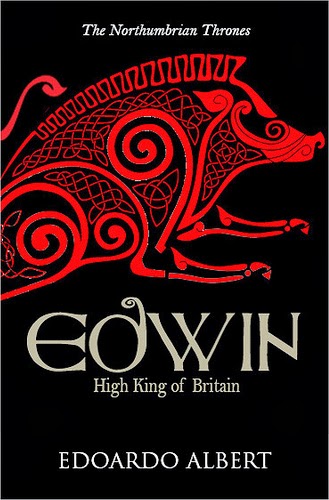
It’s only taken me thirty-two years to get to this stage! Anyway, Edwin: High King of Britain was a result of the research that went into writing my book, Northumbria: the Lost Kingdom, on the history and archaeology of one of the key Dark Ages kingdoms of England (although, of course, England didn’t actually exist then). The story of the three successive Northumbrian kings whom the Venerable Bede accords the title bretwalda – that is High King of Britain – seemed so extraordinary I was astonished that nobody had written about them before. So I decided to.
One of the advantages of doing things this way round was that I had already done most of the historical research necessary – it was just a matter of trying to bring it all to life. Hopefully I have done so, it would be a grave discourtesy to some extraordinary but all but forgotten people if I haven’t. The book will be published by Lion Fiction in March. The publishers, spotting a link, have given the trilogy the overarching title of The Northumbrian Thrones but in truth, there really was something very like a game for thrones going on in the bloody, violent but extraordinarily creative kingdoms of seventh-century Britain. The foundations of England were laid, amid historical darkness, in a time when the only certainty for a king was a violent death. And yet, perhaps because of the very precariousness of the times, these men and women created things, such as the Lindisfarne Gospels and the Sutton Hoo jewellery, of quite extraordinary beauty. While in some ways the kings of the Early Medieval Period (the preferred academic term today) were like Mafia dons, enforcing protection rackets on their subjects, yet the culture they created and their sensitivity to language were as far removed from the profane and profanity filled life of a John Gotti as it is possible to be.
To do such times and such people justice is no small task. I can hardly hope to have succeeded, but at least I hope not to have failed.
Edoardo Albert is, on paper at least, a surprisingly exotic creature: Italian, Sinhala and Tamil by background, he grew up in London among the polyglot children of immigrants (it was only when he went to university that he actually got to know any English people). He avers that he once reduced a reader to helpless, hysterical laughter. Unfortunately, the piece that did so was a lonely-hearts ad.
Find Edoardo Albert’s books (he’s particularly proud of Northumbria: The Lost Kingdom) and stories via his website although the lonely-hearts ad will not be making an appearance in the foreseeable future. Connect with him through his blog, Twitter or Facebook.
In honour of Penumbra’s second birthday, and without the slightest (well, hardly) intention to ingratiate myself with its editors, may I say that this is undoubtedly the friendliest and most professional magazine I’ve dealt with. Penumbra pays well, looks marvellous, responds quickly and, apart from publishing my stories, provides me with this free soapbox to advertise myself and my wares. What’s not to like? And, more importantly, long may it continue, particularly if it publishes more of my stories.
Dianna Gunn, intern par excellence, asked me to write something about what I’ve been up to since appearing in the magazine (since you ask, the Revolution and Exploration issues) and it just so happens that I have my first novel due out next March.
It’s only taken me thirty-two years to get to this stage! Anyway, Edwin: High King of Britain was a result of the research that went into writing my book, Northumbria: the Lost Kingdom, on the history and archaeology of one of the key Dark Ages kingdoms of England (although, of course, England didn’t actually exist then). The story of the three successive Northumbrian kings whom the Venerable Bede accords the title bretwalda – that is High King of Britain – seemed so extraordinary I was astonished that nobody had written about them before. So I decided to. One of the advantages of doing things this way round was that I had already done most of the historical research necessary – it was just a matter of trying to bring it all to life. Hopefully I have done so, it would be a grave discourtesy to some extraordinary but all but forgotten people if I haven’t. The book will be published by Lion Fiction in March. The publishers, spotting a link, have given the trilogy the overarching title of The Northumbrian Thrones but in truth, there really was something very like a game for thrones going on in the bloody, violent but extraordinarily creative kingdoms of seventh-century Britain. The foundations of England were laid, amid historical darkness, in a time when the only certainty for a king was a violent death. And yet, perhaps because of the very precariousness of the times, these men and women created things, such as the Lindisfarne Gospels and the Sutton Hoo jewellery, of quite extraordinary beauty. While in some ways the kings of the Early Medieval Period (the preferred academic term today) were like Mafia dons, enforcing protection rackets on their subjects, yet the culture they created and their sensitivity to language were as far removed from the profane and profanity filled life of a John Gotti as it is possible to be.
To do such times and such people justice is no small task. I can hardly hope to have succeeded, but at least I hope not to have failed.
Edoardo Albert is, on paper at least, a surprisingly exotic creature: Italian, Sinhala and Tamil by background, he grew up in London among the polyglot children of immigrants (it was only when he went to university that he actually got to know any English people). He avers that he once reduced a reader to helpless, hysterical laughter. Unfortunately, the piece that did so was a lonely-hearts ad.
Find Edoardo Albert’s books (he’s particularly proud of Northumbria: The Lost Kingdom) and stories via his website although the lonely-hearts ad will not be making an appearance in the foreseeable future. Connect with him through his blog, Twitter or Facebook.
Thursday, October 10, 2013
PARTY TIME FOR ONE AND ALL
With a month long party to celebrate
Musa Publishing's
second birthday!
Join us from October 1 - 31
for 30% off top selling books.
Oct. 1 - 7 Aurora Regency & Clio
Oct. 8 - 14 Calliope/FEA/Wiccan Haus
Oct. 15 - 21 Erato (GLBT)
Click Musa Publishing for exciting books.
Enjoy our Blog with fun topics and fantastic recipes.
Speculative fiction fans be sure to read Penumbra eMag Blog.
And of course, check us out on Facebook.
Tuesday, November 6, 2012
Suspending Disbelief: Achieving a Semblance of Truth
by Barbara A. Barnett
Hypothetical scenario: A hopeful young writer offers up his work to his critique group. His story takes place in a contemporary, real-world setting—except with vampires. In one scene, the protagonist and her vampire boyfriend are in a car accident. The boyfriend is unconscious, bleeding profusely. The protagonist, unaware her boyfriend is a vampire, decides to perform a do-it-yourself blood transfusion. This turns her into a vampire.
Everyone critiquing the story tells the hopeful young writer that the scene is not realistic. They're willing to believe the boyfriend's blood would turn the protagonist into a vampire, but they don't believe an intelligent, modern-day character would try to perform a transfusion on the side of the road instead of using her cell phone to call for help. Heck, she didn't even know if they had compatible blood types.
"But it's fantasy!" the hopeful young writer declares. "There are vampires! It's not supposed to be realistic! Whatever happened to suspending your disbelief?"
Suspension of disbelief. Far too often, I've seen that phrase misused in defense of characters acting in unrealistic ways. Samuel Taylor Coleridge, the man who coined the term, had this to say about it in his Biographia Literaria:
"In this idea originated the plan of the Lyrical Ballads; in which it was agreed, that my endeavors should be directed to persons and characters supernatural, or at least romantic, yet so as to transfer from our inward nature a human interest and a semblance of truth sufficient to procure for these shadows of imagination that willing suspension of disbelief for the moment, which constitutes poetic faith."
Like our hypothetical hopeful young writer, many people toss around the phrase suspension of disbelief with no awareness that an equally important phrase originally accompanied it: semblance of truth. In other words, if you want your readers to suspend their disbelief long enough to read about your vampire, alien, carnivorous gnome, or what have you, you need to give your story a semblance truth—a world with a consistent reality and characters who act like real people. One reason so many people are willing to accept all of the magic and fantastical creatures in Lord of the Rings is because Tolkien created a world that feels real. Middle Earth has depth and texture and consistency, and it's populated by characters who behave in a realistic manner.
There are times, though, when achieving a semblance of truth means parting ways with actual truth. In Ghost Writer to the Dead, I ask readers to believe in a world like ours, only with ghosts and psychic detective agencies. Giving the story a real-world setting (the Edgar Allan Poe National Historic Site) and a real-world character (Edgar Allan Poe) meant I had a rich amount of detail and history to draw upon, but it also meant I had to pick the right details. In the first draft, my critique partners pointed to some word choices in Poe's dialogue that threw them out of the story. One word actually was in popular usage during Poe's lifetime, but because it didn't feel like something my critique partners thought Poe would say, it kept them from fully suspending their disbelief. So out it went.
Achieving that semblance of truth can be tricky business, particularly when you're dealing with the fantastic. But the more realistic you make your world and its characters, the more likely readers will be to suspend their disbelief. Vampires, ghosts, and the like may not be real, but the impact they can have when a reader is drawn into the world of your story most definitely is.
Barbara A. Barnett is an avid rejection letter collector, musician, MLIS student, Odyssey Writing Workshop graduate, coffee addict, wine lover, bad movie mocker, and all-around geek. Her fiction has appeared in publications such as Fantasy Magazine, Shimmer, Daily Science Fiction, Black Static, and Wilde Stories 2011: The Year's Best Gay Speculative Fiction. In addition to writing, she has worked in the performing arts world for several years.
Learn more about Barbara on her website.
Hypothetical scenario: A hopeful young writer offers up his work to his critique group. His story takes place in a contemporary, real-world setting—except with vampires. In one scene, the protagonist and her vampire boyfriend are in a car accident. The boyfriend is unconscious, bleeding profusely. The protagonist, unaware her boyfriend is a vampire, decides to perform a do-it-yourself blood transfusion. This turns her into a vampire.
Everyone critiquing the story tells the hopeful young writer that the scene is not realistic. They're willing to believe the boyfriend's blood would turn the protagonist into a vampire, but they don't believe an intelligent, modern-day character would try to perform a transfusion on the side of the road instead of using her cell phone to call for help. Heck, she didn't even know if they had compatible blood types.
"But it's fantasy!" the hopeful young writer declares. "There are vampires! It's not supposed to be realistic! Whatever happened to suspending your disbelief?"
Suspension of disbelief. Far too often, I've seen that phrase misused in defense of characters acting in unrealistic ways. Samuel Taylor Coleridge, the man who coined the term, had this to say about it in his Biographia Literaria:
"In this idea originated the plan of the Lyrical Ballads; in which it was agreed, that my endeavors should be directed to persons and characters supernatural, or at least romantic, yet so as to transfer from our inward nature a human interest and a semblance of truth sufficient to procure for these shadows of imagination that willing suspension of disbelief for the moment, which constitutes poetic faith."
Like our hypothetical hopeful young writer, many people toss around the phrase suspension of disbelief with no awareness that an equally important phrase originally accompanied it: semblance of truth. In other words, if you want your readers to suspend their disbelief long enough to read about your vampire, alien, carnivorous gnome, or what have you, you need to give your story a semblance truth—a world with a consistent reality and characters who act like real people. One reason so many people are willing to accept all of the magic and fantastical creatures in Lord of the Rings is because Tolkien created a world that feels real. Middle Earth has depth and texture and consistency, and it's populated by characters who behave in a realistic manner.
There are times, though, when achieving a semblance of truth means parting ways with actual truth. In Ghost Writer to the Dead, I ask readers to believe in a world like ours, only with ghosts and psychic detective agencies. Giving the story a real-world setting (the Edgar Allan Poe National Historic Site) and a real-world character (Edgar Allan Poe) meant I had a rich amount of detail and history to draw upon, but it also meant I had to pick the right details. In the first draft, my critique partners pointed to some word choices in Poe's dialogue that threw them out of the story. One word actually was in popular usage during Poe's lifetime, but because it didn't feel like something my critique partners thought Poe would say, it kept them from fully suspending their disbelief. So out it went.
Achieving that semblance of truth can be tricky business, particularly when you're dealing with the fantastic. But the more realistic you make your world and its characters, the more likely readers will be to suspend their disbelief. Vampires, ghosts, and the like may not be real, but the impact they can have when a reader is drawn into the world of your story most definitely is.
Barbara A. Barnett is an avid rejection letter collector, musician, MLIS student, Odyssey Writing Workshop graduate, coffee addict, wine lover, bad movie mocker, and all-around geek. Her fiction has appeared in publications such as Fantasy Magazine, Shimmer, Daily Science Fiction, Black Static, and Wilde Stories 2011: The Year's Best Gay Speculative Fiction. In addition to writing, she has worked in the performing arts world for several years.
Learn more about Barbara on her website.
Tuesday, October 30, 2012
Bottomless Vales and Boundless Floods – Re-imagining Poe
by Kate O'Connor
October 7th marked the 163rd anniversary of Edgar Allan Poe’s death. After almost two centuries, his work is still loved, taught, portrayed in films, and, in the case of Penumbra’s October edition, re-imagined. So what is it about his stories that still make him relevant today?
I first heard The Masque of the Red Death read aloud when I was in middle school. The image of Death passing slowly through six brightly colored rooms is still the first thing that comes to my mind when someone mentions Poe. It discussed death and disease and poverty in ways that made me think hard about how my world worked.
Why and how did he come up with that story in the first place? It has certain folkloric hallmarks – death in physical form, a prince, and a masquerade ball, rich vs. poor – but there is more to it than a fairytale re-write. Prince Prospero isn’t an evil villain and neither is Death. The lesson isn’t about living a better life. Instead, the tale is a simple and subtle hint that Death is already with us no matter how hard we fight against it and how slow we are to recognize it. Typical Poe. But where did that profound understanding of humanity’s desire to deny and run from inevitability come from?
Whatever else may be said about him, Poe did not exactly lead a quiet, simple life. His father left, his mother died, he was in and out of jobs, schools, and the military. He travelled in a time when one couldn’t simply just get on an airplane and go. He struggled (and occasionally failed) to support himself working as a clerk, a newspaper writer, an editor, and a literary critic. There were so many chances in his life for questions about the world to come up. His experiences, like those of many other great writers, allowed him to glimpse the foundation of storytelling: helping people to understand aspects that cannot fit neatly into our daily life.
My story Red started with that middle school memory, but it didn’t stay there. In a time where the role government should play in protecting people is being debated in the U.S., I felt the story could speak to not just the inevitability of death, but to what happens to the people who get left behind when our leaders have to make seemingly impossible choices. “Greater good” is a hard thing to talk about – ideal for Poe-inspired story.
Poe’s writing changed the face of speculative fiction because of its subtle ferocity. His themes still have that potential. The questions he asks in his stories have certainly opened up new perspectives for me as a writer and as a person. I’m sure I’m not alone in that.
Each month, Penumbra’s variations on a theme also provide new and interesting ways to look at the universe. For me, re-imagining Poe challenges us to not just look at new and interesting perspectives, but to explore how profound questions of humanity will shape those perspectives – the perfect choice for celebrating Penumbra’s first year.
Kate O'Connor is a sometime pilot, archaeology field technician on off days, and occasional dog groomer. Her short fiction has appeared in Daily Science Fiction and Pressure Suite: Digital Science Fiction Anthology 3 and is forthcoming in Penumbra and Plasma Frequency. She currently lives in the New York area.
October 7th marked the 163rd anniversary of Edgar Allan Poe’s death. After almost two centuries, his work is still loved, taught, portrayed in films, and, in the case of Penumbra’s October edition, re-imagined. So what is it about his stories that still make him relevant today?
I first heard The Masque of the Red Death read aloud when I was in middle school. The image of Death passing slowly through six brightly colored rooms is still the first thing that comes to my mind when someone mentions Poe. It discussed death and disease and poverty in ways that made me think hard about how my world worked.
Why and how did he come up with that story in the first place? It has certain folkloric hallmarks – death in physical form, a prince, and a masquerade ball, rich vs. poor – but there is more to it than a fairytale re-write. Prince Prospero isn’t an evil villain and neither is Death. The lesson isn’t about living a better life. Instead, the tale is a simple and subtle hint that Death is already with us no matter how hard we fight against it and how slow we are to recognize it. Typical Poe. But where did that profound understanding of humanity’s desire to deny and run from inevitability come from?
Whatever else may be said about him, Poe did not exactly lead a quiet, simple life. His father left, his mother died, he was in and out of jobs, schools, and the military. He travelled in a time when one couldn’t simply just get on an airplane and go. He struggled (and occasionally failed) to support himself working as a clerk, a newspaper writer, an editor, and a literary critic. There were so many chances in his life for questions about the world to come up. His experiences, like those of many other great writers, allowed him to glimpse the foundation of storytelling: helping people to understand aspects that cannot fit neatly into our daily life.
My story Red started with that middle school memory, but it didn’t stay there. In a time where the role government should play in protecting people is being debated in the U.S., I felt the story could speak to not just the inevitability of death, but to what happens to the people who get left behind when our leaders have to make seemingly impossible choices. “Greater good” is a hard thing to talk about – ideal for Poe-inspired story.
Poe’s writing changed the face of speculative fiction because of its subtle ferocity. His themes still have that potential. The questions he asks in his stories have certainly opened up new perspectives for me as a writer and as a person. I’m sure I’m not alone in that.
Each month, Penumbra’s variations on a theme also provide new and interesting ways to look at the universe. For me, re-imagining Poe challenges us to not just look at new and interesting perspectives, but to explore how profound questions of humanity will shape those perspectives – the perfect choice for celebrating Penumbra’s first year.
Kate O'Connor is a sometime pilot, archaeology field technician on off days, and occasional dog groomer. Her short fiction has appeared in Daily Science Fiction and Pressure Suite: Digital Science Fiction Anthology 3 and is forthcoming in Penumbra and Plasma Frequency. She currently lives in the New York area.
Tuesday, October 16, 2012
One Year of Penumbra
by Dianna L. Gunn
When I emailed Celina Summers to ask about an internship with Penumbra last September, I didn't expect a response. When she invited me to join the Musa team, I expected six months of reading submissions then be sent on my way.
My expectations couldn't have been more wrong. At the end of October I was assigned to work with a team of interns on creating the third issue of Penumbra. My duties included editing and interviewing Homer Eon Flint's granddaughter and Musa author Vella Munn. I had great fun working with the other interns—and I am not a fan of group projects—and was thrilled with our December issue.
Since then, I've worked on several issues of Penumbra and interviewed a number of authors—including William Horwood, a hero on my personal bookshelf. I've also managed the blog, corresponding with authors to round up posts. I've even helped update Penumbra's Facebook and Twitter.
When I signed up as an intern, I didn't expect any of these opportunities. Sure, it's ended up being more complicated than what I originally signed up for, but it's also been a great learning experience. I've learned so much about writing, publishing, and how much work really goes into your favourite magazines. Even better, I've had the opportunity to meet and interview dozens of authors—both Penumbra authors and authors from each of Musa's imprints.
But what really stands out about working with the Penumbra team and the Musa staff isn't the lessons I've learned or the opportunities I've been given. It's the feeling that I've been brought into a big, happy family. Big staff meetings don't stress me out—instead, I look forward talking to the team and working to create our next issue. We've all been brought together by a love of fiction and a belief in the things Musa and Penumbra stand for—turning writers into authors, providing readers with great fiction, and paying our authors professional rates while keeping our fiction affordable.
I've had to take a step back from the actual Penumbra issues due to other commitments, but I'm still here working in the background. I've watched this magazine grow so much; I love each issue more than the last. I'm proud of what we do here at Penumbra and I hope to stay with this emagazine for years—both because I love the emagazine and because I love the people behind it.
Dianna L. Gunn is a young Canadian fiction writer who specializes in dark fantasy. She also writes poetry, generally dark, which is her way of dealing with life. This insightful author hosts a website covering every aspect of fiction writing and interviews with noted guest authors.
Learn more about Dianna L. Gunn on her website and follow her on Twitter.
When I emailed Celina Summers to ask about an internship with Penumbra last September, I didn't expect a response. When she invited me to join the Musa team, I expected six months of reading submissions then be sent on my way.
My expectations couldn't have been more wrong. At the end of October I was assigned to work with a team of interns on creating the third issue of Penumbra. My duties included editing and interviewing Homer Eon Flint's granddaughter and Musa author Vella Munn. I had great fun working with the other interns—and I am not a fan of group projects—and was thrilled with our December issue.
Since then, I've worked on several issues of Penumbra and interviewed a number of authors—including William Horwood, a hero on my personal bookshelf. I've also managed the blog, corresponding with authors to round up posts. I've even helped update Penumbra's Facebook and Twitter.
When I signed up as an intern, I didn't expect any of these opportunities. Sure, it's ended up being more complicated than what I originally signed up for, but it's also been a great learning experience. I've learned so much about writing, publishing, and how much work really goes into your favourite magazines. Even better, I've had the opportunity to meet and interview dozens of authors—both Penumbra authors and authors from each of Musa's imprints.
But what really stands out about working with the Penumbra team and the Musa staff isn't the lessons I've learned or the opportunities I've been given. It's the feeling that I've been brought into a big, happy family. Big staff meetings don't stress me out—instead, I look forward talking to the team and working to create our next issue. We've all been brought together by a love of fiction and a belief in the things Musa and Penumbra stand for—turning writers into authors, providing readers with great fiction, and paying our authors professional rates while keeping our fiction affordable.
I've had to take a step back from the actual Penumbra issues due to other commitments, but I'm still here working in the background. I've watched this magazine grow so much; I love each issue more than the last. I'm proud of what we do here at Penumbra and I hope to stay with this emagazine for years—both because I love the emagazine and because I love the people behind it.
Dianna L. Gunn is a young Canadian fiction writer who specializes in dark fantasy. She also writes poetry, generally dark, which is her way of dealing with life. This insightful author hosts a website covering every aspect of fiction writing and interviews with noted guest authors.
Learn more about Dianna L. Gunn on her website and follow her on Twitter.
Thursday, October 4, 2012
A Virtual Horror Noob Speaks Out
by Jane Douglas
I was eight years old when I first met Edgar Allan Poe. For several weeks, each afternoon, my fourth grade teacher Miss Gough would gather her class around her feet like a brood of hungry chicks and read to us from Poe’s short stories. I can remember how excitedly we waited for story time, how even the wriggly kids hung on every word. The feeling of horror as the super-creepy ending of The Black Cat was revealed has never left me.
This past week, ahead of Penumbra’s Poe episode, reading Poe again, my first thought was, “What on earth can Miss Gough have been thinking?” Some of those are pretty scary stories. Perhaps she realized that Poe’s plots were no worse than the urban myths we kids would whisper in the dark during slumber parties, driving ourselves to fits of delicious, sleepless terror. Still, I doubt Poe would get a mention in fourth grade classes today. I imagine over-protective moms and school psychologists fearing emotional scarring would see to that.
Even though Poe’s stories are in some ways quite dated, for me, they still stir up sufficient plausible emotion that I can enjoy them as a toe-curling read. That surprised me, so I’ve given some thought to what it might be that gives Poe’s short stories such evocative power, even to me, a 21st century reader who likes to think she hasn’t a superstitious bone in her body. I should also say that I could count the works of horror fiction I’ve read on half a hand; I’ve tried to make a respectable list but after noting John Wyndham’s Jizzle, Mary Shelley’s Frankenstein, and Conan Doyle’s Hound of the Baskervilles, I ran out of puff. So, if you don’t mind, this article will be an honest appraisal from a virtual horror noob. With any luck, the result will bob to the surface fresh and perhaps even insightful, and not simply drown in a sad bucket of ignorance. Perhaps my observations of what works for me – and what doesn’t – might prove useful to some author somewhere. So here goes...
A lot of Poe’s short stories are written as first person narratives, and the narrator is always male. The plot unfolds as though it is being told, often conversationally, to the reader sometime after the events. Although we know from the start that the narrator survives his impending ordeal – here he is telling us about it – somehow that doesn’t detract from the power of being drawn through the narrative in a very personal way; we never stop wondering what will happen next. Because no omniscient narrator stands between the reader and the main character, we experience the action with him; Poe’s evocative writing has us imagining ourselves in his place. There is a grittiness about this style of narrative that reminds me of old detective novels, and indeed Poe’s The Murders in the Rue Morgue is often credited as the first in the genre. Poe’s narrators are portrayed as ordinary men who find themselves involved in something extraordinary. This connection with a recognizable everyman provides the narrative believability; we can hear the voice of the person at the centre, which makes our access to his inner dialogue and emotions seem perfectly natural. We feel what the narrator feels, as he feels it. I like that.
Poe often leaps into the story with a start. The Tell-Tale Heart begins,
“TRUE! – nervous – very, very dreadfully nervous I had been and am; but why will you say that I am mad?”
as though the two of us have been conversing for some time already and we have just got to the good bit. It’s effective, and throws us into the plot with little time to catch our breath. Other times Poe addresses us more formally, and we feel we are reading a diary or journal account of the tale. Either way, Poe causes us as readers to quickly feel we are present in the action; and that is no mean feat.
Readers are sucked into Poe’s vortex of horror with what seems to be very little effort. Although his narrators often begin with protestations of rationality, they are all prone to attacks of superstitious jitters given spooky surroundings, and weird happenings. Often they admit repeatedly that their fears are baseless – and all of the circumstances related can be explained by coincidence or natural phenomena – yet they are not able to throw off an abiding feeling of dread. Poe’s skillful manipulation of common human fears, in reality, leads his readers into a shared attack of the heebie-jeebies, which, strangely, is compounded by the narrator’s pooh-poohing of his imaginings. Although the stories are macabre, they seem familiar. Who hasn’t got the willies jumping at shadows alone in some dark and spidery place? As Poe’s protagonist describes a growing and inexplicably visceral fear, we empathise with his crumbling mental faculties, and his incapacity to assert his reason to reverse the process. To experience terror at the imagined horrors of the unknown is a very human response.
Poe’s timing is near-perfect. He seems to have an uncanny sense of just how long he ought to string the reader along with creepy details and descriptions of inner cogitations before giving us something real to worry about. It’s as though Poe is aware that the more nervous the reader becomes, the faster they scan the text. As suspense mounts, often Poe produces long passages of description that the reader rushes through, eyes darting from one object to another in growing panic. He stretches those moments out just long enough to torment the readers’ nerves without irritating them to a point of unpleasantness. I imagine him slowing his emotional responses down so that they keep step as he handwrites the passage to suit the heightened emotions of his future reader. However he achieved it, Poe certainly had the knack. I was never bored, but always held at just the right level of tingliness in each moment.
One of Poe’s greatest talents is in employing evocative language to involve the senses of the reader; he makes us feel as present in the events of the story as any writer I know. A great deal of this sensual imagery is visual. Take this description from The Fall of the House of Usher:
“...the carvings of the ceilings, the sombre tapestries of the walls, the ebon blackness of the floors, and the phantasmagoric armorial trophies which rattled as I strode....”
Poe paints a picture of Gothic gloom, and although the rattling armour seems a cliche to the contemporary reader, in the context of the story, and even with the narrator smacking down his superstitious mental wanderings, it has an undeniably creepy effect. Decaying, dilapidated settings speak of the wrongness of the place; light and cheer are always absent as the material environment reflects the horror of the tale. In The Pit and the Pendulum, the story begins with the narrator regaining consciousness in a space filled with impenetrable darkness and Poe evokes feelings of dread through descriptions that involve senses other than sight. The pit emits a “clammy vapour, and the peculiar smell of decayed fungus”; the stone walls are “smooth, slimy and cold”, the ground “moist and slippery”; we hear with the protagonist the tiny skitterings of the feet of approaching rats. These sensual descriptions are detailed, believable and never dull.
A truly great aspect of Poe’s horror stories is that every circumstance can be explained away without resorting to supernatural influence or the presence of mythical beasties. In The Black Cat, the arrival of a feline of very similar appearance to the narrator’s formerly tortured pet can easily be explained by co-incidence. Even the growth of white hairs in the shape of a gallows on the cat’s chest would attract little comment without the gin-addled, guilt-stricken mind of the narrator attaching meaning to it. Poe allows us to experience the prickle of fear such coincidences provoke, and then stands back while they lead us away to awful imaginings he never enunciates directly. A peculiar gentleman who mutter to himself in “gutteral tones” excites the universal dread of the insane; the ravages of alcohol abuse we know will lead to perverse and cruel acts against innocents; the dreadful consequences that follow those acts we imagine are a supernatural retribution; the horrible deaths in Murders in the Rue Morgue seem to have been perpetrated by a super-human, who turns out to be a cranky, knife-wielding orangutan. But these natural revelations are never a let down. Readers play along, aware of Poe’s sleight of hand, but allowing our own imaginations to become part of the story, our suspicions tools that Poe wields to develop terrors in our minds instead of plainly on the page.
But not every feature of Poe’s stories is as effective for the contemporary reader as it may have been for readers in the mid-19th century. We no longer believe that a person’s physiognomy unfailingly reveals their mental, emotional and moral state. Modern medicine has removed the dread of infection and fever; a “ghastly pallor of the skin” and “peculiar lustre of the eye” are unlikely to be viewed as harbingers of death, but as easily fixed with a Tylenol and a wee lie down. Unkempt hair and clothing no longer speaks of madness, drunkenness, or other morally questionable states. Thanks to 1940s cinema, depictions of an insane character ‘improvising mad dirges’ on an organ strike us as laughable, as does the frequent swoonings of the narrator in The Pit and the Pendulum (did people ever really faint away with fright?).
Poe’s original audiences would likely have been mostly Christian and this is apparent in his use of metaphors and imagery that would have caused his religious readers to worry at things that we do not. It is likely that they would have, for example, found it believable that the Usher household suffered from a “constitutional and family evil”. Poe’s descriptions in The Fall of the House of Usher of a “sulphureous lustre [which] lay over all” evokes well-known literary visions of hell, then believed to be a real and very much feared destination for the damned. It’s an oversimplification, but it is possible that in The Black Cat Poe’s early readers would have seen the narrator’s banging on the wall inside which he had interred his wife and so giving away his dread secret as a fair example of pride coming before a fall. Indeed, Christian morals abound in Poe’s writings once you start looking.
But those “flaws” notwithstanding Poe’s stories have endured because they are simply what we in Australia would call “bloody good yarns”. Poe spins us tales that trick, torment and ¬– even today – retain a power to shock, and better, surprise us just a little. Firmly rooted in a reality of sorts, and without the lashings of graphic gore upon which some contemporary authors rely, Poe draws us in, frightens us, and sends us on our way wondering how it was he managed to achieve that end with such simple devices. After reading them again, I was left with the firm impression that Poe’s stories contain many lessons from which modern horror writers could learn. Write me a contemporary version of The Black Cat and I’ll be happy to add it to my shelf.
Jane Douglas is a freelance writer, student and intern with Penumbra EMag. She lives with a tribe of children and way too many animals in Queensland, Australia.
I was eight years old when I first met Edgar Allan Poe. For several weeks, each afternoon, my fourth grade teacher Miss Gough would gather her class around her feet like a brood of hungry chicks and read to us from Poe’s short stories. I can remember how excitedly we waited for story time, how even the wriggly kids hung on every word. The feeling of horror as the super-creepy ending of The Black Cat was revealed has never left me.
This past week, ahead of Penumbra’s Poe episode, reading Poe again, my first thought was, “What on earth can Miss Gough have been thinking?” Some of those are pretty scary stories. Perhaps she realized that Poe’s plots were no worse than the urban myths we kids would whisper in the dark during slumber parties, driving ourselves to fits of delicious, sleepless terror. Still, I doubt Poe would get a mention in fourth grade classes today. I imagine over-protective moms and school psychologists fearing emotional scarring would see to that.
Even though Poe’s stories are in some ways quite dated, for me, they still stir up sufficient plausible emotion that I can enjoy them as a toe-curling read. That surprised me, so I’ve given some thought to what it might be that gives Poe’s short stories such evocative power, even to me, a 21st century reader who likes to think she hasn’t a superstitious bone in her body. I should also say that I could count the works of horror fiction I’ve read on half a hand; I’ve tried to make a respectable list but after noting John Wyndham’s Jizzle, Mary Shelley’s Frankenstein, and Conan Doyle’s Hound of the Baskervilles, I ran out of puff. So, if you don’t mind, this article will be an honest appraisal from a virtual horror noob. With any luck, the result will bob to the surface fresh and perhaps even insightful, and not simply drown in a sad bucket of ignorance. Perhaps my observations of what works for me – and what doesn’t – might prove useful to some author somewhere. So here goes...
A lot of Poe’s short stories are written as first person narratives, and the narrator is always male. The plot unfolds as though it is being told, often conversationally, to the reader sometime after the events. Although we know from the start that the narrator survives his impending ordeal – here he is telling us about it – somehow that doesn’t detract from the power of being drawn through the narrative in a very personal way; we never stop wondering what will happen next. Because no omniscient narrator stands between the reader and the main character, we experience the action with him; Poe’s evocative writing has us imagining ourselves in his place. There is a grittiness about this style of narrative that reminds me of old detective novels, and indeed Poe’s The Murders in the Rue Morgue is often credited as the first in the genre. Poe’s narrators are portrayed as ordinary men who find themselves involved in something extraordinary. This connection with a recognizable everyman provides the narrative believability; we can hear the voice of the person at the centre, which makes our access to his inner dialogue and emotions seem perfectly natural. We feel what the narrator feels, as he feels it. I like that.
Poe often leaps into the story with a start. The Tell-Tale Heart begins,
“TRUE! – nervous – very, very dreadfully nervous I had been and am; but why will you say that I am mad?”
as though the two of us have been conversing for some time already and we have just got to the good bit. It’s effective, and throws us into the plot with little time to catch our breath. Other times Poe addresses us more formally, and we feel we are reading a diary or journal account of the tale. Either way, Poe causes us as readers to quickly feel we are present in the action; and that is no mean feat.
Readers are sucked into Poe’s vortex of horror with what seems to be very little effort. Although his narrators often begin with protestations of rationality, they are all prone to attacks of superstitious jitters given spooky surroundings, and weird happenings. Often they admit repeatedly that their fears are baseless – and all of the circumstances related can be explained by coincidence or natural phenomena – yet they are not able to throw off an abiding feeling of dread. Poe’s skillful manipulation of common human fears, in reality, leads his readers into a shared attack of the heebie-jeebies, which, strangely, is compounded by the narrator’s pooh-poohing of his imaginings. Although the stories are macabre, they seem familiar. Who hasn’t got the willies jumping at shadows alone in some dark and spidery place? As Poe’s protagonist describes a growing and inexplicably visceral fear, we empathise with his crumbling mental faculties, and his incapacity to assert his reason to reverse the process. To experience terror at the imagined horrors of the unknown is a very human response.
Poe’s timing is near-perfect. He seems to have an uncanny sense of just how long he ought to string the reader along with creepy details and descriptions of inner cogitations before giving us something real to worry about. It’s as though Poe is aware that the more nervous the reader becomes, the faster they scan the text. As suspense mounts, often Poe produces long passages of description that the reader rushes through, eyes darting from one object to another in growing panic. He stretches those moments out just long enough to torment the readers’ nerves without irritating them to a point of unpleasantness. I imagine him slowing his emotional responses down so that they keep step as he handwrites the passage to suit the heightened emotions of his future reader. However he achieved it, Poe certainly had the knack. I was never bored, but always held at just the right level of tingliness in each moment.
One of Poe’s greatest talents is in employing evocative language to involve the senses of the reader; he makes us feel as present in the events of the story as any writer I know. A great deal of this sensual imagery is visual. Take this description from The Fall of the House of Usher:
“...the carvings of the ceilings, the sombre tapestries of the walls, the ebon blackness of the floors, and the phantasmagoric armorial trophies which rattled as I strode....”
Poe paints a picture of Gothic gloom, and although the rattling armour seems a cliche to the contemporary reader, in the context of the story, and even with the narrator smacking down his superstitious mental wanderings, it has an undeniably creepy effect. Decaying, dilapidated settings speak of the wrongness of the place; light and cheer are always absent as the material environment reflects the horror of the tale. In The Pit and the Pendulum, the story begins with the narrator regaining consciousness in a space filled with impenetrable darkness and Poe evokes feelings of dread through descriptions that involve senses other than sight. The pit emits a “clammy vapour, and the peculiar smell of decayed fungus”; the stone walls are “smooth, slimy and cold”, the ground “moist and slippery”; we hear with the protagonist the tiny skitterings of the feet of approaching rats. These sensual descriptions are detailed, believable and never dull.
A truly great aspect of Poe’s horror stories is that every circumstance can be explained away without resorting to supernatural influence or the presence of mythical beasties. In The Black Cat, the arrival of a feline of very similar appearance to the narrator’s formerly tortured pet can easily be explained by co-incidence. Even the growth of white hairs in the shape of a gallows on the cat’s chest would attract little comment without the gin-addled, guilt-stricken mind of the narrator attaching meaning to it. Poe allows us to experience the prickle of fear such coincidences provoke, and then stands back while they lead us away to awful imaginings he never enunciates directly. A peculiar gentleman who mutter to himself in “gutteral tones” excites the universal dread of the insane; the ravages of alcohol abuse we know will lead to perverse and cruel acts against innocents; the dreadful consequences that follow those acts we imagine are a supernatural retribution; the horrible deaths in Murders in the Rue Morgue seem to have been perpetrated by a super-human, who turns out to be a cranky, knife-wielding orangutan. But these natural revelations are never a let down. Readers play along, aware of Poe’s sleight of hand, but allowing our own imaginations to become part of the story, our suspicions tools that Poe wields to develop terrors in our minds instead of plainly on the page.
But not every feature of Poe’s stories is as effective for the contemporary reader as it may have been for readers in the mid-19th century. We no longer believe that a person’s physiognomy unfailingly reveals their mental, emotional and moral state. Modern medicine has removed the dread of infection and fever; a “ghastly pallor of the skin” and “peculiar lustre of the eye” are unlikely to be viewed as harbingers of death, but as easily fixed with a Tylenol and a wee lie down. Unkempt hair and clothing no longer speaks of madness, drunkenness, or other morally questionable states. Thanks to 1940s cinema, depictions of an insane character ‘improvising mad dirges’ on an organ strike us as laughable, as does the frequent swoonings of the narrator in The Pit and the Pendulum (did people ever really faint away with fright?).
Poe’s original audiences would likely have been mostly Christian and this is apparent in his use of metaphors and imagery that would have caused his religious readers to worry at things that we do not. It is likely that they would have, for example, found it believable that the Usher household suffered from a “constitutional and family evil”. Poe’s descriptions in The Fall of the House of Usher of a “sulphureous lustre [which] lay over all” evokes well-known literary visions of hell, then believed to be a real and very much feared destination for the damned. It’s an oversimplification, but it is possible that in The Black Cat Poe’s early readers would have seen the narrator’s banging on the wall inside which he had interred his wife and so giving away his dread secret as a fair example of pride coming before a fall. Indeed, Christian morals abound in Poe’s writings once you start looking.
But those “flaws” notwithstanding Poe’s stories have endured because they are simply what we in Australia would call “bloody good yarns”. Poe spins us tales that trick, torment and ¬– even today – retain a power to shock, and better, surprise us just a little. Firmly rooted in a reality of sorts, and without the lashings of graphic gore upon which some contemporary authors rely, Poe draws us in, frightens us, and sends us on our way wondering how it was he managed to achieve that end with such simple devices. After reading them again, I was left with the firm impression that Poe’s stories contain many lessons from which modern horror writers could learn. Write me a contemporary version of The Black Cat and I’ll be happy to add it to my shelf.
Jane Douglas is a freelance writer, student and intern with Penumbra EMag. She lives with a tribe of children and way too many animals in Queensland, Australia.
Tuesday, October 2, 2012
First Anniversary Greetings from the Editor in Chief
by Celina Summers
Penumbra is one year old today.
How bizarre is that? A year ago, we pushed our first issue out on a raft made of bamboo into the hurricane that is publishing, and the darn thing didn't sink! In fact, that raft is still going, gradually strengthening along with the changes and additions we've made to the magazine, and now we have hundreds of you on board as well.
That definitely makes the journey more pleasant, as it should. When a magazine gains an audience, a dedicated readership, it's much easier to determine what types of stories they like.
So to me it only seems fair that you, the Penumbra reader, gets to toss us your two cents' worth on this, our first anniversary. If you could take a minute to answer the poll we've posted on this page, it will assist us as we continue to build Penumbra into the type of speculative fiction magazine that you want to read.
It is our greatest hope as we continue our mission to meet the needs of the readers who have been stranded after the demise of some of our long-time favorite sf/f magazines. We want to continue to grow and develop with our readership—a readership that multiplied swiftly after we offered to fulfill the contracts with the Realms of Fantasy subscribers. After we assumed those subscriptions, everything at Penumbra suddenly seemed more real…more pertinent.
With today's release of our Edgar Allan Poe issue, we've come to the next step for Penumbra. We will seek recognition from Science Fiction and Fantasy Writers of America and other spec fic organizations. We will strive to publish stories both from familiar names and debut authors. We will seek additional markets, reviewers, and awards recognition for our authors and their stories. We will continue to offer industry master classes to the authors, staff, and interns of Penumbra and its parent company, Musa Publishing, in the hopes of better equipping writers for careers as professional writers.
But above all, we will continue to offer you, the reader, the best examples of short fiction possible in every issue.
As an editor, I have to tell you that this year has been an absolute pleasure for me. I've enjoyed reading every submission, every story. I've been honored to work with a pair of amazing columnists, Lori Basiewicz and Richard C. White, who I think are among the best spec fic columnists out there right now. And then our staff: Alisha, who does layout and design; Brandie, who keeps me running on time; Dianna, who started with us at seventeen, continues to do a grown-up job at her internship; Sarah, who's not only the first set of eyes on Penumbra submissions but also does our monthly book reviews; Jane and Jude, our newly arrived interns; Cory, who has worked with me from the beginning to create the internal aesthetic and catch all those pesky comma mistakes; and, of course, my partner in crime Kelly Shorten, who creates the most visually stunning covers I've ever seen for a digital-only magazine.
Thank you for being a part of the Penumbra experience. We look forward to seeing you every month, right here, with a new issue for you to enjoy.
Penumbra is one year old today.
How bizarre is that? A year ago, we pushed our first issue out on a raft made of bamboo into the hurricane that is publishing, and the darn thing didn't sink! In fact, that raft is still going, gradually strengthening along with the changes and additions we've made to the magazine, and now we have hundreds of you on board as well.
That definitely makes the journey more pleasant, as it should. When a magazine gains an audience, a dedicated readership, it's much easier to determine what types of stories they like.
So to me it only seems fair that you, the Penumbra reader, gets to toss us your two cents' worth on this, our first anniversary. If you could take a minute to answer the poll we've posted on this page, it will assist us as we continue to build Penumbra into the type of speculative fiction magazine that you want to read.
It is our greatest hope as we continue our mission to meet the needs of the readers who have been stranded after the demise of some of our long-time favorite sf/f magazines. We want to continue to grow and develop with our readership—a readership that multiplied swiftly after we offered to fulfill the contracts with the Realms of Fantasy subscribers. After we assumed those subscriptions, everything at Penumbra suddenly seemed more real…more pertinent.
With today's release of our Edgar Allan Poe issue, we've come to the next step for Penumbra. We will seek recognition from Science Fiction and Fantasy Writers of America and other spec fic organizations. We will strive to publish stories both from familiar names and debut authors. We will seek additional markets, reviewers, and awards recognition for our authors and their stories. We will continue to offer industry master classes to the authors, staff, and interns of Penumbra and its parent company, Musa Publishing, in the hopes of better equipping writers for careers as professional writers.
But above all, we will continue to offer you, the reader, the best examples of short fiction possible in every issue.
As an editor, I have to tell you that this year has been an absolute pleasure for me. I've enjoyed reading every submission, every story. I've been honored to work with a pair of amazing columnists, Lori Basiewicz and Richard C. White, who I think are among the best spec fic columnists out there right now. And then our staff: Alisha, who does layout and design; Brandie, who keeps me running on time; Dianna, who started with us at seventeen, continues to do a grown-up job at her internship; Sarah, who's not only the first set of eyes on Penumbra submissions but also does our monthly book reviews; Jane and Jude, our newly arrived interns; Cory, who has worked with me from the beginning to create the internal aesthetic and catch all those pesky comma mistakes; and, of course, my partner in crime Kelly Shorten, who creates the most visually stunning covers I've ever seen for a digital-only magazine.
Thank you for being a part of the Penumbra experience. We look forward to seeing you every month, right here, with a new issue for you to enjoy.
Subscribe to:
Posts (Atom)