Showing posts with label Alfred Hitchcock. Show all posts

Thursday, October 17, 2013

How I Became a Writer

by BJ Leesman

It was by accident.

Don't remember much…just the sound of a crash, then total darkness.

I woke up to my teenager screaming, "What's happening?"

Our SUV spun in circles and jerked to a stop. The satellite radio hung off the dashboard at a crazy angle. I tried to put it back but it wouldn't stay.

Across the intersection, the car we never saw or heard moved in silence. Air bags deployed, it rolled to a slow stop on someone's front lawn.

"My head, my head..." Blood ran down Stewart's face.

Fumbling for my phone, I called my husband. "Paul, we've been in an accident. It's bad."

My family arrived before the ambulance rushed my son to the trauma hospital. I tagged along and almost passed out next to his stretcher. Family took Stewart home around midnight diagnosed with a concussion.

In the packed waiting room, I sat alone cradling my left arm against my chest. Around 2 am, Paul returned and convinced the nurse to give me two aspirin. My wrist began to curl at an odd angle as dawn lit up the faces of the sick and injured.

Thirteen hours after the ambulance ride, I saw an ER Doctor.

"No, you're wrong. My right hand's not broken, it's my left wrist."

"You have seven breaks in your left wrist and hand." The doctor pointed to the X-ray. "The break on your right hand looks bad. If this was the only break, you'd have the same kind of cast on your right arm. But you need to be able to use one of your hands."

My husband pushed me in a wheelchair to his car. An old-fashioned plaster cast from my fingers to my armpit kept my left arm stationary. A shorter removable cast immobilized my right hand.

On the long ride home, I watched the light change as the shadow of the Sandia Mountains receded from the foothills. Imagining how to capture the scene in a watercolor, an idea fractured the picture in my mind. I panicked.

My career as an artist is over. I'm doomed. I'll never be able to paint again. It doesn't matter about the art shows in New York, Chicago, and LA. What do I do now?

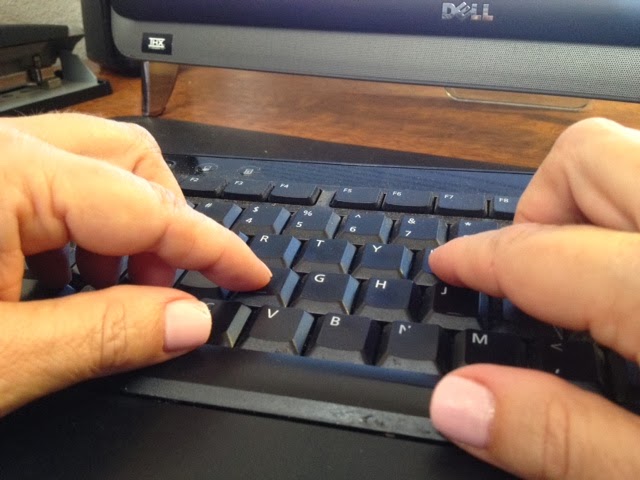
Months later I sat in front of my computer wearing purple and blue casts. It took weeks to figure out how to type again. I learned to punch the keyboard with my index fingers while resting both casts on a pillow and balancing ice packs on the back of my wrists.

Bored, restless and bored again...I got an idea for a story and haven't stopped writing since. And that's how I became a speculative fiction writer. It wasn't for a couple of bad breaks, I'd still be painting.

Read BJ Leesman's story The Little Man Who Wasn't There in the October issue of Penumbra EMag.

Thursday, October 18, 2012

Why We Love Dread

by Karen Heuler

Hitchcock knew that anticipation of a bomb’s explosion created more tension than the explosion itself. We are seduced by expectation; we are addicted to watching how inevitability plays out.


Poe knew it too. His characters await consequences; they need retribution. They long to be exposed, to be relieved of the weight of expectation. They will commit their crimes, but they will blurt out their crimes, too. And if there is no one to blurt it to, then the crimes themselves turn on them, compulsively coming for them.

Why is dread so powerful?

Our own dreads may be personal—that we will be exposed, that our actions will be viewed sternly—but the consequences are public. And we do want consequences. We want to think that the good are rewarded and the evil are punished—and for that to happen to everyone means it will happen to us.

Dread involves secret desire. Those who have no remorse have no dread. For the rest of us, the anticipation of retribution is irresistible. Why wouldn’t it be? If you do something that you believe deserves payment, then you have no alternative but to expect it. The longer it takes to arrive, the more you desire it, if only to have it over with. Dread indicates a need for moral rightness. You may believe you’ll get away with something, but if you get away with it, then the world is out of order.

Hence, our need for dread. We fear and long for justice. It indicates a rightness, a perfection in the world—and it indicates, too, that we are subject to it. We like to see murder, thoughtlessness, cruelty punished. And because we are capable of imagining justice, we both want it and hate it. No justice excludes us.

When do we first feel dread? Not until we can anticipate consequences, knowing that a broken vase means punishment, a glowing orange blueness means burns. Until then, life sails on with unpremeditated rules.

But once cause and effect makes it into our heads, then too does justice and injustice. We long for the good to come of our actions, and dread the bad.

Still, we can get away with things, but unless we’re psychopaths, our minds expect to pay some cost for our actions.

So what we do in secret is still subject to law. In order for our world to be orderly, we, too, must suffer consequences even when no one else knows but us.

Poe knew that the conscience was a torturous, tormented thing: it couldn’t be ignored; it demanded to be heard. A guilty conscience wants justice as much as a pure one does; unfortunately the justice it wants is meted out against itself. We expect justice to come; we want it to come. Its delay is awful.

Inside dread is desire. We need to have the world reset.

We dread things because we know the rest of the world evaluates our actions and tries to establish a measure for it. Punishment is supposed to suit the crime, to even out its effect. It’s what we used to call an objective correlative when I was in college—that external personification of an internal conflict. True punishment picks up on the original crime and evolves it.

Because dread is internal, it’s unbalanced; once you experience dread, it can only be resolved externally. Though of course you feel it, it has an extended life of its own. Your fear seems to separate and begin its own existence.

We dread it because we want it; we want it because it’s the only relief there is to dread—that horrible moment when what we did comes home and finds us.

Karen Heuler’s stories have appeared in over 60 literary and speculative magazines and anthologies. Her most recent novel, The Made-up Man, is about a woman who sells her soul to the devil to be a man for the rest of her life. ChiZine Publications will publish her short story collection, The Inner City, in Feb. 2013 and Permuted Press will publish her novel, Glorious Plague, in 2014.


Learn more about Karen on her website.