by Andrea Colasanto
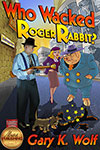
Gary K. Wolf is the author responsible for creating Roger and Jessica Rabbit, and all of Toontown. His groundbreaking 1981 novel Who Censored Roger Rabbit? served as the basis for the $950 million blockbuster film, Who Framed Roger Rabbit?. His newest novel, the highly anticipated third in the Roger Rabbit series, Who Wacked Roger Rabbit? releases in just a few short weeks, on November 29th. This is clearly a guy with some serious and successful writing chops—but have you ever wondered how an author of this magnitude actually writes?
Gary takes some time with Musa to explain his process throughout the years; interestingly enough his first method in the 1970s reflects his exact process today!
I started writing my first Roger Rabbit novel in 1976.
I would write out my passages in longhand on yellow lined paper using a No. 2 pencil. Then I would type them out on the typewriter I got in high school, a portable Remington manual. Portable being a relative term since the thing weighed almost as much as our black and white, tube-type Emerson cabinet television set.
I would edit those typed pages using my pencil. If a passage had to be eliminated, I would cut those lines out of the page and paste the page back together using Scotch tape. If a passage had to be moved, I would cut that passage out and paste it in the proper position, again using my trusty roll of Scotch tape.
This resulted in pages of wildly different lengths. Some only six inches long, some nearly two feet.
I would then retype what I had done, and repeat the process. Doing that over and over and over until the book was done.
I would retype the book one last time in a clean draft using White-Out to cover any typing errors.
Then, to my great delight, along came the miracle of word processing.
I was working as a copywriter for an advertising agency that specialized in promoting hi-tech companies and products. One of my clients was Wang, a major mainframe computer manufacturer. Wang had developed a small computer they called a word processor. They intended to sell it to companies for use by secretaries.
They gave me one of their word processors to try out.
I rapidly discovered that the Wang word processor mimicked exactly the way I worked. I was able to type, cut, and paste. Except without having to physically print, cut, and tape.
My writing speed increased dramatically.
I took nine years to write Who Censored Roger Rabbit? The Wang turned me into a veritable speedball. I pumped out the sequel, Who P-p-p-plugged Roger Rabbit? in four and a half years.
I remember having a meeting with the top execs at Wang. I suggested to them that perhaps they were thinking too small. They should position their word processors as personal computers and sell them to individuals. They looked at me like I had suddenly grown a second head. “Who would want a computer in their house?” asked one of the senior vice presidents. The other executives agreed. What a silly idea.
Which is probably why, today, Wang is a footnote in computer history and Apple rules the world.
But I digress.
I went from the Wang to a series of other word processors and eventually personal computers. I currently use a home-built desktop machine I put together myself with the help of a grade school computer whiz who lives down the street.
I wrote four more novels on those personal computers.
Then I decided to write the long awaited and highly anticipated third Roger Rabbit novel, Who Wacked Roger Rabbit?
For this one I had a set deadline. The previous two Roger novels were published by big New York publishing houses. These publishers were extremely flexible about release dates. Whenever I finished the book, that was when the book got published.
Who Wacked Roger Rabbit? came out as a digital book. The big sales day for digital books is the last Friday in November. What digital book publishers and on-line book sellers call Black Friday. You miss Black Friday, and you might as well consign your book to the digital Buck-a-Book bin because you will have missed the majority of your sales opportunities.
In order to finish the book on time, I had to keep writing it during the eight weeks I spent in China.
Obviously, I couldn’t take my desktop machine.
So I looked into laptops.
Any of those would have worked. Except in my opinion they would have been useless to me when I returned home and went back to my desktop machine.
I decided instead to get an iPad. I could use the iPad with a Bluetooth keyboard, turning it into an ersatz laptop. Then, when I got home, I could either sell the iPad on eBay or use it for whatever people used iPads to do.
To my great surprise, the iPad changed my writing forever.
I swiftly discarded the keyboard. I’m a very fast touch typist, and the keys did not suit my fingers.
Instead, I used the virtual keyboard and a stylus. I wrote the entire novel one letter at a time. I found the experience to be very similar to the way I first started writing, when I used yellow lined paper and a No. 2 pencil.
I carried the iPad around with me in a red fabric shopping bag I bought for the equivalent of a nickel in a Chinese grocery store.
I worked on the book whenever I had spare time. In Chinese airports, in Chinese hotels (usually in the lobbies, the only places with Wi-Fi), on Chinese airplanes, on Chinese boats on the Yangtze River, in Chinese buses, once in a Chinese pedicab.
The book came together quickly and well.
My wife, who accompanied me on the trip and was usually by my side when I wrote, told me that I started talking to myself. Reciting the book out loud as I wrote. I was completely unaware of that. Although I was aware of getting strange looks from people around me as I sat writing in bars and restaurants.
When I got home from China, I continued to work on the iPad, even though I could have gone back to the desktop. I carried the iPad with me everywhere. I worked in libraries, coffee shops, college student unions, yoga studios, gyms, wherever I happened to be.
The book came together so swiftly and so easily, that I can’t ever envision myself going back to writing on the desktop machine.
I even used the iPad to write scenes for the new movie I’m writing.
My programs include Final Draft for screenwriting and Pages for novels. Because Pages won’t support the Track Changes program my editor uses, I also use Office HD.
Yes, in case you’re wondering, I’m writing this on the iPad, too.
Just goes to show, you can teach an old dog, or an old rabbit, new tricks.
Read more about Jessica Rabbit in Gary K. Wolf’s novel Who Wacked Roger Rabbit?, available now in digital-only publication from Musa Publishing.
Gary K. Wolf hass written many short stories and nine novels. He is well known for two kinds of writing. His science fiction novels include Killerbowl, A Generation Removed, The Resurrectionist, Space Vulture an old-school, throwback, pulp science fiction novel which he co-wrote with his childhood friend Catholic Archbishop John J. Myers. His newest is newest Typical Day. Both Killerbowl and The Resurrectionist are currently in production as major motion pictures.
His other kind of writing isn't as easily categorized. Gary calls it fantasy fiction. He was told early on by a marketing executive at a major publishing house that this kind of writing wouldn't sell. Because there was no place for it on the bookstore shelves. It's not a regular novel, not crime, not science fiction, not romance. He was wrong. Who Censored Roger Rabbit? did indeed get published. It went through sixteen printings, and became a visual reality in Disney/Spielberg's $950 million blockbuster film Who Framed Roger Rabbit? The film won four Academy Awards and the Hugo Award. Walt Disney Pictures has also purchased film rights to the sequel novel Who P-p-p-plugged Roger Rabbit?
One of his newest novels The Late Great Show! is solidly in the Roger Rabbit style fantasy category. Those who enjoy Toontown tales will most assuredly like The Late Great Show!, too.
Gary K. Wolf currently lives in Boston, but regularly travels around the world.
Showing posts with label Gary K. Wolf. Show all posts
Tuesday, December 3, 2013
Tuesday, November 5, 2013
Two Years of Penumbra
by Dianna L. Gunn
Two years ago I sent an email to a woman named Celina asking if I could intern with her brand new publishing company. To be honest, as a writer with only a couple non-fiction clips and still in high school, I didn't expect to hear back. I was happily surprised when she invited me to become an intern, and happier still when I was moved from Musa Publishing to Penumbra EMag. Soon enough I was put in charge of this blog, and through it I've had the opportunity to work with many great authors.
Over the two years since my internship began, many things have changed. Musa has grown exponentially, publishing the works of Gary K. Wolf and the late great Homer Eon Flint. The website has been made over and we've published hundreds of books. This little publisher has grown to be a massive force that attracts some of speculative fiction's most renowned authors away from the Big Six. We have proven that an ebook publisher, who's completely open and honest with its authors, can succeed and that we can publish several good books in a single month.
I have also changed. I graduated high school, but I'm staying for an extra semester to help launch some massive writing projects. I have fallen in and out of love. I have become a woman in the eyes of the law, and I am now preparing to move out on my own for the first time. I've experimented with freelance writing and decided I'd rather have a normal job for now. I've written and edited several books of my own, and I am slowly gearing up to start submitting my first novel.
The literary world has changed, too. Ebooks are on the rise. J.K. Rowling is writing something other than Harry Potter. One of the most brilliant minds of the last century, Ray Bradbury, has been lost to the world.
As the third year of Penumbra begins it is time to celebrate what we've accomplished so far and the great successes soon to come. As such, we'll have different authors from this past year make an appearance here to talk about speculative fiction and Penumbra EMag. I hope you'll enjoy reading these posts as much as I've enjoyed working with these authors.
Dianna L. Gunn is a young Canadian fiction writer who specializes in dark fantasy. She also writes poetry, generally dark, which is her way of dealing with life. This insightful author hosts a website covering every aspect of fiction writing and interviews with noted guest authors.
Learn more about Dianna L. Gunn on her website and follow her on Twitter.
Tuesday, October 8, 2013
Gary K. Wolf Wants YOU!
by Liz DeJesus
Are you a fan of the movie Who Framed Roger Rabbit? Did you know that this movie was based on a novel titled Who Censored Roger Rabbit? and that it was written by a novelist named Gary K. Wolf?
Do you have questions you’d like to ask the author? If so, this is your chance! I’m honored to interview Gary K. Wolf and ask him questions about his writing and his upcoming novel Who Wacked Roger Rabbit?, but I wanted to give the fans a chance for input.
For example:
What does Roger Rabbit have for breakfast in the morning?
Does Jessica Rabbit always look that good?
Does she have a bad hair day?
What does Eddie Valiant do on his days off?
The questions will be sent to Gary, and maybe your question will get picked! For what, you ask? Not only to be answered but for a chance to win a giveaway once the interview is posted.
Hmmm…interview, fan questions answered, and a giveaway. What’s not to love? Please post your questions right here in the Comments section.
Gary K. Wolf wrote his first short story when he was in the third grade. The teacher told the students to write about their summer vacation. Gary wrote about his trip to the moon! He always did have an over active imagination.
He's gone back to the moon many times since. Also to places in the galaxy far, far beyond that.
To date he's written many short stories and nine novels.
Gary is well known for two kinds of writing. His science fiction novels include Killerbowl, A Generation Removed, The Resurrectionist, Space Vulture an old-school, throwback, pulp science fiction novel which he co-wrote with his childhood friend Catholic Archbishop John J. Myers. His newest is newest Typical Day. Both Killerbowl and The Resurrectionist are currently in production as major motion pictures.
His other kind of writing isn't as easily categorized. Gary calls it fantasy fiction. He was told early on by a marketing executive at a major publishing house that this kind of writing wouldn't sell. Because there was no place for it on the bookstore shelves. It's not a regular novel, not crime, not science fiction, not romance. Gary asked the executive what he would do if he got Gulliver's Travels, The Wizard of Oz, or Alice In Wonderland? He thought for a moment and said he couldn't sell those either.
He was wrong. Who Censored Roger Rabbit? did indeed get published. It went through sixteen printings, and became a visual reality in Disney/Spielberg's $950 million blockbuster film Who Framed Roger Rabbit? The film won four Academy Awards and the Hugo Award. Walt Disney Pictures has also purchased film rights to the sequel novel Who P-p-p-plugged Roger Rabbit?
One of my newest novels The Late Great Show! is solidly in the Roger Rabbit style fantasy category. Those who enjoy Toontown tales will most assuredly like The Late Great Show!, too.
Gary K. Wolf currently lives in Boston, but regularly travels around the world.
Liz DeJesus was born on the tiny island of Puerto Rico. She is a novelist and a poet. She has been writing for as long as she was capable of holding a pen. She is the author of the novel Nina (Blu Phi'er Publishing, October 2007), The Jackets (Arte Publico Press, March 31st 2011) First Frost (Musa Publishing, June 22nd 2012) and Glass Frost (Musa Publishing, July 2013).
She is also a member of The Written Remains Writers Guild.
Liz is currently working on a new novel.
Tuesday, October 1, 2013
RABBIT FEVER
Roger Rabbit: A Cultural Impact, Part II by Andrea Blundell
In Part 1 of Roger Rabbit: A Cultural Impact, we looked at the effect Roger Rabbit had on the film industry. Now we come out from behind the lens of movie-making and look instead at his influence on society.
After the huge success of the film, it didn’t take long for Roger Rabbit fever to take hold. And what was not to love? A zany hare with a zest for life—you couldn’t help but root for the guy.

First there was the typical movie memorabilia—pins, clocks, beach towels, video games, and even a board game called Dip Flip. Children begged their parents to buy the latest Roger Rabbit gear. But it didn’t stop there. As the Roger Rabbit craze grew, so did commercial efforts to cash in on it.
In1990, Disney created a comic book series called Roger Rabbit, which ran for eighteen issues and went on to spawn a spin-off series called Roger Rabbit’s Toontown. There were graphic novels, children’s books, and activity books. And now, proof that Roger and Toontown’s legacy lives on, there is a growing community of fan fiction.
In 1994, Disneyland got in on the action, adding a new ride in Mickey’s Toontown called Roger Rabbit’s Car Toon Spin. Here, fans can go through the streets of Toontown and narrowly escape being “dipped.” That same year, McDonald’s had a Happy Meal toy of Roger Rabbit in Benny the Cab.
Aside from the commercialism, Roger Rabbit made a rabbit-shaped hole in our hearts as well. It is almost a guarantee that you can mention Roger Rabbit in a room, and more than one person will respond with, “I loved Roger Rabbit as a child!” or “I watched that movie over and over again when it came out.” Both children and adults loved the film, which is part of what makes it so iconic. Eighties children walked around mimicking Roger Rabbit, drawn into the perfect child’s fantasy of a world with “real” cartoons. For many adults, including Celina Summers, one of Musa’s founders, it was the first VHS tape they bought.
But if you are still questioning the cultural impact of Roger Rabbit, look no further. As the saying goes, the proof is in the pudding. And in this case, the pudding is none other than a Roger Rabbit dance move. Yes, that’s right. There is a Roger Rabbit dance. You may not even know that you’ve seen it, but chances are that you will recognize the move. Just check out this online instructional video for a refresher.
And now twenty-five years have passed. The Eighties kids have grown up to have kids of their own, and the Eighties adults have grandkids of their own. A new generation is around to share in the fun and humor of the Roger Rabbit phenomenon, and they are enjoying it just as much as those before them. Four-year-olds are watching raptly alongside their grandparents, hiding their eyes at some of the more intense scenes, and giggling at the sillier ones. Teenagers are snickering behind their hands as they begin to understand some of the more adult-oriented humor.
Roger Rabbit has proven he can stand the test of time, and his fans are ready for more.
Luckily his creator, Gary K. Wolf, is ready to deliver more with his latest book about Roger and his Toontown pals. Who Wacked Roger Rabbit? promises more of the hare-raising antics and mystery that we’ve all come to expect from Roger, plus a host of new Toons that will keep it fresh.
So whether you are young or old, new to Roger Rabbit or experienced in his p-p-p-playful mannerisms, you can surely appreciate the cultural impact he’s had on society. And who knows? Maybe the Roger Rabbit dance will be making a comeback to a dance floor near you.
Gary K. Wolf’s latest novel Who Wacked Roger Rabbit? will be available for pre-order from Musa Publishing on October 22, 2013, in digital-only format.
Photographs courtesy of AllCollectors.com
Cover art courtesy of Kelly Shorten and Jacques Muller
Thursday, September 19, 2013
Roger Rabbit: A Cultural Impact
Part 1 by Andrea Blundell
In 1988, a little-known cartoon character got his big break. He wasn’t new to the world—after all, he’d been created by author Gary K. Wolf in the 1981 novel Who Censored Roger Rabbit?—but he'd finally “made it” with a starring role in the Disney movie Who Framed Roger Rabbit.
And now, twenty-five years after the release of the movie that made Roger Rabbit a household name, we can definitively look back and see the true cultural impact this irritatingly loveable rabbit has had on us. Part I of this article will look at the impact on the film industry, while Part II will examine the social impact of the film.
The most obvious and immediate impact was in the world of animation and film making. Who Framed Roger Rabbit was heralded as a groundbreaking film because of the unique combinations it presented—traditional animation and live action, Toons and humans, Disney, and Warner Brothers.
Mixing animation and live action had been around for decades before Who Framed Roger Rabbit. In 1919, Max Fleischer began producing Out of the Inkwell, a series of shorts in which he interacted with the animated characters. Then there were Disney’s Alice Comedies, shorts which featured a live action girl and an animated cat in a cartoon world. There was Song of the South in 1946. Mary Poppins in 1964. And the list goes on.
So why the big fuss over Who Framed Roger Rabbit?
In the 1970s and 80s, Disney appeared to have lost its edge in animation, and animation in general had slowly degraded to cheap and rushed television cartoons with a primary audience of children. Animation studios, including Disney, were experiencing disappointing box office sales on their animated films and downsizing as a result.
But Who Framed Roger Rabbit changed all of that. Never before had there been a film that so seamlessly blended hand-drawn animation and live action.
Roger Ebert, in his 4-star review of the film in 1988, credits the film’s success to a ‘breakthrough in craftsmanship,’ calling it “the first film to convincingly combine real actors and animated cartoon characters in the same space in the same time and make it look real.”
Cartoons had shadows. They shook hands with real actors. They walked from cartoon sets into the real world. These combinations no doubt led to the numerous awards the film received, which included four prestigious Oscars in sound effects, visual effects, film editing, and animation direction.
The film also proved that animation could sell to adults as well as children. Whereas television cartoons were geared only toward children, Who Framed Roger Rabbit combined cartoons, humor, and mystery into one show that was able to engage and entertain the whole family. As proof of this, the film was also awarded the less prestigious but still impressive Kids’ Choice Award for Favorite Movie. The film was clearly a success, both behind the scenes and in front of them.
Because of its success at the box office, Who Framed Roger Rabbit is largely credited with the resurgence of animation. Films like Toy Story and Avatar, which are now seen as the pinnacle of animation and CGI, may never have existed without the technology that resulted from making the film, and the renewed interest in animation that followed.
But let’s not forget that, while it was Disney and Steven Spielberg who created the box office hit, it was Gary K. Wolf who first imagined the idea of Roger Rabbit and Toontown, and who dreamed up a world where Toons and humans lived and worked side by side.
In the upcoming Part II, we will step away from the film industry and look at the cultural impact that Roger Rabbit had on society.
Stay ‘toon’ed!
Gary K. Wolf’s latest novel Who Wacked Roger Rabbit? will be available for pre-order from Musa Publishing on October 22, 2013, in digital-only format.
In 1988, a little-known cartoon character got his big break. He wasn’t new to the world—after all, he’d been created by author Gary K. Wolf in the 1981 novel Who Censored Roger Rabbit?—but he'd finally “made it” with a starring role in the Disney movie Who Framed Roger Rabbit.
And now, twenty-five years after the release of the movie that made Roger Rabbit a household name, we can definitively look back and see the true cultural impact this irritatingly loveable rabbit has had on us. Part I of this article will look at the impact on the film industry, while Part II will examine the social impact of the film.
The most obvious and immediate impact was in the world of animation and film making. Who Framed Roger Rabbit was heralded as a groundbreaking film because of the unique combinations it presented—traditional animation and live action, Toons and humans, Disney, and Warner Brothers.
Mixing animation and live action had been around for decades before Who Framed Roger Rabbit. In 1919, Max Fleischer began producing Out of the Inkwell, a series of shorts in which he interacted with the animated characters. Then there were Disney’s Alice Comedies, shorts which featured a live action girl and an animated cat in a cartoon world. There was Song of the South in 1946. Mary Poppins in 1964. And the list goes on.
So why the big fuss over Who Framed Roger Rabbit?
In the 1970s and 80s, Disney appeared to have lost its edge in animation, and animation in general had slowly degraded to cheap and rushed television cartoons with a primary audience of children. Animation studios, including Disney, were experiencing disappointing box office sales on their animated films and downsizing as a result.
But Who Framed Roger Rabbit changed all of that. Never before had there been a film that so seamlessly blended hand-drawn animation and live action.
Roger Ebert, in his 4-star review of the film in 1988, credits the film’s success to a ‘breakthrough in craftsmanship,’ calling it “the first film to convincingly combine real actors and animated cartoon characters in the same space in the same time and make it look real.”
Cartoons had shadows. They shook hands with real actors. They walked from cartoon sets into the real world. These combinations no doubt led to the numerous awards the film received, which included four prestigious Oscars in sound effects, visual effects, film editing, and animation direction.
The film also proved that animation could sell to adults as well as children. Whereas television cartoons were geared only toward children, Who Framed Roger Rabbit combined cartoons, humor, and mystery into one show that was able to engage and entertain the whole family. As proof of this, the film was also awarded the less prestigious but still impressive Kids’ Choice Award for Favorite Movie. The film was clearly a success, both behind the scenes and in front of them.Because of its success at the box office, Who Framed Roger Rabbit is largely credited with the resurgence of animation. Films like Toy Story and Avatar, which are now seen as the pinnacle of animation and CGI, may never have existed without the technology that resulted from making the film, and the renewed interest in animation that followed.
But let’s not forget that, while it was Disney and Steven Spielberg who created the box office hit, it was Gary K. Wolf who first imagined the idea of Roger Rabbit and Toontown, and who dreamed up a world where Toons and humans lived and worked side by side.
In the upcoming Part II, we will step away from the film industry and look at the cultural impact that Roger Rabbit had on society.
Stay ‘toon’ed!
Gary K. Wolf’s latest novel Who Wacked Roger Rabbit? will be available for pre-order from Musa Publishing on October 22, 2013, in digital-only format.
Tuesday, August 20, 2013
The Actor Behind the Pencil
by Andrea Blundell
You’ve seen Jacques Muller on the silver screen. Not his face per se, but his characters’ faces. You see, Jacques is a legendary character animator who’s worked on such films as Space Jam, The Rescuers Down Under, Star Wars Episode I: The Phantom Menace, and what he’s most known for, the Oscar-winning film Who Framed Roger Rabbit? Musa Publishing is excited to announce that Jacques is revisiting Roger Rabbit and Toontown after twenty-five years to design the cover art for Gary K. Wolf’s upcoming release, Who Wacked Roger Rabbit? And in the process, he’s telling us all about what it’s like to be a character animator, and what it was like to work for Disney and be a part of Who Framed Roger Rabbit?
Jacques still remembers going to the studio in Camden Town London that first day on the job of Who Framed Roger Rabbit? and getting his first glimpse of the work-in-progress film. “[Don Hahn] invited me to have a look at the last rushes from the previous day. So I entered the small projection theatre, and I saw the main scenes of the opening kitchen sequence out of order but in color. Like in a Tex Avery cartoon, my jaw dropped to the floor.”
Jacques initially worked on the film as an assistant to Phil Nibbelink, who, along with Andreas Deja, was seen as the best of the Disney animators. But after a few months, he was promoted to an animator position by Richard Williams, the animation director. “I was beyond myself with joy. [I sat] next to Andreas Deja and Nik Ranieri, not far from Phil Nibbelink and Simon Wells. Rubbing elbows all day long with people like these you surely cannot fail. Something is bound to happen as the inspirational vibrations floating around abound in such quantity.”
Jacques worked on scenes with several of the main characters, including Roger Rabbit. “My first scene [was] with Roger in the bar, when Judge Doom (Christopher Lloyd) is holding him under his arm, trying to open the can of dip. Eventually Roger unfolds his entire body, still held by the neck. He pedals in the air with his big legs and feet for a moment and then comes to a stop. The scene only lasts ten seconds of screen time, but my crew of assistants and I spent a full month on it.” Jacques also contributed to a major part of the warehouse sequence near the end of the movie, where Roger and Jessica are attached to the hook.
Jacques became very familiar with drawing Roger Rabbit’s character, and what he calls his 'plastic structure, contrast of shapes and volumes, and his dynamic property.'
“Richard Williams based his creation [of Roger Rabbit] on a triangle shape for the body, crowned by a pear-like skull, crossed by a sausage-like shape for the cheeks. Bob Zemeckis asked him to come up with a combined character mixing the WB qualities; those of a Tex Avery from MGM and a bit of Br’er Rabbit from Disney's Song of the South.”
Jacques worked for Disney for five years, and he describes the Disney experience from two perspectives. “On one hand working for Disney was like having two giant boosters attached on your belt to propel you into the stars. When the studio decided on it they could make you instantly famous—for a week or two—which happened to me during the launch of Roger Rabbit in France. Appearing on national evening news on all TV channels, radio stations, main magazines, etc, was an experience, but only that. The nature of our world is such that fame for most of us is a very temporary thing, and I am quite fine with that.
"On the other hand working for Disney allowed me to approach The Disney Phenomenon from very close. I spent quite a bit of time at the main Burbank studio and at the archives. This was a fantastic experience to be on the grounds where Uncle Walt and his enormously talented artists made it all happen. Then there were the many encounters with great people like Frank Thomas, Ollie Johnston, Marc Davis, Joe Grant, and other veterans; and all my fellow animators of course. Finally I should mention my traveling with Roy Disney and Jeffrey Katzenberg to Paris on a promotion tour [for Oliver & Co.].”
Jacques currently splits his time between teaching classical animation at Nanyang Polytechnic of Singapore, and working on animation projects. He is finishing a short film in 2D called “A Horse’s Dream,” among many other independent projects.
When asked about the toughest part of animating, his passion immediately shows through. “The biggest challenge in character animation (la crème de la crème) is to deliver a performance that rings true. When all the parameters combined bring to the screen a moment of suspended disbelief; where the work stops being a bunch of drawings, and suddenly an entity appears and moves (in one way or another) the audiences' emotions. Look at all the great characters from the Disney studio; they move you terribly through laughter, empathy, dislike, or wonderment. So it is really of an actor's performance that we are talking about, but an actor behind a pencil or a mouse.”
And now, Jacques is bringing that passion, that performance behind the pencil, into the world of book cover design. “Gary K. Wolf is the one who first mentioned the cover of his new Roger Rabbit book to me. He mentioned that he has a cel of Roger and Jessica on his wall that he enjoys looking at every day. I asked him if he could send me a picture of it. And then, guess what, it was one of my scenes with the couple attached to the hook that appears at the end of the movie! I told this to Gary, and his first response was to offer me [the chance] to do the cover of his next book.”
Because Disney owns the trademark to the film character of Roger Rabbit, Musa needed options for the cover art if Disney refused to grant them the use of the character. Jacques’ experience on the film will allow him to bring an authenticity to the book cover without violating those rights. Another perk of the job is getting the opportunity to visually create a whole new cast of Toontown characters from the new book. “It is a welcome challenge to create new original characters for Toontown. I like the idea and find it extremely exciting. I am especially interested in creating a Jessica antithesis.”
Regardless of who ends up on the cover, there is no doubt that Jacques Muller will bring his passion and authenticity to the drawing table as he revisits Toontown and Roger Rabbit. And soon, you will have seen Jacque’s face on the e-reader screen too—that is, his characters’ faces!
You can read the full interview with Jacques Muller in the September issue of Penumbra. And keep an eye out for Jacques’ latest artistic work when Gary K. Wolf’s Who Wacked Roger Rabbit? releases on November 22, 2013, from Musa Publishing.
Tuesday, July 23, 2013
Roger Rabbit at Comic-Con 2013!
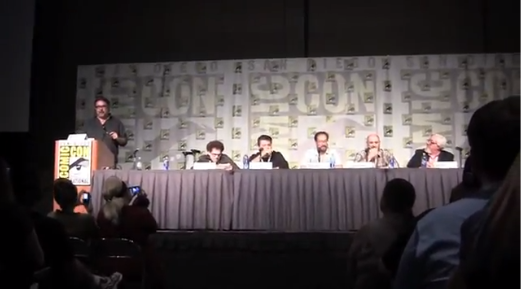
Comic-Con 2013 took place this past weekend in San Diego, and included a panel on the making of Who Framed Roger Rabbit?. The beloved animated movie based on the work of author Gary K. Wolf is celebrating its 25th anniversary this year, and the panel was led by a world class group of animators including producer Don Hahn, animation masters Andreas Deja and James Baxter, writer Tom Sito, special effects guru Dave Bossert, and a special appearance by the voice of Roger Rabbit himself, Charles Fleisher!
There is an audible buzz of excitement throughout the audience for the entirety of the panel, and served to be a great opportunity for fans wanting to discover the ins, outs, trials, tribulations and accomplishments of Who Framed Roger Rabbit?, both during its making and afterwards.
The panel begins by paying homage to Gary K. Wolf, who of course without his novel Who Censored Roger Rabbit?, there would be no script for the movie. The panelists then discuss how Who Framed Roger Rabbit? was one of the first movies to be a hybrid, which combines live action with animated character. At the time (1986), digital technology hadn’t progressed to the point of being even half as fast as it is now, so the movie shines as a “hand painted” work, where every facet of the animation is pure hand creation.
Charles Fleisher, the voice of Roger (as well as Benny The Cab, Greasy, and Psycho), seems very Roger-esque to this day. He hops around on the panel—alternating between sitting, standing, and cracking jokes. He also performs his Roger Rabbit voice after an audience member requests it at the drop of a hat, and it is still flawless, twenty-five years later!
Jessica Rabbit. You knew we were headed there, right? The panelists discuss how Rita Hayworth and various supermodels were inspiration for her. In fact, the animators would have supermodels come into the studio to walk and pose in order to capture an essence of Jessica on paper. Her main animator, Russell Hall, was very quiet and shy according to the panelists, and had a very hard time with her character at first. That is to say, he couldn’t quite bring her to life until he ultimately “exaggerated certain parts of the anatomy” (panelists words!). His routine was to smoke incessantly, get up and move about rather sensually around his office, then get back to his drawing board, never breaking focus. And for this quiet, chain-smoking man who danced solo around his office, we thank you for Jessica Rabbit!
The panel concludes with questions asked by audience members (one woman dressed in impeccable Jessica garb!). The best answer comes from Charles Fleisher, who when asked “How would Roger Rabbit react with current video game characters like Sonic the Hedgehog, Mario, or Optimus Prime?” responds with “He would destroy them all by making them laugh, and then stealing their batteries.”
Well said.
To watch the You Tube video of the Who Framed Roger Rabbit 25th Anniversary at San Diego Comic Con please click HERE.
Remember to be on the lookout for Gary K. Wolf’s new novel in the Roger Rabbit series, Who Wacked Roger Rabbit? available for pre-order by Musa Publishing on October 22nd, and for release on November 22nd! And be sure to check back here for any Roger related news!
Tuesday, July 16, 2013
Jarrod, Jessica, and Roger
This year marks the 25th anniversary of the movie Who Framed Roger Rabbit?, but its literary basis, Who Censored Roger Rabbit?, by Gary K. Wolf, first hit the shelves over thirty years ago, in 1981! Needless to say, Roger fans of both the screen and page have been quite hungry for more, and this upcoming fall they will be greatly rewarded when Musa Publishing releases Wolf’s third book in the series, Who Wacked Roger Rabbit?
With this release approaching, it’s only right to recognize those fans that have been waiting over twenty years for the third book. Fandom surrounding Roger Rabbit has never been lacking, and a common fan favorite has always been the ever-sultry Jessica Rabbit. If you’re wondering what she’s been up to these past few decades, look no further than the only Jessica Rabbit news site and photo archive on the web: ImNotBad.com, to discover everything Jessica. Below, I ask the site’s author, Jarrod, a few questions about his personal journey and experiences with Jessica Rabbit fandom:
Tell us about yourself and ImNotBad.com—how and why did you start it?
I've always loved art and animation ever since I was a kid. It impressed me that people were drawing those characters. I enjoyed watching the process of that as well - the behind the scenes stuff. I loved art, and drawing. I would often copy what I would see in a picture or on TV and try to match it as close as I could. I still do art, traditionally or digitally. I created my first ever Jessica Rabbit custom doll. I never painted before and it came out better than I expected.
I originally had a Who Framed Roger Rabbit Yahoo group, but the character Disney was focusing more attention on, surprisingly, was Jessica. So In 2003 I started the Jessica Rabbit Group. I started mainly because she was my favorite character and thought it would be fun. It allowed me to make lots of new artwork of her, which I put on the site monthly. Then her collectible pins were really taking off and there was a smattering of other merchandise - so I knew Disney was pushing the character more. Why they did it still remains a mystery. I had wanted a true stand-alone Jessica website. There were only two good sites before which didn't last long. After a few years on Yahoo I knew I needed to branch out, so I started ImNotBad.com- really thinking only a few people would see and visit. There's actually thousands of visits a week during holiday times and when big news hits. It's exciting.
What does Jessica Rabbit mean to you?
There is a wide range of characters I like - but Jessica Rabbit is THE favorite. She was such a different female cartoon for that time: A great combination of sexiness and Disney, which we had never seen before. Knowing real people created her by hand also added to it. The animators really put effort into the film and it shows. Because of the look of the character I think she became hard to create as a collectible back then, so her merchandise was rare. It was like a hunt to find anything, but I enjoyed it. Aside from that, the movie came out during a very hard time in my life when I was so young. It really was my escape. The whole experience of the movie was like fate helping me through something so difficult. So it all grew from there.
Do you have a wide collection of Jessica Rabbit memorabilia?
Yes, though I definitely don't have everything. I own the merchandise I review on my site. I have Jessica statues, snow globes, mugs, shirts, and just over three hundred Jessica pins. The Jessica Rabbit store was open for about a year and by chance I was able to visit. Had I known it was going to be temporary, I'd have stocked up!
Have you always been a Roger Rabbit fan? What's your earliest memory of first watching Who Framed Roger Rabbit?
I've always loved the movie, and all the characters. The first memory I have of seeing the characters was in a commercial for the film. It pretty much stopped me in my tracks, and all I knew was I wanted to see it - especially when I saw Jessica walk across the screen. In fact I insisted leaving a friend's house early to see the movie with my family. For some reason I think I knew this was going to be something special, so I didn't want to see it with anyone but them.
How would you describe the fandom surrounding Who Framed Roger Rabbit?
With the Internet, people really got vocal about Roger Rabbit when the Blu-Ray was released. It was also shown on TV around that time, and people were commenting how it was one of the best movies ever. I think that’s great. I feel the true "fandom" got whittled down to less people when Roger and Co. disappeared from the parks for whatever reason that was.
…versus the fandom surrounding Jessica?
The fandom for Jessica alone was different, because her merchandise kept going, and she was a character who collectors kept alive. I hoped that would be enough to keep her in the forefront of minds, and perhaps it was. Now, you see many women dressing like Jessica at conventions. So she's definitely remembered, and people want more of the character.
On ImNotBad.com it shows that Disneyland (in Paris) has finally represented Jessica Rabbit in the parks—this is something a long time in the making.
Do you think it will ever carry over here in the states?
I really hope so. The fact that they did this is huge - at least that's how I view it. No matter how it that mask looked, it was so cool to see Jessica along with all the other characters. People want to see her in the parks. That's been wanted for a while now.

The reactions you got from people about Jessica being a face vs. masked debate in the park seems split. You say on ImNotBad.com: "The shape of Jessica's face alone does not match a real human, so if a woman were to take on this role as a face character - as good as she might look - she won't really look like Jessica." Which I agree with, but I also agree with Gary K Wolf (the creator of Jessica Rabbit) when he says: "...I think this could be a better Jessica. In this rendition, she does look a lot like a blow up doll." Is there any way Disney can improve upon her masked look?
Yes, Gary is right on that. It's missing the whole attitude of Jessica Rabbit we know from the movie. She has no expression at all. The mask is also really small - character heads need to be slightly bigger and exaggerated. I tried to translate as much from Disney Paris messages boards as I could, and people think perhaps she was a last minute addition. Either way, I wish people were a bit more open to the fact Disney tried this than criticizing the look.
What is the Jessica Rabbit community like?
The community was mainly collectors. It is definitely expanding though, even after all these years. People love the character. Jessica Rabbit was like our Betty Boop of the 80's. I see women Tweeting about how they wanted to be Jessica when they grew up, or are now copying her hairstyle. The men have always liked her for many reasons, but male collectors do have an eye for her as an art piece. I think if you like Jessica, you're kind of forced into being a collector because her merchandise was usually higher end stuff. A Premium Format statue was released of her, the most accurate you can find. People not even a fan of the movie were buying it because they said it looked so good. That's the power of Jessica Rabbit, and that statue helped push her out in front little more at conventions.
You've been running your site for over 10 years now, what are some of your fondest memories and best interactions with your readers?
People have asked me for certain pictures or merchandise knowledge. I do my best to accommodate when someone is trying to find something in particular. Readers will tell me how much they enjoy the site, I'm happy they are even visiting! Someone gave me the heads up on Jessica in Paris, so it's cool that they are helping me too. Some really great interactions have come from the Disney Artists I've interviewed, sharing all their stories about creating Jessica. I also talk with other artists who create custom pieces of Jessica and feature them on the site. There are some really talented people out there.
Assuming you have met your fair share of Jessica fanatics throughout the years, do any stand out? Any impressive impersonators?
I've become friends with two other fanatics, Andoni and Mark. They often help me with the site if they find out news or merchandise. For a long time I thought it was only the three of us - but I know there are more fans out there. I think Jessica fans were shy. I don't know what's up with that. I think it was because of the nature of the character, and that she wasn't as well known. That's changing though. I've never met anyone in Jessica costume, but the ones I've seen on the Internet lately have been amazing!
How do Roger fans feel about the upcoming release of Who Wacked Roger Rabbit?
They are hungry for it, especially with being teased for twenty-five years now of a movie sequel. The books might be the only kind of sequels we ever have, so I think it's great that Gary K. Wolf is continuing with the characters stories. We have gotten to a point where a successful book is immediately looked at for making into a movie - which could still make it possibility. The fans are in support of this new book fully - as well as the other Roger Rabbit projects Gary has in the works. Those other projects garnered quite a lot of interest.
What are you hoping to see for Jessica in Gary's upcoming novel?
Just more! I'm afraid that Jessica's popularity has eclipsed Roger's slightly because her curvaceous look, and that her merchandise kept her in the public eye, but Roger is such a wonderful character. The two of them are peanut butter and jelly - different, but made for each other. They both make the other more unique in a complimentary way. So, I'm hoping that there's some great interactions between the two of them and we get more of a look into their relationship.
What are you especially looking forward to see in the upcoming novel?
I've gotten a few clues on what might possibly be in the works, but I think it will be so much fun to have the character's back again - in a way that is a reminder of how it all really began - with Gary's wonderful storytelling.
Reuniting fans with their beloved Roger Rabbit characters in Who Wacked Roger Rabbit? will absolutely be a wonderful, worthwhile reward after all these years.
Thank you Jarrod for sharing your Jessica Rabbit expertise! Check out ImNotBad.com to see what is happening with Jessica worldwide on a daily basis, and stay tuned here for more Who Wacked Roger Rabbit? news!
Thursday, December 20, 2012
What's On Your Reading List for 2013?
by Dianna L. Gunn
The new year is almost upon us, and as 2012 comes to a close many people are re-examining their lives and creating lists of "resolutions"--things they want to do to make their lives better in 2013.
I have my own list of "resolutions", but it isn't my only list for 2013. I also have another kind of list: a reading list for the year ahead. It consists of all kinds of stories, from speculative short fiction to novels in all genres. Some are books I've been asked to review on my blog, others are books by friends, still others are on the list because I believe I can learn from them. A few are on the list entirely for pleasure.
One of the things on my reading list is actually twelve things—the twelve issues of Penumbra we'll be producing next year. And I'm not just saying that because I work here—I'm planning to read the next several issues of Penumbra because I've enjoyed every single issue we've produced so far. Our editorial committee selects only the best stories, and our columns by Lori Basiewicz and Richard White are not to be missed. Most issues come with an author interview and feature article to boot, and if you're interested in finding out more about our deal with Gary K. Wolf for Who Wacked Roger Rabbit, the next couple of issues are not to be missed.
Whatever else is on your reading list for 2013, I hope you'll be adding twelve issues of Penumbra. A year's subscription only costs $36—a low price when compared to other speculative fiction magazines, made possible by our electronic model and low overhead—and if you purchase your subscription by January first, you'll get a second one free. What better way to celebrate the holidays than by purchasing matching subscriptions for you and a loved one so you can share stories all year?
To purchase your subscription now, please click HERE.
Dianna L. Gunn is a young Canadian fiction writer who specializes in dark fantasy. She also writes poetry, generally dark, which is her way of dealing with life. This insightful author hosts a website covering every aspect of fiction writing and interviews with noted guest authors.
Learn more about Dianna L. Gunn on her website and follow her on Twitter.
Tuesday, June 26, 2012
Coming to You Live
by Gary K. Wolf
INT. DAILY SHOW SET - RETURN FROM COMMERCIAL BREAK
JON STEWART
Welcome back to The Daily Show. Our guest tonight has been called a gull, a dirty dog, a booby, a goose, a cootie, an old goat, a cat's paw, a horse's ass, a gibbering gibbon. He's actually a very funny bunny. Let's hear it for Roger Rabbit!
SFX: Audience applause.
Roger comes out. Trips, falls over his own ear. Gets up, grins sheepishly. Bends his ear back into shape. Sits down in guest chair across from Jon.
ROGER RABBIT
Hi, Jon. P-p-p-pleased to be here!
JON STEWART
Glad to have you. Tell me, Roger, what's the hardest thing about being a Toon?
ROGER RABBIT
Avoiding erasers. No, fading in sunlight. No, being bonked on the head by anvils and sledge hammers, and grand pianos. No, keeping a straight face at operas. No, falling in love and having your heart thump so hard you look like your chest is sprouting a valentine.
(Contemplates, scratches head with ear.)
Shucks, none of that's so bad.
JON STEWART
We've both been in the movies. In fact, some call my films as cartoonish as yours. Describe your worst experience in Hollywood.
ROGER RABBIT
That's easy. The time the Friars invited me to a celebrity roast. Their menu included rabbit stew, hasenpfeffer, rabbit dip, Welsh rabbit, rabbit McMuffin, and country fried rabbit, all you can eat. They seated me on the head table.
JON STEWART
You seem like such a down-to-Earth rabbit. Has stardom changed your life?
ROGER RABBIT
A little bit. I get to play baseball with the Simply Splendiferous Stellar Somebunnies. The March Hare, the White Rabbit, Peter Cottontail, Oswald the Lucky Rabbit, Thumper, Peter Rabbit, Bugs Bunny, Br'er Rabbit, the Playboy Rabbit, the Easter Bunny, and me. I'm third base. Thumper's the ball. That skinny scamp Bugs, he's the bat. Big old Peter Cottontail's the right field wall.
JON STEWART
You've been called a wild hare. Any truth to the persistent rumor that you're a wolf in sheep's clothing?
ROGER RABBIT
Baaa. How do those stories get started? Just because I like to go out in my backyard and howl at the moon wearing nothing but fuzzy wool ear muffs, and Jessica's with me dressed as Little Bo Peep. I mean, who doesn't from time to time?
JON STEWART
Here's something that's always bothered me. Bugs Bunny performs nude. Why do you wear pants?
ROGER RABBIT
They hold my suspenders down.
JON STEWART
You're the master of wacky, bizarre, almost surrealistic comedy. I gotta ask you. Where do you get your ideas?
ROGER RABBIT
Well, Jon, it's real easy. Just use your imagination!
JON STEWART
Roger Rabbit. Starring this July in a short story in the hot science fiction magazine Penumbra.
(show magazine cover)
Pick up a copy at your local download.
(pause)
Roger, thanks for coming.
ROGER RABBIT
It's been my p-p-p-p-p... It's been swell.
SFX: Thunderous audience applause.
FADE TO BLACK.
THE END
Gary K. Wolf’s novel Who Censored Roger Rabbit? became a visual
reality in Disney/Spielberg’s $950 million blockbuster film Who Framed
Roger Rabbit. The film won four Academy Awards and the Hugo Award.
Two of Wolf’s science fiction novels, The Resurrectionist and
Killerbowl, are currently in development as major motion pictures.
Learn more about Gary Wolf on his website and on Space Vulture.
INT. DAILY SHOW SET - RETURN FROM COMMERCIAL BREAK
JON STEWART
Welcome back to The Daily Show. Our guest tonight has been called a gull, a dirty dog, a booby, a goose, a cootie, an old goat, a cat's paw, a horse's ass, a gibbering gibbon. He's actually a very funny bunny. Let's hear it for Roger Rabbit!
SFX: Audience applause.
Roger comes out. Trips, falls over his own ear. Gets up, grins sheepishly. Bends his ear back into shape. Sits down in guest chair across from Jon.
ROGER RABBIT
Hi, Jon. P-p-p-pleased to be here!
JON STEWART
Glad to have you. Tell me, Roger, what's the hardest thing about being a Toon?
ROGER RABBIT
Avoiding erasers. No, fading in sunlight. No, being bonked on the head by anvils and sledge hammers, and grand pianos. No, keeping a straight face at operas. No, falling in love and having your heart thump so hard you look like your chest is sprouting a valentine.
(Contemplates, scratches head with ear.)
Shucks, none of that's so bad.
JON STEWART
We've both been in the movies. In fact, some call my films as cartoonish as yours. Describe your worst experience in Hollywood.
ROGER RABBIT
That's easy. The time the Friars invited me to a celebrity roast. Their menu included rabbit stew, hasenpfeffer, rabbit dip, Welsh rabbit, rabbit McMuffin, and country fried rabbit, all you can eat. They seated me on the head table.
JON STEWART
You seem like such a down-to-Earth rabbit. Has stardom changed your life?
ROGER RABBIT
A little bit. I get to play baseball with the Simply Splendiferous Stellar Somebunnies. The March Hare, the White Rabbit, Peter Cottontail, Oswald the Lucky Rabbit, Thumper, Peter Rabbit, Bugs Bunny, Br'er Rabbit, the Playboy Rabbit, the Easter Bunny, and me. I'm third base. Thumper's the ball. That skinny scamp Bugs, he's the bat. Big old Peter Cottontail's the right field wall.
JON STEWART
You've been called a wild hare. Any truth to the persistent rumor that you're a wolf in sheep's clothing?
ROGER RABBIT
Baaa. How do those stories get started? Just because I like to go out in my backyard and howl at the moon wearing nothing but fuzzy wool ear muffs, and Jessica's with me dressed as Little Bo Peep. I mean, who doesn't from time to time?
JON STEWART
Here's something that's always bothered me. Bugs Bunny performs nude. Why do you wear pants?
ROGER RABBIT
They hold my suspenders down.
JON STEWART
You're the master of wacky, bizarre, almost surrealistic comedy. I gotta ask you. Where do you get your ideas?
ROGER RABBIT
Well, Jon, it's real easy. Just use your imagination!
JON STEWART
Roger Rabbit. Starring this July in a short story in the hot science fiction magazine Penumbra.
(show magazine cover)
Pick up a copy at your local download.
(pause)
Roger, thanks for coming.
ROGER RABBIT
It's been my p-p-p-p-p... It's been swell.
SFX: Thunderous audience applause.
FADE TO BLACK.
THE END
Gary K. Wolf’s novel Who Censored Roger Rabbit? became a visualreality in Disney/Spielberg’s $950 million blockbuster film Who Framed
Roger Rabbit. The film won four Academy Awards and the Hugo Award.
Two of Wolf’s science fiction novels, The Resurrectionist and
Killerbowl, are currently in development as major motion pictures.
Learn more about Gary Wolf on his website and on Space Vulture.
Subscribe to:
Posts (Atom)