How Literature Affects Everything…Even the Olympics
by Celina Summers
Okay, I'll admit it. After the brilliant opening and closing ceremony from China four years ago, I wasn't holding out a lot of hope for the English response for this year's Olympics. But the beginning of the ceremony made me eat my words—I thought the transition between an agrarian, idealized England to the Dickensian grime and darkness of the Industrial Revolution that then faded away, leaving the molten metal in the Olympic rings was amazing.
Then, the show made a departure from the glam and the hype to something much closer to my heart.
No, not Mr. Bean's homage to Chariots of Fire.
The great stories in children's literature written by British authors—J.M. Barrie with Peter Pan, P.L. Travers with Mary Poppins, Dodie Smith with 101 Dalmations, and Harry Potter with J.K. Rowling—were center stage during England's welcome to the world's athletes. Literature? At the Olympics? Not quite as strange as it might sound—the original Olympics in ancient Greece held competitions in athletics and the arts. The original Olympics were held every four years from 776 BC to 394 AD, when the Roman Emperor finally put an end to the festival held in honor of the king of the gods, Zeus. The winners of each category were immortalized at Olympia, the site of the games, their names and visages left for posterity in the ring of champions
In fact, literary works had to be at least twenty thousand words in length, in dramatic, epic, or lyric categories. What an opportunity we missed! When I was a kid, I dreamed of being an Olympic swimmer, just like everyone else on my swim team. I grew up less than an hour from the home pool of Tracy Caulkins, who at 14 was the best female swimmer in the world. Tracy got cheated out of her best shot at the Olympics when the Americans boycotted the Moscow games. The gold medals she earned four years later in the Soviet-boycotted Los Angeles games didn't have quite the luster that she deserved. But regardless, as a swimmer a few years younger than Tracy, the Olympics were my dream—and I could imagine myself on the starting blocks, swimming the race, looking up for the score…accepting my medal while The Star Spangled Banner plays…
So much for that. Obviously, even as a kid my imagination was running rampant.
But if the modern Olympics still had literature competitions? Music? Art? There are rumors that the 2016 games will have a ballroom dancing category added, which is a step in the right direction. And it seems only fitting that the modern games, based as they are on a ritual religious observance, should honor art as well as athletics—something I think the British organizers gave a nod to with their inclusion of the great British writers in the opening ceremonies. After all, if it weren't for writers, our knowledge of the ancient games would be significantly smaller. For example, the funerary games for Hector in the Iliad give us, the modern reader, a glimpse at what the Olympics must have been like. Even in the centuries before the birth of Christ, winning the Olympic Games was a source of pride for the competitors as well as their countries or city/states—and that was for discus and sculptors, wrestlers and singers, runners and poets.
In 1952, an art exhibition was substituted for the contests at the Helsinki games, and the art competitions never returned to the Olympics. The International Olympic committee instead voted to include a cultural program at all Olympic Games, to promote understanding of the myriad cultures represented in the countries who participate. And so we, the modern writers of speculative fiction, lost our chance to compete for the medals in our chosen field. We can only watch as athletes are crowned with the laurel wreaths of the victors, can only applaud as they lower their heads for their gold medals, and tear up when, above the stadium or pool or field, our national anthem plays high and sweet in the summer air.
But we, as writers, have other rewards. We have the joy of seeing our stories being published, the warm glow of good reviews, the innate satisfaction in the hundreds or thousands of silent readers who love the stories we gave them. We have the long nights at our desks when the rest of the house is quiet, immersed in the characters and plot lines that populate our minds. And some authors, who climb the highest pinnacles in our craft, have the ultimate honor—just like an Olympic champion in any sport—of giving back to the people who love what they've done.
I doubt that many people are aware that Peter Pan creator J.M. Barrie left all the royalties from his works to Great Ormond Street's children's hospital for the duration of the copyright. As a result of the amazing popularity of the Harry Potter franchise, J.K. Rowling has made incredibly generous contributions to literary programs, programs for single mothers, and the Multiple Sclerosis Society.
Who needs medals against a legacy like that?
Barrie's bequest to the sick children of London was a gift of such genuine love, given back to the readers who looked upon his story of the boy who could fly with magic and wonder in their eyes. But even before that, a gold medal already hung around his neck. The timelessness of his characters, the passion and delight of his stories—all this brought a measure of escape to countless children, lighting the way through the darkness and horror of the long nights when German fighters were bombing London.
When the world is literally exploding around you, sometimes imagination is the only thing that can free you.
So modern writers may not have a medal to display proudly over the mantel and when we finish a story, the national anthem might not play. But no matter what genre we write or the age of the readership for whom our stories are intended, we all reach a moment when we, too, feel like we're on the podium. Our stories are inspiring those people who, for a moment, joined with our characters on a journey through our imaginations. Our books are our legacies. And while I may never accrue a readership that would permit me to be as personally generous as J.M. Barrie or J.K. Rowling, I can still look back at some moments of my career and know that I once made a difference in someone's life. You don't need money or a gold medal to create a legacy, in much the same way that generosity isn't measured in the number of zeroes on the checks you write to charity.
A writer's generosity is measured with the stories she or he shares with the world.
The tradition of arts and the Olympics stretches back to ancient times, when the greatest poets and sculptors once competed just like the athletes under the grueling heat of the Greek skies. The opening ceremony for the thirtieth Olympic Games of the modern era harkened back to that relationship—a reminder to us all that the arts—and in our case, literature—has a place in Olympic lore. There's no better time to remember that than now, as we cheer on our athletes in the London games.
Tuesday, July 31, 2012
Monday, July 30, 2012
DIY inspiration : Ear cuffs
![]() |
| this is an "old school" ear cuff to me, this style was popular even few years ago |
![]() |
| this is a new school one: statement, bold exagerated ear cuff - pics via supermeow's wonderland |
![]() |
| pearl ear cuff via Vogue |
![]() | |
| multiple chains hanging from the ear, that would be a super fast DIY - I think charms with crosses are very in right now |
![]() |
| a hook + a chain + a comb = rad diy- pic via Asos |
Sunday, July 29, 2012
Tips on Caring for Disabled Dogs
Dog disabilities could be a result of illness, physical injury or accidents. Just because your dog is disabled, it should not stop you from enjoying its company. As a dog owner, it is your responsibility to help the dog live a normal life and cope with the situation. Below are a few tips to keep your dog happy and healthy even with their disability.
Assist their movements
Dogs who suffer from mobility problems, such as hip dysplasia, arthritis, spinal disorders, DM in dogs, or other medical problems that affects their hind legs will need plenty of help moving around. To make things easier for you and the dog, you can buy a special leash that supports their torso and back legs. There are also other tools that assist in mobility problems, such as dog wheelchairs that can be strapped to their backs. If you are going to take the dog out to the vet, you will need to carry it into the car since it might have a hard time getting in. You can also use a small and improvised ramp that will help them walk into the car.
Watch their weight
Like humans, over weight dogs have a higher chance of getting stick compared to dogs that stay within their ideal weight. Exercise and a balanced diet are the only things you really need to worry about when it comes to your dog's weight. Make sure they get the right amount of exercise by taking them out for walks or jogs. You can also let them run around in an open area like you back yard, front lawn or the nearest park. Never over feed or underfeed your dogs. Use a good dog food mix or you can feed them meat that you prepared. Check with your vet about your dog's ideal weight and the best type of diet you can give it.
Regular visits to the doctor
Visiting the vet regularly helps you and your dog's doctor track the dog's condition and see if it's improving or not. By going to the vet, you can detect any problems and stop them before they develop even further. The vet can also advise you on medical procedures and other remedies that can help or cure your dog. They can also offer medical screening for some genetic illnesses like DM in dogs.
Talk to your dog
Taking to your dog is actually a form of therapy for the both of you. Massage and gently rub its fur and spend some time with it. Sometimes, human touch works better and is more calming and relaxing compared to any other type of medication.
Assist their movements
Dogs who suffer from mobility problems, such as hip dysplasia, arthritis, spinal disorders, DM in dogs, or other medical problems that affects their hind legs will need plenty of help moving around. To make things easier for you and the dog, you can buy a special leash that supports their torso and back legs. There are also other tools that assist in mobility problems, such as dog wheelchairs that can be strapped to their backs. If you are going to take the dog out to the vet, you will need to carry it into the car since it might have a hard time getting in. You can also use a small and improvised ramp that will help them walk into the car.
Watch their weight
Like humans, over weight dogs have a higher chance of getting stick compared to dogs that stay within their ideal weight. Exercise and a balanced diet are the only things you really need to worry about when it comes to your dog's weight. Make sure they get the right amount of exercise by taking them out for walks or jogs. You can also let them run around in an open area like you back yard, front lawn or the nearest park. Never over feed or underfeed your dogs. Use a good dog food mix or you can feed them meat that you prepared. Check with your vet about your dog's ideal weight and the best type of diet you can give it.
Regular visits to the doctor
Visiting the vet regularly helps you and your dog's doctor track the dog's condition and see if it's improving or not. By going to the vet, you can detect any problems and stop them before they develop even further. The vet can also advise you on medical procedures and other remedies that can help or cure your dog. They can also offer medical screening for some genetic illnesses like DM in dogs.
Talk to your dog
Taking to your dog is actually a form of therapy for the both of you. Massage and gently rub its fur and spend some time with it. Sometimes, human touch works better and is more calming and relaxing compared to any other type of medication.
Friday, July 27, 2012
Refeshion your house: 7 home decoration ideas inspired by fashion
![]() |
| what a curious way to reclycle a shoe: succulent stiletto planters by GiddySpinster on Etsy |
![]() |
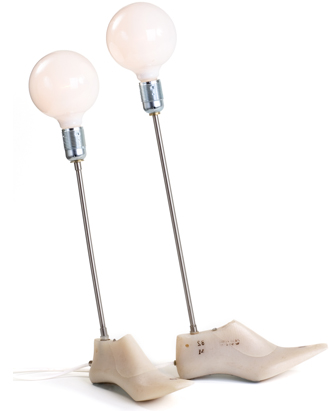
| Simple statement piece : the shoe maker lamp by junktion |
![]() |
| recycled clothing seat by Tobias Juretzek |
![]() |
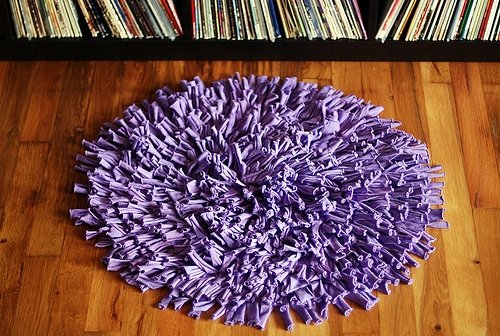
| No one will figure out what this rug is made of: recycled tees rug tutorial via Molly K. Stoltz |
![]() | ||||
| what a nice way to show clothes: necklace cloth hanger via manmakehome |
![]() | |
| I'm not sure if it's comfortable or not but it will grab atten tion for sure Coat hanger chair by Style My Life |
![]() |
| shoe lamp via core77 |
Tuesday, July 24, 2012
Discover the DIYer secret weapon and make a pair of studded earrings
Learn how to turn some harmless pearls into these spiky mines.
Firstly I'll give you a good excuse to buy new nail polish. From now on we are not only using them to paint our nails but also as a diy secret weapon. New shades for nails are out very often. There are almost an infinite variety of colours, some very sophisticated, chromed or iridesents, with glitters. The vast majority of nail polishes are inexpensive and sold in small sized bottles, perfect for your diy projects. Shortly nail polish can be a good alternative to paint sometimes: it's cheaper and you can buy it almost everywhere. Let's face it: we'll always have more bottles of nail varnish than cans of paint.
In addiction I'll show you a little trick to keep rounded surfaces from rolling while you paint them.
Oggi vi mostrerò come trasformare delle innocue perle in un paio di orecchini decisamente aggressivi.
Ma prima vorrei fornirvi una buona scusa per comprare altri smalti per le unghie. Anche se pensati per decorare le nostre unghie, a volte gli smalti possono essere una furba alternativa alla vernice. Pensateci: esistono in mille colori diversi, alcuni molto sofisticati, cangianti o pieni di glitter; sono venduti in piccole dosi, perfette per i vostri progetti fai da te e spesso sono economici. E poi ammettiamolo: avremo sempre più bottigliette di smalto in casa che lattine di vernice.
In più vi mostrerò un piccolo trucco per impedire alle superfici tonde di rotolare mentre le dipingete. You'll need:
nail polish
2 pearls
chain
2 earring hooks
glue gun
glue
metallic wire
pliers
avrete bisogno di:
smalti
2 perle
una catenella
2 ganci per gli orecchini
colla a caldo
colla
filo metallico
pinze
Plastic pieces from cocktail forks, previosly used to make crystal earrings
ho usato delle punte in plastica ricavate da delle forchette da cocktail che precedentemente avevo usato per realizzare degli orecchini trasparenti
To keep pearls and other stuff from rolling while you're painting them you can temporarily glue them on a piece of paper using the glue gun
Per evitare che le superfici tonde rotolino mentre le dipingete potete incollarle temporanemente su un pezzetto di carta con della colla a caldo
Your sparkly nail polish will make these pearls shine
Il vostro smalto glitterato farà risplendere le perle
Good pearls gone bad: Paint the plastic forks pieces with black nail polish and then glue them onto the pearls
Stendete lo smalto nero sulle punte e poi incollatele sulla perla
Once everything is dry insert the metallic wire into the pearl and make a loop with pliers. Connect the spiky pearl to a piece of chain. Add a earring hook and you've done.
Saturday, July 21, 2012
How to wear a men's jacket
![]() |
| Rihanna in Stella McCartney |
![]() |
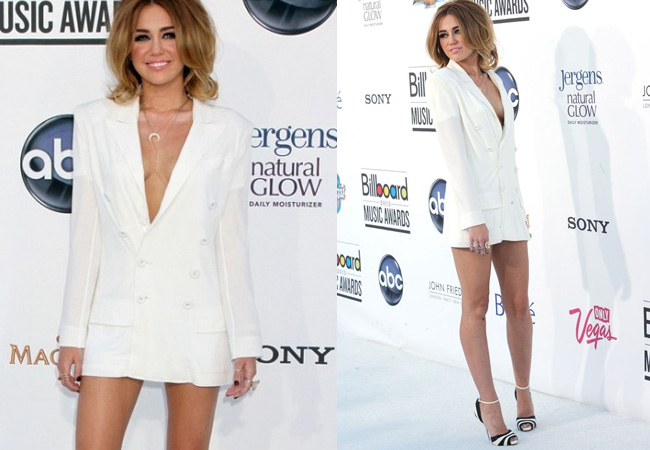
| Miley Cyrus in Jean Paul Gaultier |
Sempre più spesso le donne si divertono a mescolare elementi maschili e femminili per ottenere dei look inaspettati. E così la giacca sartoriale, caposaldo del guardaroba maschile può diventare un sensuale ed impertinente mini dress. Attenzione però, è necessario controbilanciare i dettagli maschili con altri iperfemminili quindi gambe in primo piano e tacchi alti. Potete partire proprio da una oversize per realizzare un vestito simile a quello di Miley Cyrus. Nella ricerca della giacca perfetta da trasformare prestate attenzione alla lunghezza (che deve essere simile a quella di un vestito) e all'ampiezza delle spalle. Se quest'ultime dovessero essere troppo larghe potrete modificarle rimuovendo le maniche e ridefinendo il giromanica.
Wednesday, July 18, 2012
How to sew a pair of pants : step by step guide revealed
![]() |
| DIY trousers - cut out asymmetric DIY shoes |
- Quick fix:Mix two pants find 2 pair of trousers in your closet with two colors that you would like to match (or find two discounted at sales even starting from $12); rip the seams, mix the front of one with the back of the other and sew it back!
- Make yourself the pattern: take a pair of old trousers that fit you well and sacrifice them for the sake of fashion (just kidding!), rip the seams we'll use them as a pattern. You'll need the front and the back of one leg (front and back are different for good fit!).
- Buy the pattern You can buy pant patterns with standard sizes online or find them on magazines. Burda magazine for example is a good resource.
- Cut the fabric Double your white cotton fabric and cut along the shape of your front pattern; (leave some space for the seams) do the same with black cotton and the back of the of your patten. Now you should have 4 pieces 2 fronts and 2 backs.
- Let's put the trousers together
- Sew each leg separately; put the front on the back and sew the inside seam and the outside seam of the leg
- Match the two legs together. Put one leg inside out and then insert the other leg (facing straight) in it. Sew the crotch seam from the front to the back
- Pants are almost done, did you remember to leave some space for a side zipper? If not open the left lateral seam for 10 cm or more and sew the the zipper in place.
- Adjust the lenght of the leg and finish your trousers with a hem at the bottom.
Sono l'ultimo paio di pantaloni che ho realizzato ma sono diventati rapidamente i miei preferiti. Penso che l'accostamento del bianco con il nero li renda una variante altrettanto versatile del pantalone nero . Ho utilizzato due stoffe in cotone dal peso simile. E voi avete mai realizzato un paio di pantaloni? Se volete realizzarne un paio simili a questi avete diverse opzioni:
- Barate (scherzo!) l'idea furba è quella di selezionatre 2 paia di pantaloni nel vostro armadio (o compratene due paia uguali di colori diversi ai saldi anche a partire da 10 euro) scucirli e mischiare il davanti con il dietro e ricucirli
- Fate da sole il modello del pantalone Trovate un pantalone nell'armadio che vi calza a pennello (ma neanche troppo nuovo) e sacrificatelo in nome della moda! (esagerata!). Scucitelo e usatelo come modello per un nuovo pantalone. Vi servirà il davanti e il dietro di una gamba (attenzione davanti e dietro sono sempre diversi per assicurare la giusta vestibilità).
- Comprate il modello Andate in edicola ed acquistate una rivista con i cartamodelli, Burda è un ottima scelta.
Ora che che avete il modello vi chiederete, ma come si cuciono i pantaloni?
- Tagliate la stoffa Piegate a metà il cotone bianco (in questo caso) e stendeteci sopra il modello del davanti. Tagliate seguendo la forma lasciando dello spazio per effettuare la cucitura. Fate lo stesso con il cotone nero. Alla fine dovreste avere 4 pezzi: 2 davanti e 2 dietro
- Cuciamo il pantalone!
- Cucite ogni gamba separatamente: mettete il davanti sul dietro e cucite la cucitura esterna e quella interna (dal cavallo fino in fondo)
- Mettete una gamba a rovescio e infilateci dentro l'altra gamba (a dritto). Ora la cucitura del cavallo combacia; cucite dal davanti fino al dietro.
- I pantaloni sono quasi finiti: scucite di circa dieci centimetri la cucitura laterale a sinistra e cuciteci una zip
- Terminate orlando i pantaloni.
Subscribe to:
Posts (Atom)